A combination of pipelines and ships delivers some 4 MMb/d of transportation and heating fuels to the U.S. East Coast, most of it from Gulf Coast refineries. But there’s always room for improvement in refined products delivery infrastructure, whether it’s pipeline or port capacity expansions, new pipeline spurs, or new storage capability. The aim of these projects is almost always the same: to make distribution more efficient and to hold down the per-barrel cost of delivery. Today, we conclude our series with a look at possible infrastructure improvements and a note about the challenges these projects face.
The 17 East Coast states (and District of Columbia) that make up Petroleum Administration for Defense District (PADD) 1 consume a total of about 5 MMb/d of gasoline, diesel, heating oil and jet fuel (which we’ve shortened to GDHJ for simplicity’s sake). About one-fifth of that daily need is produced at refineries within PADD 1 (mostly near Philadelphia) and the other four-fifths is piped or shipped in, most of it from refineries along the Gulf Coast (PADD 3)—plus some imports. This blog series has described the infrastructure developed over the past 70-odd years to move GDHJ from where it’s refined to where it’s used. As we said in Episode 1, PADD 3 produces about 7.5 MMb/d of GDHJ, and sends about 2.8 MMb/d of that to PADD 1, more than 80% of it (about 2.3 MMb/d) via the two primary refined products pipelines between and through the two regions: the 2.5 MMb/d Colonial and the 700 Mb/d Plantation. Then, in Episode 2, we provided the details on those two pipelines: their routes, injection points, storage-tank terminals, spurs and delivery points. We also discussed two other, midsized pipeline systems (Buckeye Partners’ and Sunoco Logistics’) that interconnect with Colonial and help deliver large volumes to consumers in the Central Atlantic states (New York, New Jersey and Pennsylvania). Last time, in Episode 3, we described the very different situations that each of the four sub-regions in PADD 1 (New England, Central Atlantic, Southeast, and Florida) find themselves in regarding the sources of their GDHJ and the means by which these refined petroleum products are delivered. The Central Atlantic and Southeast sub-regions get most of their GDHJ via the Colonial and Plantation pipelines (and, in parts of the Central Atlantic, with assists from Buckeye and Sunoco pipes). In New England and Florida, though, waterborne deliveries play critical roles.

Visualize the infrastructure behind U.S. NGL movement.
The U.S. NGLs Map provides a comprehensive view of the transport, processing, and export networks moving NGLs across the U.S.
This time, we look at several possible enhancements to the East Coast’s existing delivery infrastructure, including a major transportation fuels pipeline project in the southern part of PADD 1 and two pipelines in the northern part of PADD 1 that would deliver GDHJ to market or (in one case) deliver crude oil to refineries as well. As you’ll see, none of these projects is a certainty—in fact, the development of the biggest of them was put on hold March 30, the day we posted Episode 3. And as we’ll get to, the primary challenges they face aren’t lack of interest or demand, it’s concern about their environmental impact and/or the use of eminent domain to establish their rights of way. First, let’s look at that recently suspended project, Kinder Morgan’s proposed Palmetto Pipeline, which would run from an interconnection with the Plantation Pipeline at Belton in upstate South Carolina to the Atlantic coast at Savannah, GA, then south to Jacksonville, FL (Figure 1).
About the song
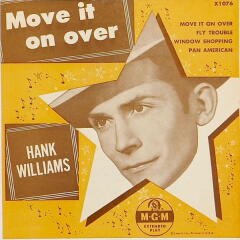
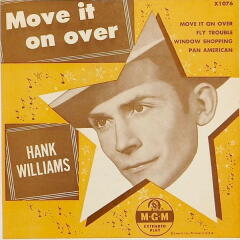
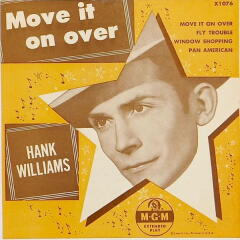
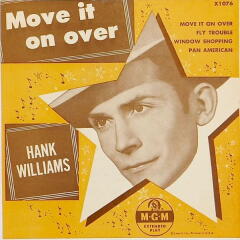
“Move It On Over” was written by Hank Williams and was released as a single by Williams in June 1947. The song, which went to #4 on the Billboard Most Played Juke Box Folk Records Singles chart, was Williams’s first major hit record and helped to secure him a spot on Louisiana Hayride, a country music radio show and a training ground for the Grand Old Opry. The song was recorded in April 1947 at Castle Studio in Nashville, with Fred Rose producing. Rose used Red Foley’s band, The Cumberland Valley Boys, to back up Williams. Personnel on the record were: Hank Williams (vocals, acoustic rhythm guitar), Zeke Turner (electric guitar), Jerry Byrd (Hawaiian steel guitar), and Tommy Jackson (fiddle).
Some musicologists have called “Move It On Over” the first rock and roll record and, listening to the approach to the song by Williams and the band — especially the rocking and swinging electric guitar solo by Zeke Turner — it’s hard to ignore its significance. However, other music writers say first-ever honors should go to “Rocket 88” by Jackie Brenston and his Delta Cats, which was recorded at Memphis Recording Service in March 1951 by Sam Phillips. (One of the members of the Delta Cats was Ike Turner, who with his wife, Tina, would have his own impact on rock and roll and soul music.) Many other artists have covered “Move It on Over” over the years, including George Thorogood and The Destroyers, who had a hit single with it from their album of the same name in 1979.
Hank Williams was an American country music singer, songwriter and musician. He is considered by many to be one of the most influential and iconic country music artists of all time. Born and raised around Montgomery, AL, Hank learned how to play the guitar from an African American blues street musician named Rufus Payne. His first professional break came when Montgomery radio station WSFA hired him to perform on and host a 15-minute program in 1937. During his lifetime Williams released two studio albums and 31 singles. Ten studio albums, eight live albums, 25 compilation albums and 30 singles were released posthumously. In 1987, Williams was inducted into the Rock and Roll Hall of Fame and received a Grammy Lifetime Achievement Award.
The last single released during Williams’s lifetime was “I’ll Never Get Out of This World Alive,” which came out in November 1952. Williams died from heart failure in the backseat of his baby-blue 1952 Cadillac convertible enroute to a show in Canton, OH, on New Year's Day 1953. He was 29 years old.