As recently as the mid-to-late 2000s, the U.S. was expected to become a major importer of LNG. Instead, the opposite occurred. Once forecast to need tens of millions of metric tons of LNG each year to meet its own power needs, the U.S. is now producing about the same amount and sending it out to Asia, Europe, and other overseas markets. That swing — from the expectation of being a major LNG importer to the reality of being a top-tier producer/exporter — has had a huge impact on the global market, and the influence of that reversal cannot be overemphasized. In today’s RBN blog, we look at how U.S. production has moved LNG closer to being a global commodity, the effect of growing U.S. production on the market, and prospects for future growth.
During the past few months, the U.S. has been battling with Qatar and Australia for the title of #1 LNG exporter, as we described in Three’s (Not Always) a Crowd. This king-of-the-hill fight is taking place less than six years after the first U.S. LNG export from Cheniere’s Sabine Pass facility. Perhaps more remarkable is the fact that the decision to proceed with U.S. exports only happened in 2012. Impressive as these achievements are, they should also be seen in relation to past LNG projections to appreciate their full market impact. The Energy Information Administration (EIA) estimated U.S. LNG export capacity to be 73 million tons per annum (MMtpa; or 9.7 Bcf/d) in 2021, with peak capacity of 89 MMtpa (11.8 Bcf/d). Previous EIA estimates called for Lower 48 imports of 64 million MMtpa (8.4 Bcf/d) by 2015 and 92 MMtpa (12.2 Bcf/d) by 2030. That turnaround has helped turn LNG from a specialty product sold point-to-point on contract toward becoming a global commodity — where prices are more easily discoverable and trading volumes are significant — and also fueled the growth of the spot market.
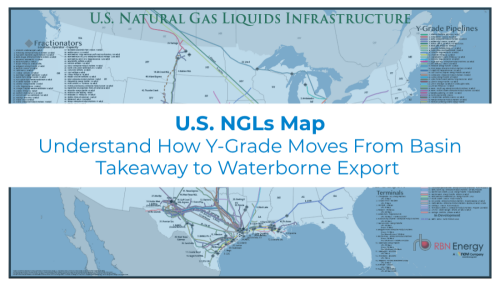
Visualize the infrastructure behind U.S. NGL movement.
The U.S. NGLs Map provides a comprehensive view of the transport, processing, and export networks moving NGLs across the U.S.
Possibly the most important characteristic of U.S. LNG is that it is mostly destination-flexible, allowing lifters to ship product to any importing market (other than those under U.S. sanctions), with deliveries to 37 different countries since 2016. The customers are a diverse mixture of (a) utilities such as Korea Gas, Osaka Gas, and Endesa; (b) portfolio players such as Shell, BP, Naturgy, and TotalEnergies; and (c) traders including Mitsubishi and Mitsui, plus a few independent oil companies (IOCs) such as Woodside.
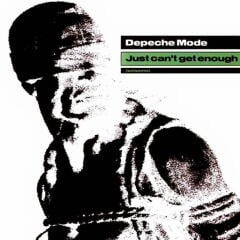
About the song
“Just Can’t Get Enough” was written by Vince Clarke and appears as the 11th cut on Depeche Mode’s debut album, Speak & Spell. The song was released as the band’s first single in the U.S. in February 1982. The song reached #26 on the Billboard Hot Dance Club Play chart. It was recorded at Blackwing Studio in London and was produced by Depeche Mode and Daniel Miller. Ironically, Vince Clarke had left Depeche Mode to form the band Yazoo shortly before the single was released in the U.S.
Speak & Spell was released in October 1981 and is the band’s only album with Vince Clarke, who left to later have success with his bands Yazoo and Erasure. After his departure, most of the band’s writing chores were handled by Martin Gore. The LP would reach #192 on the Billboard Top 200 Albums chart. The title of the record refers to the then-popular “Speak & Spell” electronic kids learning toy. Personnel on the record were: Dave Gahan (lead vocals), Martin Gore (keyboards, guitar and backing vocals), Andy Fletcher (keyboards, bass and backing vocals), and Vince Clarke (keyboards, guitar, lead and backing vocals).
Depeche Mode is an English electronic band formed in Essex in 1980. They have released 14 studio albums and sold over 100 million records worldwide. Billboard magazine named them the most successful dance club artist of all time in 2016. The group’s most recent tour included stops in Latin America, North America, and Europe in 2018. A digitally restored edition of the group’s 1989 concert and film documentary, Depeche Mode 101, was released in December 2021.