Of the 10 Bcf/d, or more than 75 MMtpa, of nameplate LNG export capacity currently operational in the Lower 48, Japanese companies form the largest single group lifting U.S. cargoes. Their commitments total ~2 Bcf/d of U.S. liquefaction capacity. However, Japan’s LNG consumption has been falling over the past two years, and in 2019 and 2020, U.S. LNG accounted for only 0.6 Bcf/d and 0.8 Bcf/d of Japanese imports, respectively, or about 20% of the country’s total LNG demand in each year. In other words, Japanese companies have made commitments for incremental LNG from their remotest supply option against a backdrop of falling domestic demand. In all cases, the Japanese players have opted not to buy FOB from producer projects, but instead have booked capacity at the Cove Point, Cameron, and Freeport LNG export facilities — all plants that require offtakers to secure and transport the feedgas supply for LNG production. This type of arrangement carries with it the need to set up gas trading desks in the U.S., with front-, middle- and back-office personnel, plus operations staff, representing additional fixed costs. What was the motivation for these commitments, made by no less than seven of Japan’s major LNG buyers, how successful have they been, and what lies in store for these volumes that the country does not appear to need? Today, we look at where these volumetric commitments fit, not only in the portfolios of the capacity holders but within the broader context of LNG commerce and commoditization.
Historically, due to its lack of indigenous hydrocarbon resources, Japan has placed a premium on energy security and the need to ensure timely delivery of cargoes — preferably with dedicated fleets of Japanese-constructed LNG carriers (LNGCs). In the first part of the 2000s, Japanese buyers would face pressure in the form of anticipated declines in LNG from existing suppliers, due to falling production. They were troubled by the unilateral reduction of LNG supply from Indonesia in 2006 due to depleted reserves. Additionally, between 2005 and 2017, there was a moratorium on further gas development in Qatar, which may have called into question the ability to secure future LNG volumes as Japanese contracts for supply from the Qatargas 1 LNG facility — totaling 0.9 Bcf/d (7 MMtpa) — came due in 2021. Further, in 2011, about the time that U.S. LNG export projects started looking for customers, Japan suffered the Great East Japan Earthquake, and the potential threat of sustained closure of nuclear power facilities at that time added to Japanese concerns regarding security of LNG supply. It should be noted that, in 2011 and 2012, the global LNG market was able to supply the roughly 1.3 Bcf/d (10 MMtpa) of additional LNG that Japan required to keep its power systems working, which showed, at least at that time, that supply could be reliably sourced without the need for long-term agreements. Regardless, Japanese buyers were willing to pay up for long-term capacity commitments.
Previously, an essential part of the process for identifying and contracting for new LNG supply was the role played by the trading houses, or sogo shosha, especially Mitsui and Mitsubishi, which typically took equity stakes in LNG projects that signed supply deals with Japanese utility companies. Over time, however, LNG buyers have become increasingly independent of the sogo shosha by signing contracts directly with LNG operators for offtake on FOB terms — as was the case with the Darwin project in Australia that began production in 2006. Also, Japanese buyers have been increasingly vocal in their criticism of destination clauses in LNG sales and purchase agreements (SPAs) and U.S. volumes would be fully destination flexible — free to be delivered to the market that pays the best price, provided Japanese demand was met first. Altogether, by 2011, Japanese utility companies were ready to sign up with U.S. LNG producers.

Join industry leaders in Calgary on October 29 for market insights, technical presentations, Duvernay inventory analysis, an expert panel, and networking focused on the next chapter of Canadian energy.
About the song
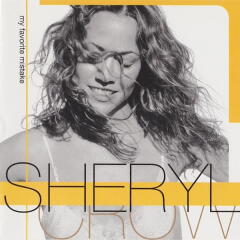
"My Favorite Mistake" was written by Sheryl Crow and Jeff Trott. It appears as the first song on Sheryl Crow's third studio album, The Globe Sessions. Released as a single in September 1998, the song went to #1 on the Adult Alternative chart, #2 on the Adult Top 40 chart, and #20 on the Hot 100 Billboard Singles chart. The song is rumored to be about her romantic involvement with Eric Clapton, but Crow has denied that the song was about him. Personnel on the record were: Sheryl Crow (vocals, guitars, bass, keyboards, percussion), Jeff Trott (tremolo guitar), Gregg Williams (drums), and Wendy Melvoin (guitar).
The Globe Sessions was recorded between 1996 and 1998 at Globe Studios in New York City and Sunset Sound in Hollywood. Produced by Sheryl Crow, the album was released in September 1998. It went to #5 on the Billboard Top 200 Albums chart and was certified Platinum by the Recording Industry Association of America. Three singles were released from the album.
Sheryl Crow is an American musician, singer, songwriter, and actress. She got her start singing in cover bands, which led to her meeting St. Louis-based producer Jay Oliver. Oliver used Crow's vocal abilities on jingles for McDonalds and Toyota. She toured with Michael Jackson as a backing vocalist for his Bad Tour from 1987 to 1989. She started singing backing vocals for various artists in Los Angeles and secured her own record deal in 1993. She released her debut album, Tuesday Night Music Club, in August 1993. Crow has released 11 studio albums, three live albums, six compilation albums, one EP, and 45 singles. She has sold more than 50 million records worldwide. She has won nine Grammy Awards and has appeared as an actress in several television shows. She has stated that Threads, her duet album released in August 2019, may be her final album. Crow continues to tour, with a global livestream concert scheduled in June, followed by tour dates beginning in August.