Mexican production of gasoline, diesel and jet fuel continues to fall and Mexico’s imports of these refined petroleum products from the U.S. are rising fast to keep pace with increasing demand. Longer term upgrade projects to increase Mexican refinery transport fuel are finally underway. But before refinery upgrades make a dent in imports, two ambitious refined-products pipeline/terminals projects will make it easier and more efficient to move large volumes of gasoline, diesel and jet fuel from Texas refineries into Mexico. Today, we update our coverage of fast-moving developments in Mexico-U.S. hydrocarbon trading.
In the past few months we’ve talked a lot about Mexico’s energy sector, particularly it’s evolving relationship with the U.S. regarding oil, natural gas, natural gas liquids (NGLs) and refined petroleum products. In several blogs—including The Gas All Went to Mexico and As We Send Gas Through the Streets of Laredo—we discussed Mexico’s growing dependence on U.S.-sourced natural gas, which is fueling more and more of the country’s power plants and industries. We also considered all the gas pipelines being built to move that gas south. In our Enciende Mi Fuego (Light My Fire) series, we described Mexico’s need for increasing amounts of liquefied petroleum gas (LPG, e.g., propane/butane) from the U.S., and again we looked at the pipelines being installed to move LPG to Mexican consumers. And then, in our With a Little Help From My Friends series and Drill Down report, we looked at the big picture, namely the growing energy interdependence of Mexico and U.S. in everything from oil to natural gas and NGLs. We did made reference to refined petroleum products like gasoline, diesel and jet-kero,in those analyses, but didn’t dive too deeply into them because there was so much else to talk about. In the past few weeks though, three significant developments have occurred, giving us an opportunity to revisit the topic.
First a quick recap. Mexico, you may recall, is between a rock and a hard place when it comes to hydrocarbons. It has extraordinary crude and natural gas resources, but oil production has been declining and gas production has been flat, in part because state-owned Petróleos Mexicanos (Pemex) has been unable to make the investments needed to boost output. Pemex’s refineries also need upgrading; there have been disconnects between 1) the types of crude that Pemex produces (mostly heavy) and the capabilities of the company’s refineries, and 2) the yields of various refined oil products (fuel oil, gasoline and diesel, for instance) that Pemex’s refineries can produce and the domestic demand for those products. Mexico and Pemex have been trying to get things back on track, in part by opening up the hydrocarbon sector to private-sector investment and competition. These efforts have come in fits and starts—and, it’s got to be said, they’ve occurred at a particularly challenging time, with crude prices near their lowest levels in a dozen years and investment cutbacks being the order of the day.
Pemex’s production of gasoline and diesel has been stagnating for several years and fell again in 2015. Gasoline production averaged 425 Mb/d in 2010, and 422 Mb/d in 2014; in 2015 gasoline production fell almost 10%, to 381 Mb/d (380 Mb/d in December 2015, down 7 Mb/d from December 2014; dark gray bar segments in Figure 1).
About the song
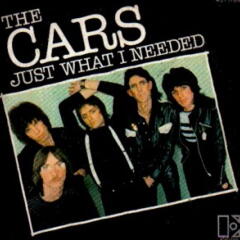
“Just What I Needed” was written by Ric Ocasek and appears as the third cut on side one of The Cars’ debut album, The Cars. Released as a single in May 1978, it went to #27 on the Billboard Hot 100 Singles chart. Personnel on the record were: Benjamin Orr (lead vocal, bass), Ric Ocasek (backing vocals, rhythm guitar), Elliot Easton (lead guitar, backing vocals), Greg Hawkes (keyboards, backing vocals), and David Robinson (drums, backing vocals).
The Cars was recorded at AIR Studios in London, with Roy Thomas Baker producing. Released in June 1978, the album went to #18 on the Billboard Top 200 Albums chart. The striking album cover art featured Nataliya Medvedeva, a Russian-born model, singer, poet and writer. The Cars yielded three charting singles, proving that the band’s new wave/rock sound was radio-friendly. It has been certified 6X Platinum by the Recording Industry Association of America.
The Cars were an American rock band formed in Boston in 1976. Ric Ocasek, Benjamin Orr, Elliot Easton, Greg Hawkes and David Robinson successfully blended guitar-driven rock with synthesizer pop music. The band’s demos were garnering a lot of radio airplay in the Boston area before they signed a record deal with Elektra Records in 1977. The band released seven studio albums, eight compilation albums and 26 singles. They have sold over 23 million records in the U.S. alone. The Cars are members of the Rock and Roll Hall of Fame. They officially broke up for the first time in 1988, with four of the original members reuniting in 2010 to record the album Move Like This, which was followed with a brief tour. All the band members have done solo projects. Benjamin Orr died in 2000 and Ric Ocasek in 2019.