Mexico’s need to import increasing amounts of transportation and cooking fuels--mostly gasoline, diesel, and liquefied petroleum gas (LPG)—from the U.S. is spurring an infrastructure development boom on both sides of the Rio Grande. Over the past few years this has been a frequently reoccurring pattern: A fast growing market for hydrocarbons emerges, and the need to efficiently move increasing volumes of product from points A and B to points C, D and E quickly becomes urgent. All hands are called on-deck: trucks, railroads, barges, pipelines—plus storage facilities and distribution terminals. Today, we consider the latest initiatives to deliver gasoline, diesel, jet-kero and LPG from Texas to its southern neighbor.
We’ve discussed the U.S.-Mexican hydrocarbon trade many times in the RBN blogosphere, first focusing on the boom in U.S. natural gas deliveries South of the Border (The Gas All Went to Mexico and As We Send Gas Through the Streets of Laredo), then on LPG exports to Mexico (the Enciende Mi Fuego/Light My Fire series), and—in a bigger-picture look at things—our Drill Down report (With a Little Help From My Friends). Most recently, in the first episode of Just What I Needed, we zeroed in on Mexico’s need to import increasing volumes of transportation fuels (gasoline, diesel and jet-kero), mostly because 1) many of the refineries owned by state-owned Petróleos Mexicanos (Pemex) need upgrading, and 2) there are major disconnects between the mostly heavy crude oil Pemex produces, the capabilities of its refineries, and Mexico’s domestic needs for gasoline, diesel and jet-kero. In that blog, we described three recent initiatives aimed at fixing things: a $1 billion plan to boost production of clean diesel at Pemex’s Madero refinery; Howard Energy’s $500 million Dos Águilas refined-products pipeline and terminals plan; and the NuStar Energy project to develop $125 million of new refined product/LPG pipeline infrastructure in northern Mexico. We also noted that the Howard and NuStar projects wouldn’t be the first pipelines that help move gasoline, diesel and jet-kero from the U.S. to Mexico. Transmontaigne Partners--recently acquired by ArcLight Capital Partners--already operates the 18-mile U.S. portion of a Pemex-owned, bi-directional, 174-mile pipeline that moves refined products to and from Transmontaigne and Pemex’s jointly owned Frontera terminal in Brownsville, TX and (in northeastern Mexico) Pemex’s terminal in Reynosa and refinery in Cadereyta.

The NATGAS Appalachia weekly report provides the data and insights to monitor the northeast natural gas market’s twists and turns and identify the risks and opportunities along the way, including tracking supply-demand trends, outbound capacity and their impact on takeaway pipeline utilization, and regional prices.
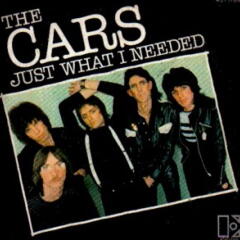
About the song
“Just What I Needed” was written by Ric Ocasek and appears as the third cut on side one of The Cars’ debut album, The Cars. Released as a single in May 1978, it went to #27 on the Billboard Hot 100 Singles chart. Personnel on the record were: Benjamin Orr (lead vocal, bass), Ric Ocasek (backing vocals, rhythm guitar), Elliot Easton (lead guitar, backing vocals), Greg Hawkes (keyboards, backing vocals), and David Robinson (drums, backing vocals).
The Cars was recorded at AIR Studios in London, with Roy Thomas Baker producing. Released in June 1978, the album went to #18 on the Billboard Top 200 Albums chart. The striking album cover art featured Nataliya Medvedeva, a Russian-born model, singer, poet and writer. The Cars yielded three charting singles, proving that the band’s new wave/rock sound was radio-friendly. It has been certified 6X Platinum by the Recording Industry Association of America.
The Cars were an American rock band formed in Boston in 1976. Ric Ocasek, Benjamin Orr, Elliot Easton, Greg Hawkes and David Robinson successfully blended guitar-driven rock with synthesizer pop music. The band’s demos were garnering a lot of radio airplay in the Boston area before they signed a record deal with Elektra Records in 1977. The band released seven studio albums, eight compilation albums and 26 singles. They have sold over 23 million records in the U.S. alone. The Cars are members of the Rock and Roll Hall of Fame. They officially broke up for the first time in 1988, with four of the original members reuniting in 2010 to record the album Move Like This, which was followed with a brief tour. All the band members have done solo projects. Benjamin Orr died in 2000 and Ric Ocasek in 2019.