The Inflation Reduction Act (IRA), which became law several months ago, may have an enormous impact on the U.S. energy landscape over the long run, but many of its key provisions, including the much-discussed tax credits for electric vehicles (EVs), have been missing one big thing: rules of the road. Federal agencies such as the Department of Energy (DOE), the Environmental Protection Agency (EPA) and the Treasury Department are responsible for implementing and enforcing laws passed by Congress, which are not only lengthy and complex, but often leave out important details. That’s where federal rulemaking comes into play, filling in the details and addressing questions left unanswered in the original legislation. In today’s RBN blog, we look at how the rules surrounding the New Clean Vehicle Credit (NCVC) are taking shape, the detailed steps that automakers will have to take to meet new sourcing and content requirements, and what it all means for prospective EV buyers.

RBN Energy’s US CO₂ Infrastructure map brings together legacy Enhanced Oil Recovery (EOR) assets, as well as announced large-scale Carbon Capture and Sequestration (CCS) and Carbon Capture, Utilization and Sequestration (CCUS) projects, all in our signature concise, accurate, and intelligible style.
Since enactment of the IRA in August 2022, the Treasury Department has issued occasional guidance aimed at providing clarity about how the tax credit’s provisions will be interpreted, often in response to lobbying from U.S. automakers and trading partners such as South Korea, Japan and the European Union (EU), with foreign automakers aiming to maximize the number of vehicles eligible for the full $7,500 in tax credits. (The previous $7,500 credit for new EVs has been split into two credits worth $3,750 each under the IRA, one with a critical mineral requirement and one with a battery component requirement.) Treasury issued its first significant guidance in late December, ruling that EVs leased by consumers qualify for up to $7,500 in commercial clean vehicle tax credits. It removed a requirement that leased vehicles must have final assembly in North America, as is required for new-car sales under the IRA. That loophole means that potential EV buyers who choose to lease instead can still benefit from the full $7,500 credit — even if their vehicle wouldn’t qualify for the full credit if it were purchased. (Few EVs currently qualify for the full credit, more on that below.)
Treasury responded to industry concerns about the IRA again in February when it revised its vehicle-classification system. Under the IRA, SUVs, trucks and vans can be priced at up to $80,000 to qualify for the tax credits, while other passenger vehicles must have a manufacturer’s suggested retail price (MSRP) of no more than $55,000. Disagreements about which models fit into which category had caused some automakers — including Tesla, Ford, GM and Volkswagen — to seek changes in the program. In response, Treasury said it would use the EPA’s Fuel Economy Labeling standard, rather than the Department of Transportation’s Corporate Average Fuel Economy (CAFE) standard, to determine a vehicle’s classification. The department said the change allows crossover vehicles that share similar characteristics to be treated consistently. For example, the five-seat version of Tesla’s Model Y, the most popular EV in the U.S. market, was classified as a passenger vehicle before the change, although the seven-seat version was considered an SUV. Both models are now considered SUVs and get the higher price cap.
About the song
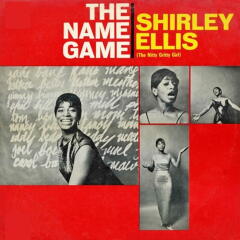
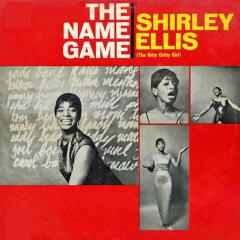
“The Name Game” was written by Shirley Ellis and Lincoln Chase. It appeared as the first song on side one of Shirley Ellis’ second studio album of the same name. Produced by Charles Calello, it was released as a single in December 1964. It went to #3 on the Billboard Hot 100 and #4 on the Billboard R&B Singles charts. The song is a rhyming game that creates variations on a person’s name. Ellis explains how to play the game through speaking and singing on the record. She said the song was based on a game she played as a child. It’s probably no coincidence that “Lincoln,” the name of the song’s co-writer, was used in the recording. Schoolkids on playgrounds everywhere in 1965 had fun and laughs using the name “Chuck” in the game, while teachers and parents were not so amused. The song has been covered by artists such as Soupy Sales, Laura Branigan, Divine, and Linda Tillery. Personnel on the record featured Shirley Ellis (vocals).
Shirley Ellis (Shirley Marie O’Garra) was an American soul music singer and songwriter. She is best known for her novelty hit records in the 1960s: “The Nitty Gritty” (1963); “The Name Game” (1964); and “The Clapping Song” (1965). “The Clapping Song” was certified Gold by the Recording Industry Association of America. Ellis started her professional career by writing two songs that The Chords recorded in the 1950s. All her solo hits were co-written with her manager, record producer and songwriting partner, Lincoln Chase. Ellis recorded for Congress, Columbia and Bell before retiring from the music industry in 1968. She released three studio albums, four compilation albums, and 14 singles. Ellis died in March 2005 in New York City at the age of 76.