Hydrogen has a well-established, if limited, role in the modern economy. It has been used in refining and ammonia production for decades, but its potential has long been touted in various areas, including decarbonizing hard-to-abate industrial processes such as steelmaking, as well as in larger roles in heavy-duty transportation and energy storage. The last few years have seen a significant push to expand hydrogen’s role — an attempt to capitalize on its versatility and lack of carbon dioxide (CO2) emissions — but a number of formidable obstacles to wider adoption remain, including price, availability and infrastructure, in addition to its tenuous political support. In today’s RBN blog, we look at the challenges that make forecasting the industry’s growth difficult and the emerging consensus around the most practical end uses for hydrogen.
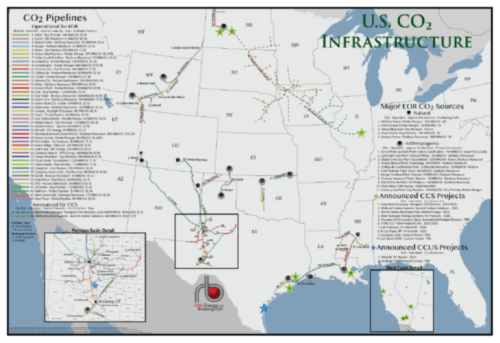
RBN Energy’s US CO₂ Infrastructure map brings together legacy Enhanced Oil Recovery (EOR) assets, as well as announced large-scale Carbon Capture and Sequestration (CCS) and Carbon Capture, Utilization and Sequestration (CCUS) projects, all in our signature concise, accurate, and intelligible style.
We’ve written extensively about hydrogen in the RBN blogosphere over the past couple of years, including the development of several regional hubs in the U.S., our series on the future of low-carbon hydrogen, the unique properties that make it particularly hard to handle, and the final rules around the 45V tax credit, which were wrapped up earlier this year (but which could soon be revoked under budget legislation now being considered by Republicans in Congress). Once a major priority of the Biden administration, which saw it as a key piece of its decarbonization efforts, the outlook for low-carbon hydrogen is far less certain under President Trump, whose administration has prioritized the development of fossil fuels and indicated it could cut or reduce funding already set aside for the hydrogen hubs.
Hydrogen gets high marks for versatility because it can be produced in several different ways from a number of different fuels — including coal, natural gas, nuclear power and renewables — and it has many potential uses. Section A to the left in Figure 1 below shows the primary alternatives to hydrogen, if any (colored rectangles in box in upper-left corner), and breaks down more than two dozen potential applications of hydrogen and the fuel’s competitiveness against other alternatives into four categories, ranked from “necessary” to “uncompetitive.” You’ll note that hydrogen, despite its versatility, is considered a very poor alternative to electricity and batteries (blue-shaded boxes) in applications like bulk power generation, residential heating and personal transportation — all areas where hydrogen was once thought to hold significant potential. Sections B, C and D of Figure 1 show how hydrogen fuel-cell applications (teal lines) changed from 2015-23 in heavy-duty trucking, passenger vehicles and residential heating, respectively.
Hydrogen Applications and Potential Alternatives
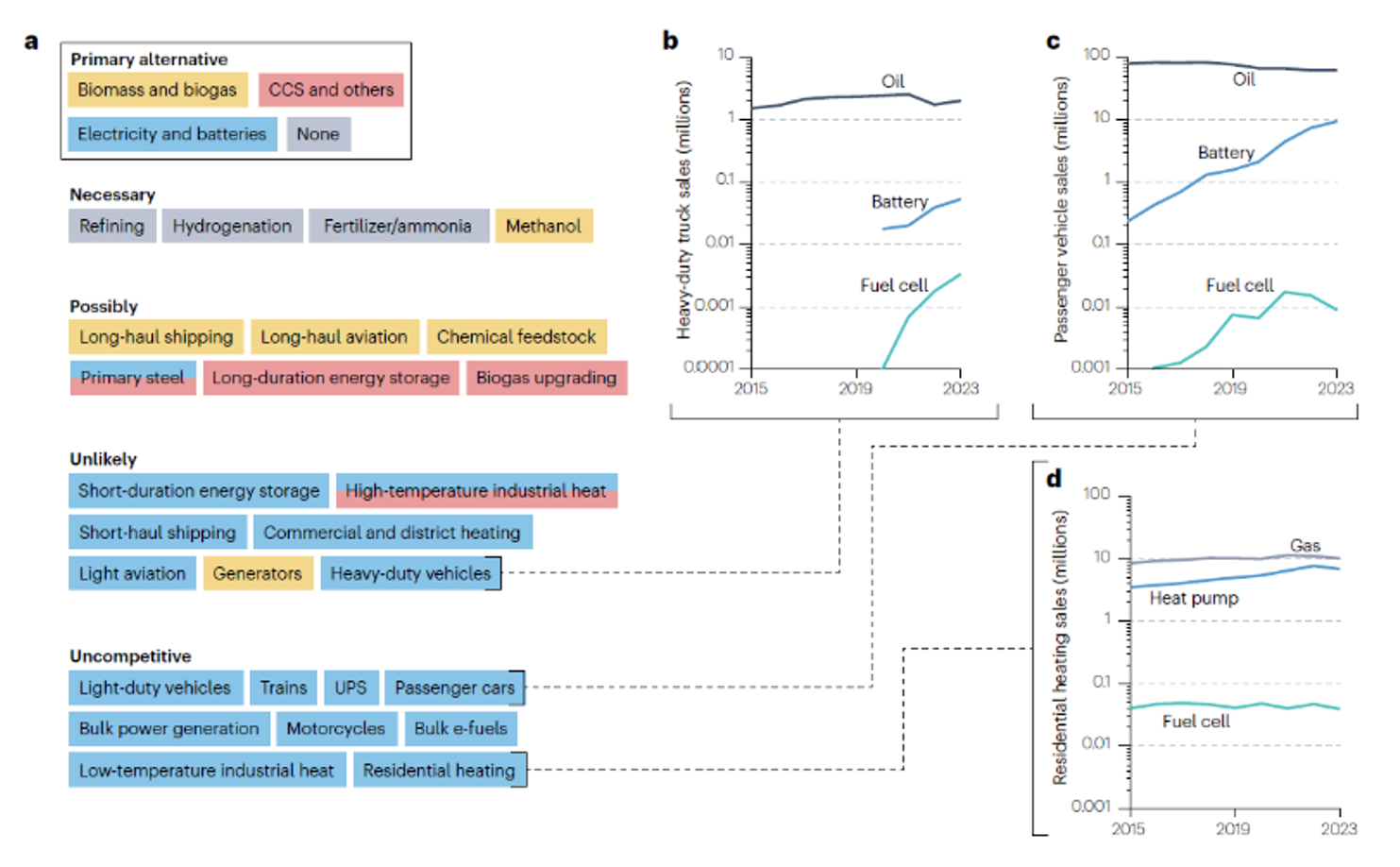
Figure 1. Hydrogen Applications and Potential Alternatives. Source: Nature
About the song
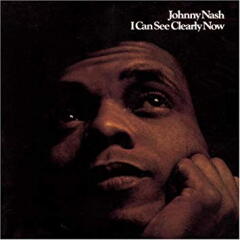
“I Can See Clearly Now” was written by Johnny Nash and appears as the first song on side two of Nash’s 12th studio album of the same name. Released as the first single from the album in June 1972, it went to #1 on the Billboard Hot 100 and Adult Contemporary Singles charts and has been certified Gold by the Recording Industry Association of America. The song has been covered by many artists, including Ray Charles, Willie Nelson, Toots & the Maytals, and Gladys Knight and the Pips. In October 1993, Jimmy Cliff released his version from the movie Cool Runnings and it went to #18 on the Billboard Hot 100 Singles chart. Personnel on the record were: Johnny Nash (lead vocals) and members of the Jamaican reggae and soca band the Fabulous Five: Freddie Campbell (bass), Cleveland Manderson (guitar), Grub Cooper (drums), Donovan Lee Palmer, Stanley Thorpe (keyboards), Harold Jr. Bailey (flute, sax), Romeo Gray (trombone), Andre Palmer (trumpet), and Andrew Cassanova (backing vocals).
The album, I Can See Clearly Now, was recorded at AIR Studios in London in 1971-72 and produced and arranged by Johnny Nash. Released in July 1972, it went to #1 on the Billboard 200 Albums chart and has been certified Gold by the RIAA. Bob Marley wrote or co-wrote four songs on the album, including the hit single, “Stir It Up.” Two singles were released from the LP.
Johnny Nash was an American reggae and pop singer, songwriter and record producer from Houston. He released his first single, “A Teenager Sings the Blues,” in 1957. He released 24 studio albums, 23 compilation albums, and 163 singles and EPs. He was the co-owner of JAD Records, which produced and released the earliest recordings of Bob Marley & the Wailing Wailers. Nash died at his home in Houston in October 2020 at the age of 80.