
Refined product prices have remained elevated this summer even as crude oil prices have fallen from their 2026 highs set just a few months ago. While several factors are contributing to the differential trends between crude and product prices, the overwhelming reason is that global supply and demand is much tighter in product markets than crude markets. In today’s RBN blog, we’ll discuss the main drivers behind the seeming disconnect between the two.
This is the latest blog offering insights from our newly released Future of Fuels report. In Waiting on the World to Change, we discussed our forecasts for lower global crude oil prices and a potential rollback in U.S. production in the next few years. More recently, Go With The Flow took a look at some of the key developments — including the Strait of Hormuz closure, U.S. intervention in Venezuela, and plans for a new wave of refined-product pipelines into the West Coast — that have already shaken up the market in a big way, with more changes likely to come.
(Crude oil and refined products are major components of our upcoming School of Energy: Fundamentals, a two-day conference designed to help professionals build their understanding of energy markets, from production and infrastructure to exports, pricing and end-use demand. The conference is September 9-10 in Houston and the early-bird rate, a $500 discount, expires August 12. Click here to learn more.)

The replay of our Fall 2026 School of Energy (September 9 & 10, Houston) is now available online!
Learn from RBN experts, participate in hands-on Excel modeling, connect with industry peers, and gain a stronger understanding of today's interconnected energy markets.
As noted in the introduction, the biggest factor keeping product prices elevated this year has been the emergence of a refined product shortage. The most important drivers have been the disruption of normal vessel traffic through the Strait of Hormuz, damage inflicted on refineries in the Persian Gulf region, and the similar severe degradation of Russian refining operations by accelerated and more effective Ukrainian drone strikes. Contributing to these global product shortages are Chinese policies limiting product exports, a lack of new refining capacity coming online, and the impacts of a number of permanent refinery shutdowns over the past 18 months. Within the U.S. in particular, regulatory policies that have pushed Renewable Identification Number (RIN) prices to record levels have added to the high product prices. We’ll look at each of these drivers in turn, beginning with the Strait of Hormuz, and also provide some takes on longer-term refining prospects.
The closure of the Strait of Hormuz has had a major impact on markets by removing significant volumes of exportable barrels from an already tight market. As shown in Figure 1 below, refined product exports from Persian Gulf countries (excluding Iran) collapsed from more than 3.3 MMb/d in 2025 to just over 1 MMb/d by April, a loss of more than 2 MMb/d. The decline is concentrated in clean products such as diesel (green bar segments), jet fuel (red bar segments) and gasoline (blue bar segments), which have tightened global supply and kept margins elevated. If operations remain severely limited, the squeeze will continue to be felt most acutely in these products. The disruption is not solely the result of shipping constraints. Iranian strikes have also inflicted significant damage on several of the region’s largest refineries, limiting their ability to produce exportable fuels even as shipping routes gradually reopen.
About the song
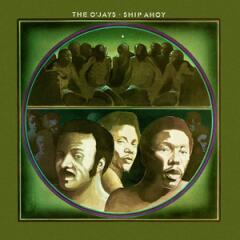
“For The Love of Money” was written by Kenneth Gamble, Leon Huff and Anthony Jackson, and appears as the first song on side two of The O’Jays’ seventh studio album, Ship Ahoy. The funky R&B song’s title comes from a Bible verse stating that the love of money is the root of all evil, and it describes what people will do out of greed and materialism. The song is propelled by Anthony Jackson’s funky bass line, giving it a dance groove that was attractive to the emerging disco scene. Released as a single in April 1974, it went to #3 on the Billboard R&B and #9 on the Billboard Hot 100 Singles charts. It has been certified Gold by the Recording Industry Association of America. In 2016, the song was inducted into the Grammy Hall of Fame. Personnel on the record were: Eddie Levert (lead vocals), William Powell, Walter Williams (backing vocals), Anthony Jackson (bass), Leon Isley Brooks (keyboards), Norman Harris (guitar), Earl Young (drums), and MFSB (orchestrations).
Ship Ahoy was recorded in 1973 at Sigma Sound in Philadelphia and produced by Gamble and Huff. The album was a blend of love songs and socially conscious numbers. Released in November 1973, it went to #1 on the Billboard R&B and #11 on the Billboard 200 Albums charts. It has been certified Platinum by the RIAA. Two singles were released from the LP.
The O’Jays are an American R&B vocal group formed in Canton, OH, in 1958 by Eddie Levert, Walter Williams, William Powell, Bobby Massey and Bill Isles. They have released 29 studio albums, a live album, 20 compilation albums, and 92 singles and have sold more than 100 million records worldwide. They are members of the Rock and Roll Hall of Fame, Vocal Group Hall of Fame, and Rhythm and Blues Music Hall of Fame. Six members have passed through the group since its inception. The band still performs with original members Eddie Levert and Walter Williams, joined by Eric Nolan Grant. They are currently on tour at various venues in the U.S.
"About the Song" -- written by Mickey McMahan , RBN Director of Musicology