Europe’s push to reduce and eventually eliminate its reliance on Russia for natural gas has pushed LNG imports back into the forefront of Europe’s long-term energy plan. This year, with European natural gas prices trading above Asian prices, the continent has been able to attract an incredible amount of LNG, with imports at record levels this winter and sitting just shy of those records this spring. That helped mitigate some of the risks to energy reliability from Russian aggression, at least until the Freeport LNG outage and the latest Russian gas curtailments, but import capacity in Europe was maxed out last winter and more LNG imports can’t happen in the long term without more import capacity. Most of the LNG terminals in Europe are operating at full capacity or don’t have enough market access on the other side of the pipe to take more. While plans to build new import terminals are underway, those take time, and lots of it, so Europe is also pursuing a more immediate option, floating storage and regasification units (FSRUs) — basically, an LNG import terminal on a ship. In today’s RBN blog, we take a look at all things FSRU, from what and where they are to the recent deals with European offtakers.

Visualize the infrastructure behind U.S. NGL movement.
The U.S. NGLs Map provides a comprehensive view of the transport, processing, and export networks moving NGLs across the U.S.
FSRUs are large vessels that can be moored or anchored offshore, quayside or near-shore, generally close to a market access point. Some are installed as permanent fixtures, while some are moored on a short- or medium-term basis, even seasonally in a few cases. FSRUs are inherently flexible and can move from one market to another when needed, and when not used for regasification, many of them act as LNG tankers, transporting cargoes. For those being used for regasification, an LNG tanker docks alongside the FSRU and offloads its cargo using unloading arms or cryogenic hoses. The LNG is then stored in tanks on the FSRU and vaporized into pipeline-grade natural gas as needed, using the same technology as a traditional import terminal. The gas is offloaded via a subsea buoy or offloading arm with existing pipeline infrastructure as the end destination. Connecting to existing infrastructure does require some setup off or onshore, but while a traditional LNG import terminal can take two to three years to build, the connections needed to receive gas from an FSRU take just months. Given that lead time, it’s easy to see why this is an attractive option for European utilities right now, a subject we touched on recently in Lublin on the Edge. Both FSRUs and traditional LNG import terminals require permitting, and that adds additional time to the startup, but European governments are interested in securing more LNG right now and seem willing to fast-track projects.
FSRUs can also offload LNG, sometimes to smaller vessels to get LNG into difficult-to-navigate ports that larger ships can’t pass through, or to refuel LNG-powered ships. In some cases in Asia, FSRUs have been paired with floating power generation plants and serve those directly. FSRUs come in different sizes, but storage capacity ranges from 126,000 cubic meters (cm) to 173,400 cm. For reference, the U.S. export terminal Corpus Christi LNG has three 160,000 cm storage tanks. Gas sendout varies from around 200 million standard cubic feet per day (MMscf/d) to 1,000 MMscf/d.
About the song
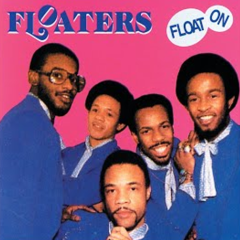
“Float On” was written by James Mitchell, Marvin Willis and Arnold Ingram. It appears as the first song on side one of The Floaters’ debut album, Floaters. Released as a single in June 1977, the song went to #1 on the Billboard Hot R&B Songs and #2 on the Billboard Hot 100 Singles charts. In the song each singer states his astrological sign and name before singing the song with the other members of the quartet. There have been a few covers and parodies of the song since its initial release. Personnel on the record were: Larry Cunningham, Charles Clark, Ralph Mitchell (tenor vocals), Paul Mitchell (baritone vocal). Musicians on the record were: Kenny Goodman, Dennis Coffey (guitars), Buster Marbury (drums), Guy Hutson (bass), Brimstone Ingram (piano), Lorenzo Brown (congas), Jack Brokensha (vibraphone, bells), Marvin Willis, Larry Nozero, Gary Schunk (horns), and Brandye, James Mitchell (backing vocals).
The album, Floaters, was recorded during early 1977 at PAC 3 and Sound Studio in Detroit. Produced by James Mitchell and Marvin Willis, it was released in May 1977. The album went to #1 on the Billboard Top Soul and #10 on the Billboard 200 Albums charts and has been certified Platinum by the Recording Industry Association of America. Two singles were released from the LP.
The Floaters were an American R&B vocal group formed in Detroit in 1976 by former Detroit Emeralds lead vocalist James Mitchell. He recruited his brother, Paul Mitchell, Larry Cunningham, Charles Clark, and the unrelated Ralph Mitchell to form The Floaters. James Mitchell became the group’s main songwriter and record producer. They released four studio albums, one compilation album, and eight singles before breaking up in 1982. Larry Cunningham died in January 2019 and Paul Mitchell died in December 2021.