The Fiscal Responsibility Act (FRA) — whose primary purpose was to increase the federal government’s debt ceiling — addressed some immediate priorities surrounding federal permitting for energy and infrastructure projects and sought to expedite completion of the long-delayed Mountain Valley Pipeline (MVP), but it did more than that. Its passage provided a ray of hope for those eager for a renewed focus on permitting issues while also serving to underscore all the progress that is still needed. In today’s RBN blog, we look at the other key sections of the FRA, where Congress could look next to address permitting reform, and why additional progress might be hard to achieve.
In the first blog of this series, we looked at the permitting issues that have kept MVP in regulatory limbo and how the FRA is designed to overcome them and bring the natural gas pipeline project back to life. We also touched on some of the other parts of the legislation, including changes to the review process for energy projects under the National Environmental Policy Act (NEPA). As we outlined in our Don’t Pass Me By series, permitting can be a complicated, drawn-out process that can drag on for years and prevent some projects from ever becoming a reality. Much of that blog was focused on the fate of MVP, which has been stymied for years. (For more on MVP, see our weekly NATGAS Appalachia report.) As an example of how long some projects can take, we also looked at the TransWest Express Transmission Project, which will move 3,000 megawatts (MW) of Wyoming’s wind-generated electricity to utilities in more densely populated regions of the Desert Southwest. Even though it’s a straightforward idea, the project didn’t receive final federal approval until April — 18 years after it was first proposed — and serves as a prime example of how long it can take to walk the road to final approval. New transmission lines like TransWest Express are critically important for the development of wind- and solar-powered generation, which are increasingly running into permitting issues at the local level.
While the FRA features a variety of budget-control elements, allows the U.S. to avoid hitting the debt ceiling until 2025, and seeks to expedite MVP’s completion, it also reforms the way NEPA interacts with agency actions to approve energy projects. (See Figure 1 below for an illustration of how a project moves through the NEPA process.) Among other things, the FRA includes several changes that have been mentioned in any number of reform proposals in the past.
About the song
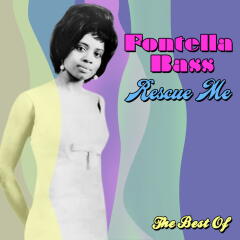
“Rescue Me” was written by Ray Miner, Carl Smith and Fontella Bass. The song was recorded in three takes at Chess Studio in Chicago, with Billy Davis producing. Released as a single in September 1965, the song went to #1 on the Billboard Rhythm and Blues chart, and #4 on the Billboard Hot 100. It would become Fontella Bass’s biggest hit and one of the best-selling singles for Chess Records. Personnel on the record were: Fontella Bass (lead vocals), Minnie Ripperton (backing vocals), Louis Satterfield (bass), Maurice White (drums — later of Earth Wind and Fire), Pete Cosey (guitar), Gerald Sims (guitar), Leonard Caston (piano), Sonny Thompson (organ) and Charles Stepney (percussion). “Rescue Me” would be included on Bass’s first studio album, The New Look, and would go on to be covered by many artists, including Linda Ronstadt, Diane Ross, Cher, Bryan Ferry, Roy Buchanan and Gayle McCormick.
The New Look LP was released in early 1966 and went to #93 on the Billboard Top 200 Albums chart. It was produced by Billy Miller and recorded at Chess/Ter-Mar Studios in Chicago in November 1965.
Fontella Bass was a soul singer from St. Louis. Her mother, Martha Bass, was a member of the Clara Ward Singers, so Fontella was around music from an early age. She started her professional career as a pianist and singer with bluesman Little Milton’s band. Her recording career started in the early 1960s with her singing on singles produced by Ike Turner for his Bobbin, Prann, and Sonja labels. She signed with Chess Records in 1965. Bass released eight studio albums and 10 singles in her career. She passed away in St. Louis in 2012 at the age of 72.