The recent drama related to the U.S. debt ceiling may have illustrated the chaos that polarization has brought to Washington, but it showed one other thing as well: there’s an appetite for federal permitting reform from Democrats and Republicans alike. The Fiscal Responsibility Act (FRA), signed into law Saturday by President Biden, addressed some immediate priorities — including changes to the review process under the National Environmental Policy Act (NEPA) — but its mandate to expedite completion of the long-delayed Mountain Valley Pipeline (MVP) caught many of the project’s supporters and critics by surprise. In today’s RBN blog, we look at the permitting issues that have kept MVP in regulatory limbo and how the FRA is designed to overcome them and bring the project back to life.
Concerns about energy infrastructure permitting have pervaded public policy for at least a decade, on both sides of the political aisle. On one side, concern over things like new power transmission for renewable energy sources has been dominant, while on the other side concern over new natural gas pipeline infrastructure like MVP has been center stage. (For more, see our Don’t Pass Me By series.) The whole debate over permitting reached a fever pitch as both Congress and the Biden administration became deeply concerned over reliability and national security in our energy mix following events such as the Winter Storm Uri Texas blackout.

Join industry leaders in Calgary on October 29 for market insights, technical presentations, Duvernay inventory analysis, an expert panel, and networking focused on the next chapter of Canadian energy.
We have chronicled MVP’s long, long journey in the years since it was proposed (most recently in Will It Go In Circles). It received its certificate from the Federal Energy Regulatory Commission (FERC) in 2017 and construction began in early 2018. But as the project wandered through the permitting jungle (even after a FERC certificate is issued, a project has to get permits at the state level, primarily water permits from the U.S. Army Corps of Engineers at the federal level, but with a state ability to obstruct them), we saw permit by permit issued, only to be yanked away by a U.S. Court of Appeals reversal after being challenged by environmental groups (which is somewhat ironic given the net emissions benefits of the pipeline, as we discussed in Ghosts of Pipelines Past and Future). But just as MVP was once again testing its sponsors’ resolve by having yet another permit reversed, along came the debt-limit crisis. As anyone with access to any news at all knows, we went through the periodic mud fight of trying to integrate U.S. budgetary policy with the basic act of preventing a default on debt we have already incurred. If we hadn’t been through this process before, it would have been pretty scary — in fact, this time it was pretty scary, given the polarization in our government at the moment.
About the song
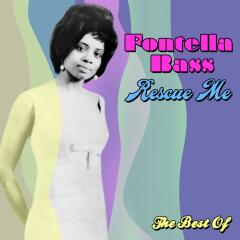
“Rescue Me” was written by Ray Miner, Carl Smith and Fontella Bass. The song was recorded in three takes at Chess Studio in Chicago, with Billy Davis producing. Released as a single in September 1965, the song went to #1 on the Billboard Rhythm and Blues chart, and #4 on the Billboard Hot 100. It would become Fontella Bass’s biggest hit and one of the best-selling singles for Chess Records. Personnel on the record were: Fontella Bass (lead vocals), Minnie Ripperton (backing vocals), Louis Satterfield (bass), Maurice White (drums — later of Earth Wind and Fire), Pete Cosey (guitar), Gerald Sims (guitar), Leonard Caston (piano), Sonny Thompson (organ) and Charles Stepney (percussion). “Rescue Me” would be included on Bass’s first studio album, The New Look, and would go on to be covered by many artists, including Linda Ronstadt, Diane Ross, Cher, Bryan Ferry, Roy Buchanan and Gayle McCormick.
The New Look LP was released in early 1966 and went to #93 on the Billboard Top 200 Albums chart. It was produced by Billy Miller and recorded at Chess/Ter-Mar Studios in Chicago in November 1965.
Fontella Bass was a soul singer from St. Louis. Her mother, Martha Bass, was a member of the Clara Ward Singers, so Fontella was around music from an early age. She started her professional career as a pianist and singer with bluesman Little Milton’s band. Her recording career started in the early 1960s with her singing on singles produced by Ike Turner for his Bobbin, Prann, and Sonja labels. She signed with Chess Records in 1965. Bass released eight studio albums and 10 singles in her career. She passed away in St. Louis in 2012 at the age of 72.