


Much like the “crude-by-rail” phenomenon, the burgeoning interest in transporting crude oil by tanker or tanker barge to U.S. refineries represents an innovative answer to a simple question: What is the best, most cost-effective way to move growing domestic and Canadian oil production from the wellhead to refineries? Using waterborne transportation to move crude to market requires a comprehensive understanding of the Merchant Marine Act of 1920—better known as the Jones Act—which regulates maritime commerce in U.S. waters and between U.S. ports. RBN’s latest Drill-Down Report provides a thorough review of the law and its impact on crude oil markets. In today’s blog we examine the highlights of – Rock the Boat, Don’t Rock the Boat— Impact of the Jones Act on U.S. Crude Oil Markets.
The report, which is available exclusively to RBN Backstage Pass subscribers, builds upon a series of blogs we have written in the past two years about the Jones Act itself and about increasing use of U.S.-flagged tankers and barges to move crude along inland waterways and along the nation’s three coasts for offloading at refineries. Over the past three years crude-by-water has emerged as an important transportation alternative for producers hampered by pipeline bottlenecks and enticed by the higher price they can receive if their products are deliverable to certain locations. The use of Jones Act vessels (which under that law must be built in the U.S., and be owned and crewed by U.S. citizens) often occurs in tandem with railroads—another pipeline alternative, which have been instrumental in delivering Bakken, Niobrara, and other crude to market.
The requirements the Jones Act places on ships operating between U.S. ports add significant costs, including those that are associated with less-favorable economies of scale at U.S. shipyards, a lower level of competition among U.S. ship builders, and higher wages and insurance costs for Jones Act workers. Those higher costs have reduced the number of ships built for “coastwise” and inland movement of crude oil, and the relatively small size of the U.S.-flagged fleet and increased competition for Jones Act vessels has resulted in sharply higher charter costs and shipping fees. And charter costs and shipping fees, of course, are key factors in determining whether transporting crude on a Jones Act vessel makes economic sense in a particular situation.
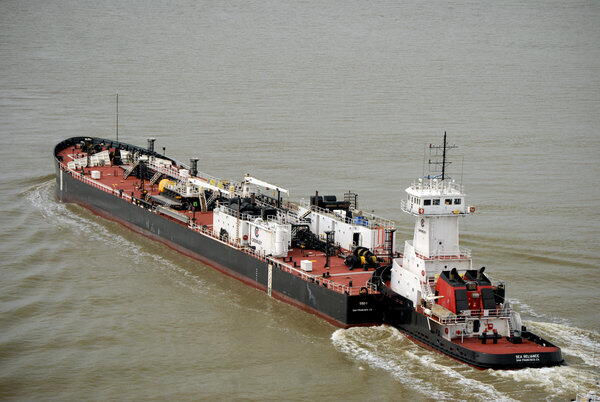
Source: Crowley Maritime





Comments
Do not Jones Act vessels plying coastal trade have to also be constructed of steel made in the U.S. as well as being built in a U.S. shipyard and crude by U.S. Citizens (or legal immigrants)?
"Do not Jones Act vessels plying coastal trade have to also be constructed of steel made in the U.S. as well as being built in a U.S. shipyard and crude by U.S. Citizens (or legal immigrants)?
Yes for U.S ships, U.S manning.
However, JA has no Steel country of origin bill "or a steel molecular" basis.
Dear Housley,
The requirements the Jones Act places on ships operating between U.S. ports add significant costs, including those that are associated with less-favorable economies of scale at U.S. shipyards, a lower level of competition among U.S. ship builders, and higher wages and insurance costs for Jones Act workers. Those higher costs have reduced the number of ships built for “coastwise” and inland movement of crude oil.
I will say that is the general perception about the JA, but I'll will point out that the perception of in Energy&Trade and Shipping is somewhat different. Segments of the U.S Flag are competitive in the inter-coastal trade.
Housley, you also have mentionned Kirby Corp, they barge products in Canada too. If JA ships have less-favorable economics, how do explain that U.S Flags barges have regular Canadian Ports of Call ? Simon
There is a shortage in crude barge/tanker not necessarily product tanker/barge capacity. K-sea shipping (acquired by kirby) was primarily a product shipper who got into trouble once the coastal product trade died in 08-09. Also, smaller barges are not economical in GC/EC crude transportation trade (producer to refiner), barges typically supported refiner to wholesalers distribution.
Basically, there is a shortage of high tonnage crude carrying Jones Act vessels.