Predictions about what the energy market and the global economy might look like in the future can feel a bit like stargazing — the closer something is, the clearer it appears. But if something is really far away, even the Hubble Space Telescope won’t bring it precisely into view, especially if it’s a still-developing solar system or a distant planet. That’s pretty much where things stand with bioethylene, which could become a shooting star but might also end up as a big cloud of dust. In today’s RBN blog, we discuss the developing market for bioethylene: where it’s being made, what changes might make it more economical to produce in the U.S., and its target markets.
In our first blog on the subject back in November, which looked at how bioethylene fit into the energy transition discussion, we started with the basics. Ethylene is the cornerstone building block of the petrochemical industry, the precursor to everything from food packaging to construction materials, along with detergents, lubricants, PVC pipes, antifreeze, and all things polyethylene. The strong global demand for ethylene, along with efforts to meet environmental, social and governance (ESG) goals, has led some to look at bioethylene as a greener and potentially economical alternative.

In contrast to traditional ethylene, which is produced via steam crackers using fractionated NGLs as their primary feedstock (ethane is used about 80% of the time in the U.S.), bioethylene can be derived from ethanol and represents a chemically identical alternative to ethylene. Proponents say its benefits include lower greenhouse gas emissions (GHGs), a reduced dependence on fossil fuels, and fewer impurities. The feedstock for bioethylene, ethanol, can be produced from starches (corn, soy, wheat), sugars (sugarcane, sugar beets, sorghum), and biomass (wood, grass).
About the song
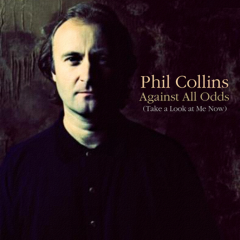
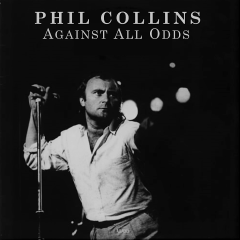
“Against All Odds (Take a Look at Me Now)” was written and recorded by Phil Collins as the title song for the 1984 movie Against All Odds. Produced by Arif Mardin and released in February 1984, the single went to #1 on the Billboard Hot 100 Singles chart, #1 on the Mainstream Rock Tracks chart, and #2 on the Adult Contemporary list. Originally an unreleased song of Collins’s titled “How Can You Just Sit There,” written about the breakup between Collins and his first wife, the song was rewritten to reflect what the film was portraying. In addition to the single, the song appears on the 1984 soundtrack album, Against All Odds, and also on Collins’s 1998 Hits album and Love Songs: A Compilation, released in 2004. Personnel on the recording were: Phil Collins (vocals, drums), Rob Mounsey (piano, keyboards), and an orchestra conducted by Arif Mardin. The song won a Grammy Award for Best Pop Vocal Performance by a Male in 1985.
Phil Collins is an English singer, songwriter, drummer, multi-instrumentalist, record producer and actor. He started in show business as a child actor, and his professional musical career began as the drummer, and later lead vocalist for the British rock band Genesis. He recorded nine studio and two live albums with Genesis. Since going solo in 1979, he has released eight studio albums, one live album, and three compilation LPs, along with 45 singles. He has sold more than 150 million records worldwide. Collins has won eight Grammy Awards, six Ivor Novello Awards, four Billboard Music Awards, three American Music Awards, two Golden Globes, one MTV Video Music Award, and one Academy Award. He is a member of the Songwriters Hall of Fame, was inducted into the Rock and Roll Hall of Fame as a member of Genesis, and has a star on the Hollywood Walk of Fame. In March 2022, at the last date of Genesis’s The Last Domino? Tour, at O2 Arena in London, Collins announced that “It’s the last show for Genesis.” A five-LP Box set was released in September entitled Both Sides (All the Sides).