For a couple of years now, Buckeye Partners has been working to advance a controversial plan to reverse the western half of its Laurel refined-products pipeline in Pennsylvania to allow motor gasoline, diesel and jet fuel to flow east from Midwest refineries into the central part of the Keystone State. Some East Coast refineries that have relied on Laurel for 60 years to pipe their refined products as far west as Pittsburgh have been fighting Buckeye’s plan tooth and nail, arguing that it would hurt their businesses and hurt competition in western Pennsylvania gas and diesel markets — and refined-product retailers in the Pittsburgh area agree. Now, after a state administrative law judge’s recommendation that Pennsylvania regulators reject Buckeye’s plan, Buckeye has proposed an alternative: making the western half of the Laurel Pipeline bi-directional, which would allow both eastbound and westbound flows. Today, we consider the latest plan for an important refined-products pipe and how it may affect Mid-Atlantic and Midwest refineries.
Like Mick Jagger, Keith Richards and the three other members of the Rolling Stones — the band behind the song in today’s blog title — each of the U.S.’s five Petroleum Administration for Defense Districts (PADDs) has its own character, personality and history. While People magazine and, yes, Rolling Stone magazine closely track the ups and downs of Sir Mick and Mr. Richards (who famously turned down knighthood), the RBN blogosphere has served as a regular chronicler of the refining sector in each and every PADD. PADD 3 (Gulf Coast) is the biggest — with 9.7 MMb/d of refining capacity, or just over half of the U.S. total — and still growing (see Beaumont-ian Rhapsody), PADD 4 (the Rockies) benefits from lofty crack spreads (see Gonna Fly Now) and PADD 5 (West Coast) is quirky as heck (especially California; see Beast of Burden), but we’ve blogged more about PADD 1 (East Coast) and PADD 2 (Midwest) than any of those — there’s been a lot to say about them both.
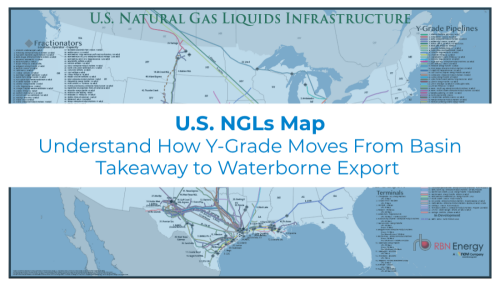
Visualize the infrastructure behind U.S. NGL movement.
The U.S. NGLs Map provides a comprehensive view of the transport, processing, and export networks moving NGLs across the U.S.
A while back, in Back to Red, we recounted that East Coast refineries can supply only a small portion of PADD 1’s total demand for refined products, and that for years they relied almost exclusively on waterborne imported crude for feedstock and therefore had little or no competitive advantage over their European refined-product rivals. More recently, in Philadelphia Freedom, we discussed the rise and fall of Philadelphia Energy Solutions (PES), owner of the East Coast’s largest refinery (the 335-Mb/d Philadelphia Refining Complex), which at first benefitted from the Shale Revolution by railing in steeply discounted light sweet crude from the Bakken but later lost that leg-up when pipeline constraints from the Bakken to the Gulf Coast eased and the spread between Bakken and Brent prices narrowed — in essence, leaving PES and a number of other PADD 1 refiners back in the same leaky boat they were rowing pre-Shale.
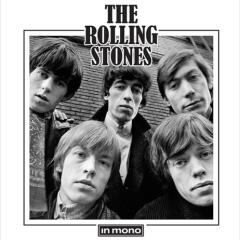
About the song
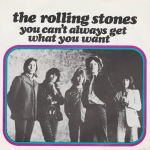
“You Can't Always Get What You Want” was written by Mick Jagger and Keith Richards and appears as the fourth song on side two of The Rolling Stones’ eighth studio album, Let It Bleed. It was recorded in November 1968 at Olympic Sound Studios in London as part of the sessions for The Stones’ Beggars Banquet album but was held for release until the 1969 Let It Bleed album. It’s unusual in that it features producer Jimmy Miller on drums, not Stones drummer Charlie Watts. Al Kooper played keyboards on it and the French horn intro. The London Bach Choir (who asked that their name be removed from the album credits to no avail) was brought in to supplement the choruses at the end. A short version was released as the B-Side of the “Honky Tonk Women” single in July 1969. It ended up being re-released as an A-Side single in 1973 and going to #42 on the Billboard Hot 100 Singles chart. The song remains one of the most popular songs at Stones’ live concerts, with audiences singing along with the refrains. Personnel on the record were: Mick Jagger (lead vocals), Keith Richards (guitars), Bill Wyman (bass), Al Kooper (piano, organ, French horn), Jimmy Miller (drums), Rocky Dijon (congas, maracas, tambourine), Madeline Bell, Nanette Workman, Doris Troy (backing vocals), and the London Bach Choir, arranged by Jack Nitzsche (choral vocals).
Let It Bleed was recorded between November 1968 and November 1969 at Olympic Sound Studios in London and Elektra and Sunset Sound in Hollywood with Jimmy Miller producing. Released in November 1969, it went to #3 on the Billboard 200 Albums chart and has been certified 2X Platinum by the Recording Industry Association of America. Two singles were released from the LP.
The Rolling Stones are an English rock band formed in London in 1962. Mick Jagger and Keith Richards are the only remaining members of the original group. Past members include Brian Jones (died in July 1969), Charlie Watts (died in August 2021), Ian Stewart, Mick Taylor and Bill Wyman. Ronnie Wood joined the band as a permanent official member in 1975. Steve Jordan has been drumming for the group since Watts’s passing. The Rolling Stones have been active for over six decades and have sold over 250 million records worldwide. They have released 31 studio albums, 39 live albums, 25 compilation albums, three EPs and 122 singles and have received three Grammy Awards and a Grammy Lifetime Achievement Award. The Stones are members of the Rock and Roll Hall of Fame and the U.K. Music Hall of Fame. Their latest album, Hackney Diamonds, was released in October 2023. They continue to record and tour.