For a few years now, Buckeye Partners’ plan to revise the current east-to-west refined products flow on its Laurel Pipeline across Pennsylvania has pitted Midwest refiners against their Philadelphia-area brethren — and gasoline and diesel marketers in western Pennsylvania. Each side has good arguments. Midwest refiners note that westbound volumes on Laurel have been declining through the 2010s, and assert that making the western part of the pipeline bidirectional would result in higher utilization of the line and enhance competition in central Pennsylvania, Maryland and eastern West Virginia. Pittsburgh-area marketers counter with the view that allowing refined products to flow east on a portion of Laurel would hurt competition in Pirates/Steelers/Penguins Country, while Philly refiners — their ranks now thinned by the planned closure of the fire-damaged Philadelphia Energy Solutions (PES) facility — say Buckeye’s plan would further threaten their economic viability. Amid all this, might there be a “perfect-world” solution? Today, we provide an update on this still-in-limbo project and discuss a few possible paths forward.
The repurposing, reversal and/or expansion of existing pipelines has been a frequent topic in the RBN blogosphere. In fact, a few projects of this sort have been a subject of a number of blogs, including our focus today. The contentiousness behind Buckeye’s Laurel Pipeline plan is really a battle between refineries in Petroleum Administration for Defense District (PADD) 1 (the East Coast) and PADD 2 (the Midwest). As we said in Back to Red, East Coast refineries, with a paltry 1.2 MMb/d of capacity, can supply only a small portion of PADD 1’s total demand for refined products. Also, for years they relied almost exclusively on waterborne imported crude for feedstock and therefore had little or no competitive advantage over their European refined products rivals. Then, for a few years in the mid-2010s, PADD 1 refineries benefited from the U.S. Shale Revolution by railing in steeply discounted light sweet crude from the Bakken. But they soon lost that leg-up when pipeline constraints from the Bakken to the Gulf Coast eased and the spread between Bakken and Brent prices narrowed — in essence, leaving many East Coast refiners back in the same leaky boat they were sailing pre-shale.

To truly understand Cushing — what it does and how it works — you need to know the hub’s assets and how they fit together. RBN’s Cushing Crude Oil Playbook provides the first one-stop, comprehensive guide to the hub’s assets.
By contrast, it’s been a generally smooth ride this decade for PADD 2 refiners, which as a group has 3.9 MMb/d of refining capacity and produces considerably more gasoline and diesel than the Midwest demands. As we said in Born to Run Heavy, a number of these refineries have undergone major upgrades over the past few years to increase their coking capacity so they can process steeply discounted heavy crudes from Western Canada. (Most of the new coking capacity that came online was added to refineries in PADD 2’s Eastern District, which includes Indiana, Illinois, Kentucky, Tennessee, Michigan and Ohio.) That feedstock price advantage led many of the refineries west of Pittsburgh to believe they could out-compete their East Coast counterparts by providing cheaper refined products in their own backyard.
About the song
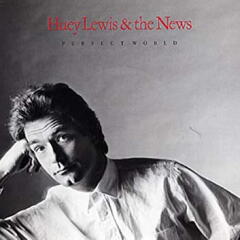
"Perfect World" was written by Alex Call, a former bandmate of Huey Lewis and keyboardist Sean Hopper when they both were in a band together called Clover in the 1970s. Call also wrote the hit songs “867-5309/Jenny” for Tommy Tutone, and “Little Too Late” for Pat Benatar. "Perfect World" was the first single from the fifth studio album from Huey Lewis and the News, Small World. The video of the song received heavy airplay on MTV, and the single went to #2 on the Billboard Adult Contemporary chart, and #3 on the Hot 100 chart. It was the last Top 10 single for Huey Lewis and the News. Personnel on the recording were: Huey Lewis (vocals, harmonica), Mario Cipollina (bass), Johnny Colla (guitar, saxophone, backing vocals), Chris Hayes (guitar, backing vocals), Sean Hopper (keyboards, backing vocals) and Bill Gibson (drums, percussion, backing vocals).
Small World was produced by Huey Lewis and the News, and was released in June 1988. It went to #11 on the Billboard Top 200 Albums chart, and was certified Platinum by the Recording Industry Association of America.
Huey Lewis and the News is an American rock band formed in San Francisco in 1979. Band members Lewis and Sean Hopper have played together since 1972, starting with Clover –– a band that, by the way, moved to London in the mid-‘70s to be part of the popular UK pub rock scene that would go on to influence punk rock in Great Britain. Clover is the band playing on Elvis Costello's debut album, My Aim is True. They also were the opening band on Thin Lizzy's 1976 Johnny the Fox tour.
Huey Lewis and the News has released nine studio albums and has sold more than 30 million records worldwide. The group have won one Grammy and one Brit Award. The band had still been touring until 2018, when Huey Lewis was diagnosed with Meniere's disease. The disease causes vertigo problems and hearing loss, making it impossible for Lewis to sing and perform at this time.