For a few years now, refineries in the eastern part of PADD 2 — feedstock-advantaged and capable of producing far more refined products than their regional market can consume — have been eyeing the wholesale and retail markets to their east in PADD 1. Their thinking has been, if they could just pipe more of their gasoline and diesel into Pennsylvania, upstate New York, and adjoining areas, they could sell the transportation fuels at a premium and take market share. Well, things are looking up for PADD 2 refineries pursuing this strategy. Not only has new pipeline access to the east been opening up, but PADD 1’s refining capacity has been shrinking fast, leaving East Coast refineries less able than ever to meet in-region demand. Today, we discuss recent developments in the battle for refined-product market share in the Mid-Atlantic region.
The refining sectors of both PADD 1 (East Coast) and PADD 2 (Midwest) have been frequent topics in the RBN blogosphere. As we said in Back to Red, East Coast refineries — for many years dependent on waterborne imported crude oil — in the mid-2010s benefited briefly from the U.S. Shale Revolution by railing in steeply discounted light sweet crude from the Bakken. But they soon lost that leg-up when pipeline constraints from the Bakken to the Gulf Coast eased and the spread between Bakken and Brent prices narrowed, leaving many East Coast refiners back in the same leaky boat they were sailing pre-shale, relying largely on shipped-in crude oil from overseas and, to a lesser extent, U.S.-sourced oil barged in from Corpus Christi and other Gulf Coast ports. Another important thing to note about PADD 1 and refined products: the combined capacity of East Coast refineries — almost all of them in the Philadelphia area or near New York City — has been shrinking, and is now well under 1 MMb/d, which means that the region needs to pipe in refined products from the Gulf Coast (on the Colonial and Plantation pipelines) or import it to keep pace with regional demand.

By contrast, the PADD 2 refining sector is far larger and in better shape: the Midwest has 4.2 MMb/d of refining capacity and produces considerably more gasoline and diesel than the region demands. As we said in Born to Run Heavy, a number of PADD 2 refineries have undergone major upgrades over the past few years to increase their coking capacity so they can process steeply discounted heavy crudes from Western Canada. (Most of the new coking capacity that came online was added to refineries in PADD 2’s Eastern District, which includes Indiana, Illinois, Kentucky, Tennessee, Michigan, and Ohio.) That feedstock price advantage led many of these refineries to believe they could sell their gasoline and diesel at a premium in PADD 1, where refined-product prices are generally much higher, if only they could cost-effectively move more product farther east.
About the song
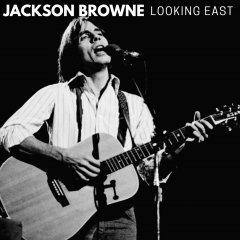
"Looking East" was written by Jackson Browne, Luis Conte, Mark Goldenberg, Mauricio Lewak, Kevin McCormick, Scott Thurston, and Jeff Young. It appears as the first track on Jackson Browne's 11th studio album of the same name. The LP featured Browne’s return to more political and social themes, with most of the songs co-authored with his backing band. Personnel on the record were: Jackson Browne (lead vocals); Waddy Wachtel, Mark Goldenberg, Scott Thurston (electric guitar); Kevin McCormick (acoustic guitar, bass), Mauricio Lewak (drums), Benmont Tench (organ), Luis Conte (percussion), and Vonda Shepard (backing vocals).
The album, Looking East, was recorded in 1995 at Groove Masters in Santa Monica, CA, with Kevin McCormick and Scott Thurston producing. Released in February 1996, the album went to #36 on the Billboard Top 200 Albums chart.
Jackson Browne is an American singer, songwriter, and musician whose career came into prominence in the 1970s. He has released 14 studio albums, two live albums, two compilation albums, and 44 singles. Browne is a member of the Rock and Roll Hall of Fame and the Songwriters Hall of Fame, and has won the John Steinbeck Award, Gandhi Peace Award, and Harry Chapin Humanitarian Award. He holds an honorary Doctorate of Music degree from Occidental College in Los Angeles. Browne, a survivor of COVID-19, which he contracted in March 2020, continues to record and perform. He has plans to release his 15th studio album and tour the U.S. with James Taylor in the summer of 2021.