
The Gulf Coast will require vast amounts of incremental natural gas storage space over the next few years. Brownfield expansions to existing salt cavern facilities appear to have an economic edge, but there are only so many potential projects like that. As brownfield opportunities run out, LNG export terminals and others that need more storage will likely turn to the best greenfield projects being planned. In today’s RBN blog, we continue our series on Gulf Coast gas storage with a look at a couple more brownfield projects and a few greenfield sites too.
This is Part 4 in the series. In Part 1, we said that after a long period of storage-capacity surplus and relatively low storage prices, the Gulf Coast market is now in the midst of a massive buildout expected to continue into the early 2030s. The growth is driven primarily by the storage needs of new and expanding LNG export facilities. In Part 2, we discussed the sharply higher gas storage rates that LNG terminal operators in particular are now willing to pay for Firm Storage Services (FSS) and looked at how much new gas storage is likely to be built along the Gulf Coast over the next few years. We also said that for economic and other reasons most of the near-term storage projects will be brownfield expansions to existing salt cavern facilities.
The NATGAS Appalachia weekly report provides the data and insights to monitor the northeast natural gas market’s twists and turns and identify the risks and opportunities along the way, including tracking supply-demand trends, outbound capacity and their impact on takeaway pipeline utilization, and regional prices.
In Part 3, we began a review of the Gulf Coast storage projects currently under development, beginning with brownfield expansions at existing salt cavern facilities owned by Enbridge, Caliche Storage and Enstor. Today, we continue that review with a look at three more brownfield salt cavern projects (Williams/Pine Prairie, ONEOK/JISH and New Jersey Resources/Leaf River) and two of a half-dozen greenfield projects of that same type (NeuVentus’s TRU Hub and Texas Brine’s White Castle). In an upcoming blog, we’ll discuss other planned greenfield projects, including a few depleted-reservoir proposals.
Before we start, a reminder that brownfield projects typically have an economic advantage because much of their required infrastructure (compressors, brine management systems, pipeline interconnections, etc.) is already in place. Greenfield salt cavern projects may have an edge because, for example, they may be located in tried-and-true salt formations and/or well-sited to serve LNG terminals and tie into multiple gas pipelines. (And, as we’ll get to, scale can help too — so can the project-finance record of the project’s equity sponsor.)
Williams Cos.
Williams Cos., which owns six gas storage facilities across Louisiana and Mississippi — some salt cavern and some depleted reservoir — with a combined capacity of about 200 Bcf, announced plans in February 2025 to add another 10.8 Bcf of working gas capacity at its 50-Bcf Pine Prairie salt cavern storage facility in Evangeline Parish, LA. The one-cavern expansion also will add 300 MMcf/d of injection capacity and 500 MMcf/d of withdrawal capacity, bringing Pine Prairie’s total injection and withdrawal capacities to 2.7 Bcf/d and 3 Bcf/d, respectively.
Williams secured Federal Energy Regulatory Commission (FERC) approval for the project in May. Construction began in Q3 2026, with commercial operation to follow in Q4 2028.
About the song
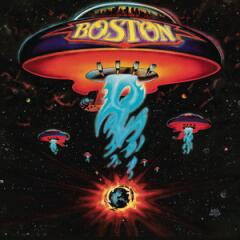
“Long Time” was written by Tom Scholz and appears as the third song on side one of Boston’s eponymous debut album. The intro section leading into the song, “Foreplay,” has been used in many commercial applications, including motion pictures, television shows and commercials, sporting events, video games, and sampling. Tom Scholz has said that “Foreplay” was the first song he ever recorded on a two-track tape recorder in his basement. “Long Time“ is about Scholz‘s long, hard path to success as a musician and never giving up on that quest. The 7:47-minute suite, including “Foreplay,“ was released as a single in January 1977 and went to #22 on the Billboard Hot 100 Singles chart. Personnel on the record were: Brad Delp (lead, backing vocals), Tom Scholz (guitar, organ, Clavinet, bass), Barry Goudreau (guitar), Fran Sheehan (bass), and Sib Hashian (drums).
The album, Boston, was recorded in Tom Scholz‘s basement studio at his home in Watertown, MA; Capitol Studios in Hollywood; and Record Plant in Los Angeles from October 1975 to April 1976. Produced by Tom Scholz and John Boylan, it was released in August 1976 and went to #3 on the Billboard 200 Albums chart. It has been certified 17X Platinum by the Recording Industry Association of America. Three singles were released from the LP.
Boston (originally named Mother’s Milk) is an American rock band formed in Boston in 1975 by songwriter, musician and mastermind Tom Scholz. With Brad Delp on vocals, Scholz recorded most of Boston’s debut album in his basement home studio. Scholz began writing songs in the 1970s while finishing his master’s degree in engineering at MIT. He worked for a while at Polaroid Corp. as a senior product design engineer before securing a record deal for Boston. Later, he developed his Rockman brand, which helped change the direction of recording electric guitar in home studios in the 1980s. Boston has released six studio albums, a live album, two compilation albums, and 16 singles, and sold more than 75 million records worldwide. Twenty-two members have passed through the band since its inception, with founder Scholz in all renditions of the group. Original vocalist Brad Delp died by suicide in March 2007 in Atkinson, NH, at 55. Original drummer Sib Hashian died at 67 in March 2017 while performing on a cruise ship in the Bahamas. Although the group hasn't officially broken up, it hasn’t performed live since 2017. August 2026 marked the 50th anniversary of the release of Boston’s debut album.
"About the Song" -- written by Mickey McMahan , RBN Director of Musicology