Just a few years ago, natural gas storage capacity along the Gulf Coast was widely available at low cost, but that has all changed. The operators of existing and planned LNG export terminals have locked up most of the old storage surplus and much of the incremental storage capacity on the drawing boards. But more storage is needed, and the competition among developers to provide that space is heating up. There will be winners and losers. In today’s RBN blog, we begin an in-depth series on Gulf Coast gas storage — why the market flipped from bust to boom, what’s being planned, and how to predict which projects will make it over the finish line.
High-cycle salt cavern storage in Southeast Texas, strategically located near major interstate and intrastate pipelines to provide firm storage service connecting Permian supply with LNG, power generation, utility, industrial, and Gulf Coast end-use markets.
Contact: Edmund Knolle - [email protected]
The scale is enormous. More than 350 Bcf of new gas storage capacity — most of it salt cavern storage with high injection and withdrawal rates — is known to be under active development in Texas, Louisiana and Mississippi, and it’s safe to say that at least a couple more projects are still flying under the radar. There are several drivers behind this ongoing, multibillion-dollar buildout, chief among them (1) the proliferation of new and expanded LNG export terminals along the Gulf Coast and (2) terminal operators’ need for a place to quickly store large volumes of gas in the event of a liquefaction plant outage.
This is key: Without nearby storage capacity to serve as an at-the-ready buffer for gas supply, terminals could expose themselves to major financial losses, either by not having the gas they need to operate or, most ominously, by being forced to dump billions of cubic feet of gas into the market during an outage event. In essence, gas storage serves as relatively low-cost insurance. (Note that, as a rule of thumb, an LNG export terminal requiring 800 MMcf/d of feedgas should have 15 to 20 days of storage capacity — that is, 12 to 16 Bcf — under contract.)
About the song
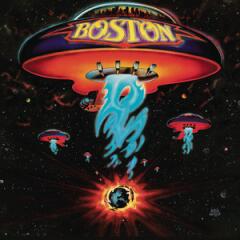
“Long Time” was written by Tom Scholz and appears as the third song on side one of Boston’s eponymous debut album. The intro section leading into the song, “Foreplay,” has been used in many commercial applications, including motion pictures, television shows and commercials, sporting events, video games, and sampling. Tom Scholz has said that “Foreplay” was the first song he ever recorded on a two-track tape recorder in his basement. “Long Time“ is about Scholz‘s long, hard path to success as a musician and never giving up on that quest. The 7:47-minute suite, including “Foreplay,“ was released as a single in January 1977 and went to #22 on the Billboard Hot 100 Singles chart. Personnel on the record were: Brad Delp (lead, backing vocals), Tom Scholz (guitar, organ, Clavinet, bass), Barry Goudreau (guitar), Fran Sheehan (bass), and Sib Hashian (drums).
The album, Boston, was recorded in Tom Scholz‘s basement studio at his home in Watertown, MA; Capitol Studios in Hollywood; and Record Plant in Los Angeles from October 1975 to April 1976. Produced by Tom Scholz and John Boylan, it was released in August 1976 and went to #3 on the Billboard 200 Albums chart. It has been certified 17X Platinum by the Recording Industry Association of America. Three singles were released from the LP.
Boston (originally named Mother’s Milk) is an American rock band formed in Boston in 1975 by songwriter, musician and mastermind Tom Scholz. With Brad Delp on vocals, Scholz recorded most of Boston’s debut album in his basement home studio. Scholz began writing songs in the 1970s while finishing his master’s degree in engineering at MIT. He worked for a while at Polaroid Corp. as a senior product design engineer before securing a record deal for Boston. Later, he developed his Rockman brand, which helped change the direction of recording electric guitar in home studios in the 1980s. Boston has released six studio albums, a live album, two compilation albums, and 16 singles, and sold more than 75 million records worldwide. Twenty-two members have passed through the band since its inception, with founder Scholz in all renditions of the group. Original vocalist Brad Delp died by suicide in March 2007 in Atkinson, NH, at 55. Original drummer Sib Hashian died at 67 in March 2017 while performing on a cruise ship in the Bahamas. Although the group hasn't officially broken up, it hasn’t performed live since 2017. August 2026 marked the 50th anniversary of the release of Boston’s debut album.
"About the Song" -- written by Mickey McMahan , RBN Director of Musicology