The Gulf Coast gas storage market today is a different animal, marked by steeper prices, an emphasis on high injection and withdrawal rates, and a looming capacity shortfall. How did we get here, which market players are shaping things the most, and how much new gas storage is likely to get built over the next few years as a slew of new gas pipelines, LNG export terminals, and gas-fired power plants come online? In today’s RBN blog, we continue our series on Gulf Coast gas storage.
In Part 1, we said that after a long period of storage-capacity surplus and relatively low storage prices, the Gulf Coast market has been on a tear lately. More than 350 Bcf/d of new storage capacity is currently under development, most of it additional salt cavern space at existing facilities in coastal Texas and Louisiana. This massive buildout, which is expected to continue for at least a few more years, is being driven primarily by the storage needs of new and expanding LNG export facilities, each of which need a place to quickly store large volumes of gas in the event of a liquefaction plant outage.

The Natural Gas Master Class is a one-day online event focusing on understanding flow analysis, interpreting pipeline data and forecasting future flows. This course is designed to equip you with the knowledge and skills to effectively analyze the complexities of natural gas markets, flow analysis, and pipeline modeling. Join us online
October 21 | Online
To a lesser degree, new gas storage capacity is also needed to manage gas flows along the Gulf Coast, which have increased sharply in recent years due to Permian gas production growth and new LNG export, power and industrial demand. Power generators, many tied to planned AI data centers, need backup gas supply if regional gas and power demand soars or traditional supplies are interrupted.
As for the storage-capacity surplus that characterized the Gulf Coast market through most of the 2010s and the very early 2020s, that has been largely contracted for — again, mostly by LNG export terminals — resulting in both higher storage prices and a competition among storage developers to provide the incremental space that will be required.
Lastly, we discussed the differences between salt cavern and depleted reservoir gas storage facilities. Most important by far, salt caverns offer considerably higher gas injection and withdrawal rates — a must-have for LNG export terminals and other customers that may need to “park” large volumes of gas within a short period of time. Also, salt caverns require considerably less “base” or “cushion” gas. (See Part 1 for details.)
Today, we’ll begin with a look at Gulf Coast gas storage prices or, more specifically, the monthly rates that market participants pay storage owners/operators for Firm Storage Services (FSS) — that is, the fixed fee they pay each month under long-term contracts for the right to store X amount of gas at their facilities, whether or not they use it. (Note: In addition to that fee, customers pay volume-based fees for moving gas into and out of storage.)
In the second half of the 2000s, when large amounts of gas storage capacity were being built in anticipation of fast-growing LNG imports (something that never materialized, as it turned out), FSS prices were relatively high — north of 15 cents per dekatherm (dth) per month (blue arrow in Figure 1 below). That price level not only supported the capacity buildout, it also reflected the wide winter-summer spread in gas prices, the high gas price volatility and the hurricane risk that drove the demand for more storage.
About the song
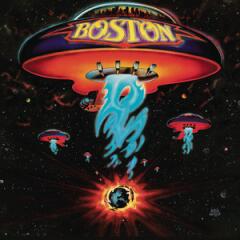
“Long Time” was written by Tom Scholz and appears as the third song on side one of Boston’s eponymous debut album. The intro section leading into the song, “Foreplay,” has been used in many commercial applications, including motion pictures, television shows and commercials, sporting events, video games, and sampling. Tom Scholz has said that “Foreplay” was the first song he ever recorded on a two-track tape recorder in his basement. “Long Time“ is about Scholz‘s long, hard path to success as a musician and never giving up on that quest. The 7:47-minute suite, including “Foreplay,“ was released as a single in January 1977 and went to #22 on the Billboard Hot 100 Singles chart. Personnel on the record were: Brad Delp (lead, backing vocals), Tom Scholz (guitar, organ, Clavinet, bass), Barry Goudreau (guitar), Fran Sheehan (bass), and Sib Hashian (drums).
The album, Boston, was recorded in Tom Scholz‘s basement studio at his home in Watertown, MA; Capitol Studios in Hollywood; and Record Plant in Los Angeles from October 1975 to April 1976. Produced by Tom Scholz and John Boylan, it was released in August 1976 and went to #3 on the Billboard 200 Albums chart. It has been certified 17X Platinum by the Recording Industry Association of America. Three singles were released from the LP.
Boston (originally named Mother’s Milk) is an American rock band formed in Boston in 1975 by songwriter, musician and mastermind Tom Scholz. With Brad Delp on vocals, Scholz recorded most of Boston’s debut album in his basement home studio. Scholz began writing songs in the 1970s while finishing his master’s degree in engineering at MIT. He worked for a while at Polaroid Corp. as a senior product design engineer before securing a record deal for Boston. Later, he developed his Rockman brand, which helped change the direction of recording electric guitar in home studios in the 1980s. Boston has released six studio albums, a live album, two compilation albums, and 16 singles, and sold more than 75 million records worldwide. Twenty-two members have passed through the band since its inception, with founder Scholz in all renditions of the group. Original vocalist Brad Delp died by suicide in March 2007 in Atkinson, NH, at 55. Original drummer Sib Hashian died at 67 in March 2017 while performing on a cruise ship in the Bahamas. Although the group hasn't officially broken up, it hasn’t performed live since 2017. August 2026 marked the 50th anniversary of the release of Boston’s debut album.
"About the Song" -- written by Mickey McMahan , RBN Director of Musicology