


The debate around the transition to electric vehicles (EVs) has often centered on the burden the shift will put on the power grid, both in terms of overall load and particularly peak load. Those concerns amplify risks to grid stability and sufficiency, the ability to meet summertime spikes in power demand, and the need to accommodate a growing share of power generation from renewable sources such as wind and solar. Now, the introduction of bidirectional charging and vehicle-to-grid (V2G) technology — both of which are just beginning to enter the conversation around EVs — is likely to make the discourse even more complicated and interesting. In today’s RBN blog, we explain the basics of V2G tech, some ways in which it could one day add strength and reliability to the power grid, and some barriers to wider adoption.
We first looked at EVs and their effect on the power grid in Electric Avenue, laying out the basics about charging infrastructure and the challenges that wider EV adoption will pose for the California and Texas energy and power markets. In our One Shining Moment series, we looked at the sudden burst of attention that EVs have received this year, the impact of higher gasoline prices on the EV market, and how the Inflation Reduction Act (IRA) is incentivizing automakers to make more EVs in the U.S.
One of the hottest EVs in the market today is the Ford F-150 Lightning, the iconic brand’s first all-electric pickup. Ford said it planned to produce 40,000 vehicles/year when it was unveiled in May 2021 but boosted that target to 150,000/year less than a year later. Ford has said that demand was two to three times more than expected and that it already had reservations for more than 200,000 vehicles. And it’s not hard to see why even die-hard truck-lovers are signing up. The base model’s 426-horsepower output is more than a top-of-the-line 3500 Ram, Silverado, or F-350. It has a reported range of 320 miles — more than enough to comfortably drive from Dallas to Houston — alleviating some of the range anxiety. And, as we’ll get to later, for areas where backup power generation is highly sought after due to natural disasters, the Lightning’s bidirectional capability could be a lifesaver.

RBN Energy’s US CO₂ Infrastructure map brings together legacy Enhanced Oil Recovery (EOR) assets, as well as announced large-scale Carbon Capture and Sequestration (CCS) and Carbon Capture, Utilization and Sequestration (CCUS) projects, all in our signature concise, accurate, and intelligible style.
About the song
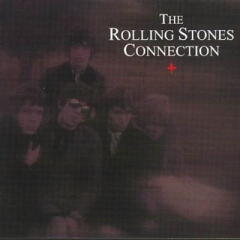
“Connection” was written by Mick Jagger and Keith Richards and appears as the fourth song on side one of The Rolling Stones’ seventh American studio album, Between the Buttons. The song seems to portray the time that The Rolling Stones spent waiting on planes at various airports while touring. On closer inspection of the lyrics, it seems to foreshadow the drug busts that Richards, Jagger and Brian Jones experienced in Great Britain in 1967. “My bags they get a very close inspection. I wonder why it is that they suspect ’em. They’re dying to add me to their collection. And I don’t know if they'll let me go.” Norman Pilcher, the arresting officer in the Richards, Jagger, Jones, Donovan, John Lennon and George Harrison cases on similar cannabis possession charges, was later convicted himself in September 1973 of perjury and sentenced to four years in prison. The line “simolima pilchard” in the lyrics of The Beatles’ “I am the Walrus” refers to the ex-sergeant, as does the 2003 Primus song, “Pilcher’s Squad.” The thumping kick drum heard on “Connection” was supplied by Jagger, who beat on Charlie Watts’s kick drum with his hands during an overdub. Personnel on the record were: Mick Jagger (harmony vocal, tambourine, kick drum), Keith Richards (lead vocal, guitars, bass), Charlie Watts (snare drum), and Jack Nitzsche (piano, organ bass pedals).
Between the Buttons was recorded between August and December 1966 at RCA Studios in Hollywood and Olympic and Pye Studios in London, with Andrew Loog Oldham producing. Released in February 1967 in the US, it went to #2 on the Billboard 200 Albums chart. It has been certified Gold by the Recording Industry Association of America. The album featured Brian Jones using an assortment of different instruments, including a recorder, vibraphone, saxophone, accordion, and dulcimer. It would be the last Rolling Stones album produced by Loog Oldham. One single was released from the LP.
The Rolling Stones are a British rock band formed in London in 1962 by Mick Jagger, Keith Richards, Brian Jones, Bill Wyman, and Charlie Watts. Jones left the band in 1969 and was replaced by Mick Taylor. Taylor was replaced by Ronnie Wood in 1974. Bill Wyman left the band in 1993 and has been replaced by Darryl Jones on tour. Charlie Watts died in 2021 and has been replaced by Steve Jordan on tour. They have released 30 studio albums, 35 live albums, 29 compilation albums, three EPs, and 121 singles and have sold more than 200 million records worldwide. The Rolling Stones have won three Grammy Awards and a Grammy Lifetime Achievement Award, and are members of the Rock and Roll Hall of Fame and the UK Music Hall of Fame. In 2003 Mick Jagger was knighted by Queen Elizabeth II for his services to popular music. The Rolling Stones continue to record and tour.




Comments
Merge fleet leases F150 for commercial fleets, would be a good blog topic
http://mergefleet.com/
In reply to Merge Fleet Solution - would be a good follow up blog by Douglas Coleman
Thanks for taking the time to read the blog.
Commercial vehicles and trucking are topics that I'm already beginning to reserarch.