


Electric vehicles sit front and center in the effort to decarbonize passenger transportation, a movement that helped make Tesla’s Elon Musk the richest man in the world. Pair this with heavy attention to EVs from the broader car-and-truck market and the White House’s goal of 50% EV sales by 2030 and it makes you wonder how EVs will impact the energy and power-generation sectors. We’ve all seen how power grids can be overwhelmed during periods of extreme heat or cold, by relying too heavily on intermittent renewables like wind and solar, or — as many Texans saw last February — by interruptions in natural gas deliveries to gas-fired power plants. What might happen when we add tens of millions of power-hungry EVs to the mix? In today’s RBN blog, we discuss the impacts that scaling electric vehicles may have on energy and power markets and the power grid.
The push for plug-in electric vehicles (PEVs) — a subset of electric vehicles that includes all-electric, battery electric vehicles (BEVs) such as the Tesla Model S and the Chevy Bolt, and plug-in hybrid vehicles (PHEVs) such as the Honda Clarity and the Ford Escape PHEV — will disrupt current driving and power consumption norms and has the potential to have major market impacts. An early market worry ties to infrastructure needs, which are proving to be one of the biggest hurdles in the switch from internal combustion engines to EVs.
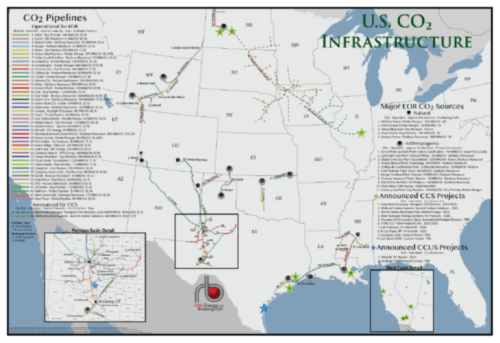
RBN Energy’s US CO₂ Infrastructure map brings together legacy Enhanced Oil Recovery (EOR) assets, as well as announced large-scale Carbon Capture and Sequestration (CCS) and Carbon Capture, Utilization and Sequestration (CCUS) projects, all in our signature concise, accurate, and intelligible style.
Charging Infrastructure
There have been many changes to U.S. transportation fuels over the years, as we described in our Come Clean series, including the move to unleaded gasoline in the 1970s, and to lower-sulfur fuels in the 1990s and 2000s. These changes had the most effect on refineries, which had to reconfigure their operations and invest in new equipment so they could produce cleaner fuels. For drivers, there really wasn’t much of an effect. They were still going to a service station and filling up their tanks.
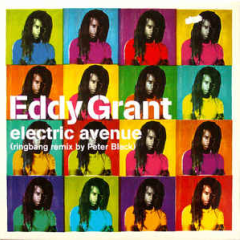
About the song
“Electric Avenue” was written by Eddy Grant and appears as the first song on Eddy Grant’s sixth studio album, Killer on the Rampage. Released as a single in early 1983 and buoyed by heavy video rotation on MTV, the song went to #2 on the Billboard Hot 100 Singles chart. Grant wrote the song in response to the 1981 Brixton riots in South London. In 1997 the Refugee Camp All-Stars released a cover of the song that went to #35 on the Billboard Hot 100 Singles chart.
Killer on the Rampage was recorded at Blue Wave Studios in Barbados and produced by Eddy Grant. It was released in late 1982 and went to #10 on the Billboard Top 200 Albums chart. It remains Grant’s best-selling album to date. Three singles were released from the LP.
Eddy Grant is a Guyanese-British singer, songwriter, multi-instrumentalist, and record producer. In 1965, Grant was a founding member of The Equals, the first interracial rock band in the UK. They released 11 studio albums and 26 singles. “Baby Come Back” was their biggest single, going to #32 on the Billboard Hot 100 Singles chart in 1968. The Clash covered Grant’s “Police on My Back” from The Equals’ Baby Come Back LP, and included it on their 1980 album, Sandinista! Grant has released 15 solo studio albums, one live album, 13 compilation albums, and 19 singles. He continues to record.






Comments
I do not understand the attraction of EV's absent the climate dogma. EV the 480 volt rate would require an hour or so to "fill up" vs 5-minutes at a gas pump. I've got better ways to spend my time. Anecdotally I've heard there is a lot of remorse among TSLA buyers for this very reason. Good stuff, keep em coming.
In reply to Charging rate by David Messler
TSLA cars have better performance along almost every metric vs. ICE cars. Our base Model 3 is more fun to drive than anything I've ever owned, including my manual CIVIC from college days. The charging times are also overstated. Tesla Level 3 Superchargers can easily pump 200+ miles in 20 minutes. And when not on a long trip, keep in mind that you are leaving home every day with a full battery, so no need for those 5+ minute stops at a gasoline station. Ever.
The graphs in Figure 2 demonstrate how the Lone Star State’s power grid could face serious challenges in keeping pace with demand if EV owners are not incentivized the do most or all of their