


There is a lot we don’t know about how the energy transition might play out over the next couple of decades. One thing that we can say with a high degree of certainty, however, is that the big run-up in wind and solar generating capacity in recent years is just the beginning — a lot more wind farms and solar arrays will be developed through the 2020s and ’30s, as will many, many energy-storage batteries. Another good bet is that as the portfolios of wind and solar developers grow, they will need help in maintaining, upgrading, and replacing their assets from a newly emerging type of company: the clean energy services provider. In today’s RBN blog, we discuss wind and solar’s role in the energy transition and the types of services these new companies might provide.
Back in the late 1950s and early ‘60s, rock ‘n’ roll was taking the world by storm — and so was crude oil. The Seven Sisters — the corporate ancestors of today’s BP, Shell, Chevron, and ExxonMobil — were huge and dominant. They were growing year-by-year and running every aspect of their operations, each convinced that they alone had the technological expertise to get the most out of the oil reserves they controlled. But as their expansion continued, the big oil companies started turning to new market entrants — oilfield services companies — that offered sophisticated, often proprietary drilling techniques as well as economies of scale and other benefits.
Nowadays, the upstream side of the energy business is considerably more diversified, and oilfield services companies like Schlumberger, Halliburton, and Baker Hughes are indispensable industry players that provide the wide range of products and services needed to efficiently develop wells and produce crude oil, natural gas, and NGLs for their E&P clients.
With the much-discussed energy transition now under way, a new need for specialized support may be emerging in the clean energy space. Since the turn of the century, the U.S. has experienced extraordinary growth in the capacity of wind farms and solar facilities. According to the Department of Energy (DOE), there was about 2,500 megawatts (MW) of wind capacity in place in 2000, but by 2020 the nation’s wind capacity had increased nearly 50-fold to 122,000 MW, including 33,000 MW in Texas alone. Another 7,200 MW of U.S. wind capacity was added in the first three quarters of 2021, and 40,000 MW more is in various stages of construction and pre-construction development.
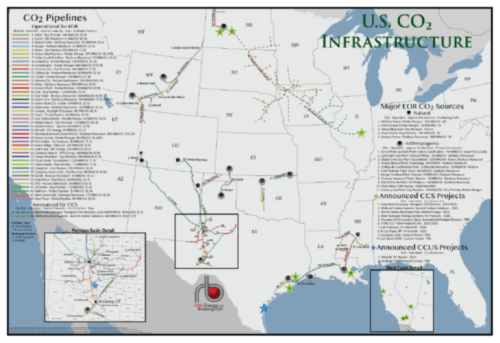
RBN Energy’s US CO₂ Infrastructure map brings together legacy Enhanced Oil Recovery (EOR) assets, as well as announced large-scale Carbon Capture and Sequestration (CCS) and Carbon Capture, Utilization and Sequestration (CCUS) projects, all in our signature concise, accurate, and intelligible style.
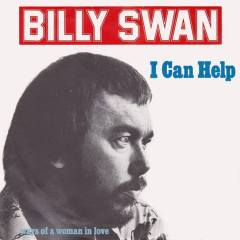
About the song
"I Can Help" was written by Billy Swan and appears on Swan's album of the same name. It was released as a single in July 1974, and went to #1 on the Billboard Hot 100 and Hot Country Songs charts. The record has been certified Gold by the Recording Industry Association of America. Swan says he wrote the song in about 20 minutes in his Nashville duplex, using an early drum machine and the RMI organ that Kris Kristofferson and Rita Coolidge gave him as a wedding present. The song was recorded at Young'un Sound Studio in Murfreesboro, TN, and was produced by Chip Young and Billy Swan. Personnel on the record were: Billy Swan (lead vocals, Farfisa organ), Reggie Young (electric guitar), Dennis Linde and Johnny Christopher (acoustic guitar), Mike Leech (bass), Hayward Bishop (drums), and Lea Jane Berinati and the Holliday Sisters (backing vocals). Swan recorded the I Can Help album after the success of the single. The LP went to #1 on the Billboard Top Country albums chart, and #21 on the Billboard Top 200 Album chart. Elvis Presley, Ringo Starr and The Replacements have all recorded cover versions of "I Can Help."
Billy Swan is an American country singer-songwriter. His first big break in the music business came in 1962, when he wrote "Lover Please," which became a hit for Clyde McPhatter. He has also written hits for Conway Twitty, Waylon Jennings and Mel Tillis. Swan produced Tony Joe White's 1969 Top 10 hit, "Polk Salad Annie." He has released six solo studio albums and 18 singles, and continues to write and do session work.






Comments
This capability and capacity to do the necessary work in renewables ( the blocking and tackling ) to maintain and operate, is essential. Too often we get enamoured of the science - the project concepts - the impact to the world....and do not fully recognize that without reliable and effective services to support industries - they become good ideas that don't realize the fullest impacts. Like with all energy supplies - it must be realiable - it must be affordable. And without effective O&M and on stream time and the building and the revamps - its just an idea. This is the real deal in the real world. CES is right in the heart of an energy play we can all underatand and appreciate! And this type of capability is a signal that the industry is real and recognizes the need for full life cycle support!
The "energy transition" is being driven by climate alarmism elites and totalitatrian minded governments. One thing that is never discussed is the cost. The cost will bankrupt entire states and countries with consumers left holding the bill and it will have no impact on the climate. This is pure folly. https://cornwallalliance.org/2022/02/two-more-contributions-on-the-impossibility-of-electrifying-everything-using-only-wind-solar-and-batteries/
https://cornwallalliance.org/2022/02/calculating-the-full-costs-of-electrifying-everything-using-only-wind-solar-and-batteries/
Will anybody pay attention? The answer is, no for now, but eventually, reality will win out, and attention will be paid.