For a lot of us, efforts to amp up the amount of power generated by renewables are largely out of sight, out of mind. We might know that an increasing share of our electricity is being produced by wind- and solar-powered generation, especially if you live in a place like California or Texas, but the impact might be largely unseen because of where many of those facilities tend to be located. That’s beginning to change, however, as renewable projects get bigger and move closer to populated areas, causing all sorts of new issues for energy developers. In today’s RBN blog, we look at the unique challenges that renewable energy projects face, the slowing pace of project development, and some changes that advocates believe could accelerate the permitting process.
As we outlined in Part 1 of this series, permitting for infrastructure projects is a well-known problem with many contributing factors but no easy solutions. There are obvious benefits in having interested parties and stakeholders weigh in on major proposals to build or expand energy infrastructure, and credible regulations and appropriate safeguards are essential. Still, the reality is that the permitting process for some important projects can drag on for years — such as with Mountain Valley Pipeline (MVP), the poster child for today’s permitting challenges — and prevent others from ever becoming a reality. Parts of the Fiscal Responsibility Act (FRA), the legislation that raises the U.S. debt ceiling, are intended to expedite the final approvals needed for MVP. (The FRA was approved by the House on Wednesday and by the Senate on Thursday, and signed into law by President Biden on Saturday. More on some of the FRA’s other provisions below.)

Join industry leaders in Calgary on October 29 for market insights, technical presentations, Duvernay inventory analysis, an expert panel, and networking focused on the next chapter of Canadian energy.
In Part 2 we examined the TransWest Express Transmission Project, which will bring 3,000 megawatts (MW) of Wyoming’s wind-generated electricity — roughly equivalent to three-fourths of the electric power used every day in Los Angeles — to utilities in more densely populated regions of the Desert Southwest. The project itself is a straightforward concept, but it wasn’t until April 10, 2023 — 18 years after it was first proposed — that TransWest received its final federal approval. We looked at the project’s long road to approval, the difficulties in getting new transmission lines built and the long-term repercussions of those delays.
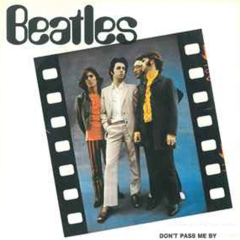
About the song
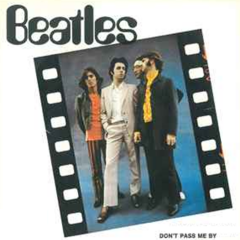
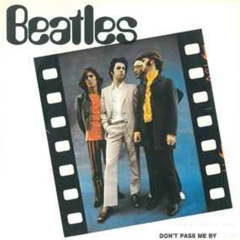
“Don’t Pass Me By” was written by Richard Starkey (Ringo Starr) and appears as the sixth song on The Beatles’ ninth studio album, The Beatles (White Album). Starr wrote the song shortly after he joined The Beatles in August 1962. He said it was the first song he wrote, “while sitting round at home, fiddling with the piano.” He wrote two songs for The Beatles, “Don’t Pass Me By” and “Octopus’s Garden,” and co-wrote “What Goes On” and “Flying.” Keith Richards once commented to Paul McCartney that the difference between their groups was that The Stones had one front man, while The Beatles had four. “Don’t Pass Me By” was recorded during June and July 1968 at Abbey Road in London. It was released as a single in Scandinavia in April 1969 and went to #1 in Denmark. Personnel on the record were: Ringo Starr (vocals, drums, percussion, tack piano), Paul McCartney (grand piano, bass), and Jack Fallon (fiddle). Both pianos on the song were recorded into a Leslie 147 speaker.
The Beatles (White Album) was recorded between May and October 1968 at Abbey Road and Trident in London with George Martin producing. Nineteen of the LP’s 30 songs were written during March-April 1968 at a Transcendental Meditation retreat that the band attended in Rishikesh, India. The double album was released in November 1968 and went to #7 on the Billboard 200 Albums chart. It has been certified 24x Platinum by the Recording Industry Association of America. The original release of the album had The Beatles name embossed on the front cover and were numbered. No singles were released from the LP but “Hey Jude” backed with “Revolution” originated from the same sessions and were issued as a single in August 1968. It went to #1 on the Billboard Hot 100 Singles chart and has been certified 4x Platinum by the RIAA.
The Beatles were an English rock band formed in Liverpool, England, in 1960. The band, with members John Lennon, Paul McCartney, George Harrison, and Ringo Starr, went on to change pop culture and are considered by many to be the most influential band of all time. They have released 21 studio albums, six live albums, 36 EPs, 54 compilation albums, and 63 singles. All of the band are Members of the Order of the British Empire (MBE). They were inducted into the Rock and Roll Hall of Fame in 1988, and have received one Academy Award, Seven Grammy Awards, and 15 Ivor Novello Awards. They are the best-selling band in history, having sold more than 600 million records worldwide. All band members went on to successful solo careers after the breakup of The Beatles in 1970. John Lennon was assassinated in December 1980, George Harrison died in November 2001. Both Paul McCartney and Ringo Starr continue to record and tour as solo artists.