2022 was a particularly significant year for the global LNG industry, distinguished by a sharp increase in LNG demand in Europe tied to the reduction in flows of Russian pipeline gas after Putin’s invasion of Ukraine. Whereas Europe had historically been the last market option for many LNG sellers, it became the most highly priced market in the world and pulled in LNG from multiple locations, including a cargo from Australia delivered in October. Paying premium prices enabled European buyers to fill the continent’s underground storage at an unprecedented rate — as of mid-January, storage there was over 80% full. A mild winter, at least to date, coupled with conservation efforts and fuel switching have reduced European natural gas demand by 10% to 15% and helped avoid a gas shortage. Now, gas prices (and LNG cargo prices) have fallen to pre-invasion levels and prompted market observers to suggest that, with China emerging from pandemic-related lockdowns, Asia may start pulling large volumes of LNG its way. In today’s RBN blog, we examine LNG cargo movements within the Asia Pacific and Atlantic regions and what rising Asian demand could mean for European gas supplies going forward.

As global LNG markets have evolved over the past several decades, an increasing share of the LNG produced has destination flexibility — that is, rather than being committed to a specific buyer under a long-term agreement, LNG cargoes can be directed to the buyers willing to pay the most for them. The rise in destination-flexible cargoes helps to explain how continental Europe was able to draw a lot more LNG its way last year — 94.7 million tons (MMt; 12.5 Bcf/d) in 2022 versus only 54 MMt (7.2 Bcf/d) the previous year — after Russia’s February 2022 invasion of Ukraine led to sanctions and the cut-off of most piped-in Russian gas to European Union (EU) countries.
Russia’s decision to withhold pipeline gas supplies to European buyers resulted in record gas prices in Europe, which filtered through to the LNG market. Although holders of LNG import capacity in Europe were able to purchase cargoes at deep discounts to the continent’s benchmark Title Transfer Facility (TTF) gas price, the prices still exceeded those in Asia, making Europe the market of choice for many players. Further, the return of the Freeport LNG facility in Texas, which is expected in February or March, will also ease supply concerns in the Atlantic Basin and reduce the impact of diversions toward Asia. But as European prices have trended downward in recent weeks, some have expressed concern that if prices fall much further, significant volumes of U.S. LNG will be diverted toward Asia, especially China, and could pave the way for a new supply crisis in Europe and a bidding war for spot cargoes.
About the song
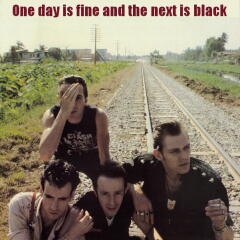
“Should I Stay or Should I Go” was written by Topper Headon, Mick Jones, Paul Simonon and Joe Strummer, and appears as the third track on side one of The Clash’s fifth studio album, Combat Rock. It was originally released as a single in May 1982, where it went to #45 on the Billboard Hot 100 Singles chart. After being featured in a Levi’s jean television commercial, the song was re-released in February 1991 and went to #1 on the U.K. singles chart and made the Top 10 on several European charts. The song borrowed heavily from the 1960s Righteous Brothers hit, “Little Latin Lupe Lu,” and featured the lead vocals of Mick Jones. The lyrics were rumored to have been written about Jones’s relationship with singer Ellen Foley. Personnel on the record were: Mick Jones (guitar, lead vocals), Joe Strummer (guitar, backing vocals), Paul Simonon (bass, backing vocals), Topper Headon (drums) and Joe Ely (backing vocals).
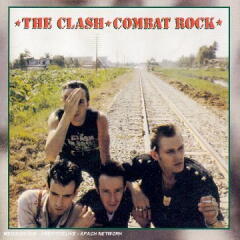
Combat Rock was recorded between September 1981 and April 1982 at Electric Lady Studios in New York City, Ear Studios in London, and Warnford Studio in Hampshire, England. Produced by The Clash with Glyn Johns, the album was released in May 1982. It went to #7 on the Billboard Top 200 Albums chart and has been certified 2X Platinum by the Recording Industry Association of America. Three singles were released from the LP.
The Clash was an English punk rock band formed in London in 1976 by Joe Strummer, Mick Jones, Paul Simonon and Topper Headon. Headon left the band in 1982 and Jones in 1983. The group continued with new members, but officially broke up in 1986. Ten members passed through The Clash after its inception. They released six studio albums, two live albums, nine compilation albums, two EPs, and 31 singles. The band was inducted into the Rock and Roll Hall of Fame in March 2003. Joe Strummer went on to form various solo projects, Mick Jones formed Big Audio Dynamite, and Paul Simonon formed Havana 3AM. Joe Strummer died in December 2002. In 2007, director Julien Temple released the Joe Strummer biopic Joe Strummer: The Future is Unwritten, along with a soundtrack to the film.