



As rising AI-driven demand for data centers has supported growth in key markets like Virginia and Texas, developers are increasingly casting a wider net — landing major projects in states that haven't historically been on the radar. While established hubs still dominate the landscape, regulatory hurdles, rising power costs and grid congestion are pushing developers to look elsewhere. In today's RBN blog, we'll examine the factors drawing large-scale data center projects to “non-key” states, with a close look at Indiana, Louisiana, North Carolina and Pennsylvania.
In Part 1 of this series, we examined the key factors driving data center development across seven leading states — Arizona, California, Georgia, Illinois, Ohio, Texas and Virginia. While Texas appears to lead in new development thanks to its business-friendly regulatory environment, relative strength in power and direct access to Permian Basin natural gas, it faces a familiar Catch-22 also seen in California, Illinois and Virginia: the same conditions that attract development are weakened when that development arrives. So far, that dilemma is partially responsible for the interest toward comparatively less-mature states like Arizona, Georgia and Ohio — but that doesn’t make them immune from those issues either.
With that in mind, large-scale projects are increasingly appearing outside of those key markets — a theme we initially explored in I Know Places. In Indiana, Amazon and Meta have both announced multibillion-dollar commitments. Louisiana was selected as the site for Meta’s Hyperion Data Center, which is under construction. Amazon has also announced investments in North Carolina, in addition to projects by Microsoft and other more speculative plans in the state. And lastly, Pennsylvania’s market is expected to grow, driven by a $20 billion investment from Amazon, on top of the highly publicized planned restart of a Three Mile Island nuclear unit to power Microsoft data centers.
Figure 1 below offers our analysis of these four states. Comparing each on the factors that determine where data centers are built hints at these projects’ rationales. The matrix indicates whether a specific factor (rows) is a relative strength (green plus sign), weakness (red minus sign), or neither (yellow tilde), in each state.
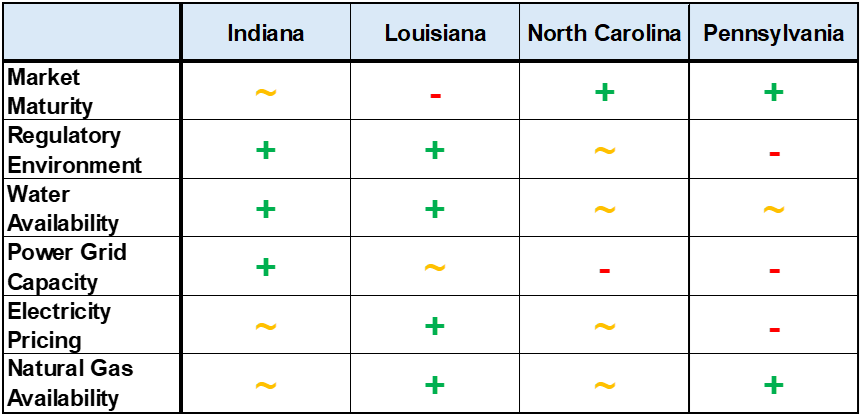
Figure 1. Relative Strengths and Weaknesses of Indiana, Louisiana, North Carolina and Pennsylvania.
Source: RBN
Terminal Fees Close the Spot Asia Propane Arb
The conflict involving Iran has pushed international NGL and LPG prices sharply higher, increasing demand for U.S. exports as global buyers look for replacement supply.
About the song
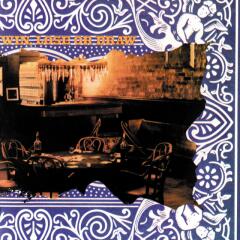
“Win, Lose or Draw” was written by Gregg Allman and appears as the fourth song on side one of The Allman Brothers Band’s fifth studio album of the same name. The song was written about Gregg Allman’s friend ( and friend of the band) Chank Middleton, who was serving time in prison. The bluesy ballad talks about the loneliness and longing for freedom that comes with serving time. Released as a single in August 1975, it failed to enter the Billboard charts. Personnel on the record were: Gregg Allman (lead vocal, keyboards, acoustic guitar), Dicky Betts (lead guitar), Chuck Leavell (keyboards, backing vocals), Lamar Williams (bass), Jaimoe (drums, percussion), and Butch Trucks (drums, percussion).
The album, Win, Lose or Draw, was recorded from February to July 1975 at Capricorn Sound in Macon and the Record Plant in Los Angeles. Produced by Johnny Sandlin and The Allman Brothers Band, it was released in August 1975 and went to #5 on the Billboard 200 Albums chart. It has been certified Gold by the Recording Industry Association of America. Three singles were released from the LP.
The Allman Brothers band was an American rock band formed in Jacksonville, FL, in 1969 by brothers Duane and Gregg Allman, Dickey Betts, Barry Oakley, Jaimoe, and Butch Trucks. Duane and Gregg had previously played together in The Allman Joys and Hour Glass. Hour Glass recorded two studio albums for Liberty Records in 1967 and 1968. The Allman Brothers Band relocated to Macon, GA, where their manager and record label, Capricorn Records, were based. They released their debut album, Idlewild South, in 1969. They released 12 studio albums, seven live albums, 18 compilation albums, and 22 singles. They have sold more than 20 million records worldwide. They have won a Grammy Award, a Grammy Lifetime Achievement Award, and are members of the Rock and Roll Hall of Fame. Twenty members have passed through the band since its formation. Duane Allman died in Macon in October 1971 at 24. Barry Oakley died in Macon in November 1972 at 24. Butch Trucks died in Jacksonville in January 2017 at 69. Gregg Allman died in Richmond Hill, GA, in May 2017 at 69. Dicky Betts died in Osprey, FL, in April 2024 at 80.
"About the Song" -- written by Mickey McMahan , RBN Director of Musicology




Comments
Looks like U.S. will soon be exporting a lot more oil. How about an article on who benefits from this trend: EPD,ET.PAA,ENB,TRGP, OTHER?? Thanks, Jack