Haynesville natural gas production is heading back to record levels thanks to growing LNG demand and new pipelines designed to move gas from north to south in Louisiana. Since last summer, two new pipelines, Momentum’s NG3 and Williams’s Louisiana Energy Gateway (LEG), have been pushing production east and pulling more gas south to serve LNG demand in the area near Lake Charles. In today’s RBN blog, we’ll preview some of the topics we’ll be covering regularly in our new weekly NATGAS Haynesville report by taking a closer look at how LEG and NG3 are reshaping the market.
NATGAS Permian is a weekly natural gas fundamentals analysis focusing entirely on the key market drivers within the Permian basin. The report contains details and forecasts around natural gas production, demand, pricing, and a summary of pipeline outflows and capacities from the Permian to neighboring regions.
The Haynesville Shale is one of the most consequential gas basins in the U.S., especially as LNG exports along the Gulf Coast continue to grow (see Sitting, Waiting, Wishing). One of the first shale basins to be extensively exploited with unconventional drilling techniques, the Haynesville burst onto the scene in 2008 during the early days of the Shale Revolution. While the Appalachian Basin is the largest gas producer, and the Permian the fastest-growing, the Haynesville stands out for three significant reasons. First, its location in Northwest Louisiana and Northeast Texas puts it in a sweet spot, nestled close to Gulf Coast LNG export facilities and well positioned to serve rising power demand across the Southeast. Second, unlike the Permian and Appalachian basins, the Haynesville isn’t boxed in by infrastructure and pipeline constraints. It has spare pipeline capacity (though that does not mean that all the gas can get to the most ideal markets), which means producers can ramp up output in the near term without waiting for new infrastructure. Finally, the basin is extremely responsive to Henry Hub prices, perhaps more so than any other basin in the U.S. When prices are high, production climbs; when prices are low, it pulls back. That makes the Haynesville one of the country’s most effective swing producers.
As LNG demand grows and puts upward pressure on Henry Hub prices, the Haynesville is poised to respond. Production in the basin peaked in May 2023, just shy of 16.5 Bcf/d, following the extremely high Henry Hub pricing in 2022 (teal line and left axis in left graph in Figure 1 below). The rig count (orange line and right axis) peaked in late 2022, reaching 75, before producers scaled back in response to lower prices in 2023 and 2024. The rig count began climbing again last year and stands at 46 as of mid-January. Production fell from the May 2023 peak to just above 13 Bcf/d at the end of 2024 (sum of gold and green layers in graph to right) before beginning to climb again last year. Current production is around 16 Bcf/d, and we expect output to keep rising this year, topping the previous record by spring. Once new takeaway capacity comes online, it will push even higher from there as the new pipelines begin to fill.
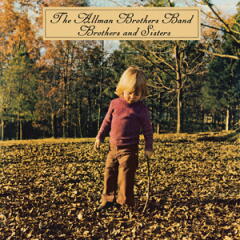
About the song
"Southbound" was written by Dickey Betts and appears as the first song on side two of The Allman Brothers Band's fourth studio album, Brothers and Sisters. The country-tinged blues number features the soulful vocals of Gregg Allman, with guitarist Dickey Betts providing tasty licks from the PAF pickups of his 1957 goldtop Gibson Les Paul he called "Goldie." The Allman Brothers' unique way of providing a groove is perfectly exemplified in this song. Never released as a single, the song did receive heavy rotation on FM radio at the time in the days before MTV. Personnel on the record were: Gregg Allman (vocals, keyboards), Dickey Betts (lead guitar), Lamar Williams (bass), Jai Johanny Johanson (drums), and Butch Trucks (drums, percussion).
Brothers and Sisters was recorded between October and December 1972 at Capricorn Sound in Macon, with Johnny Sadlin and The Allman Brothers Band producing. This was the last album that founding bassist Barry Oakley played on. before dying from injuries received in a motorcycle wreck, just blocks away from where guitarist Duane Allman died in a similar accident about a year earlier. The album was released in August 1973 and went to #1 on the Billboard 200 Albums chart and has been certified Platinum by the Recording Industry Association of America. Two singles were released from the LP.
The Allman Brothers Band was an American rock band formed in Jacksonville, Florida, in 1969 by Duane Allman, Gregg Allman, Dicky Betts, Barry Oakley, Jai Johanny Johanson, and Butch Trucks. Brothers Gregg and Duane Allman had played together before in the Allman Joys and Hour Glass. Hour Glass released two studio albums on Liberty Records in 1967 and 1968. The band relocated to Macon, where their manager Phil Walden and his record label, Capricorn Records, were located. They released their debut studio album, Idlewild South, in 1969. They released 12 studio albums, seven live albums, 18 compilation albums, and 22 singles. They have won a Grammy Award, a Grammy Lifetime Achievement Award, and are members of the Rock and Roll Hall of Fame. Twenty members passed through the band from its inception until its breakup in 2014. Duane Allman died in Macon in October 1971 at 24. Barry Oakley died in Macon in November 1972 at 24. Butch Trucks died in West Palm Beach in January 2017 at 69. Gregg Allman died in Richmond Hill, Georgia, in May 2017 at 69. Dickey Betts died in Osprey, Florida, in April 2024 at 80.
"About the Song" -- written by Mickey McMahan , RBN Director of Musicology