The AltaGas/Royal Vopak Ridley Island Propane Export Terminal in the Port of Prince Rupert, BC, is poised to receive and load its first Very Large Gas Carrier (VLGC) any day now, a milestone that will make it Western Canada’s first LPG export facility and only the second such terminal in the greater Pacific Northwest region. With a capacity of 40 Mb/d, the facility is likely to provide a healthy boost to Western Canadian propane exports in 2019, easing oversupply conditions in the region while also providing producers with enhanced access to overseas markets, particularly in Asia. Today, we take a closer look at the new Prince Rupert facility and what it means for the Western Canadian propane market.
We last wrote about Alberta’s propane market woes in Things Can Only Get Better in early February, when a joint venture of Canada’s Pembina Pipeline and Kuwait’s Petrochemical Industries Co. (PIC) announced a final investment decision (FID) for a multibillion-dollar, integrated propane dehydrogenation (PDH) plant and polypropylene (PP) upgrader unit in Alberta’s Industrial Heartland. The new PDH/PP complex won’t come online until 2023, but the FID signaled that another much-needed outlet for Western Canadian propane is on the way — good news for producers who have been selling the product at a significant discount in recent years.
Propane is one of the five “purity” natural gas liquids (NGLs) produced from natural gas processing plants; smaller volumes of propane are produced as a by-product of crude oil refineries and bitumen upgrader plants. Over the past decade or so, much of the natural gas production growth in Western Canada has come from the liquids-rich Montney production area along the Alberta/British Columbia border, resulting in increasing volumes of propane (and other NGLs; see (Can't) Give It Away for our discussion of butane oversupply). But producers have had a harder and harder time finding outlets for it.
For one thing, rising production of propane in the U.S. has nibbled away at a primary market for Western Canadian propane — namely, customers south of the 49th Parallel (the U.S.-Canada border out west). For another, pipeline takeaway capacity for exports has been shrinking. It used to be that the bulk of propane exports out of Alberta and British Columbia (BC) were transported via pipeline and rail, with a smaller chunk also being trucked out, all to the U.S. Some years ago, there were more options for piping NGLs out of Alberta, most of them utilizing “batching” (transporting different NGLs at different times; see Refined, Piped, Delivered – They’re Yours for an explanation of how batching works). The one exception was Kinder Morgan’s Cochin Pipeline, the only propane-exclusive conduit, which for many years had transported as much as 60 Mb/d of propane from Edmonton, AB, to Windsor, ON, via the U.S. Midwest. However, pipeline capacity for exports has been reduced over the past decade. Most recently, in March 2014, Cochin was reversed to move condensate — used as a diluent to blend with bitumen produced in the Alberta oil sands — from Kankakee, IL, to Edmonton. With Cochin no longer a propane-takeaway option, pipeline exports have been limited to: the Enbridge Mainline system, which can batch-flow propane (and other NGLs) from Edmonton to Enbridge’s Superior Terminal in Superior, WI, and from there on to Sarnia, ON; and Pembina Pipeline’s Alliance Pipeline, which ships natural gas mixed with NGLs from Western Canada’s gas production region to Chicago, IL. Any incremental volume beyond that has needed to move out of Alberta by rail — a higher-cost alternative to pipelines that has its own logistical challenges and is also increasingly at or near capacity. And what is railed is increasingly being challenged by those growing U.S. supplies we mentioned above.
About the song
The music for "Harbor Lights" was written by Will Grosz, with lyrics by Jimmy Kennedy in 1937. It was first recorded and released in 1937 by Frances Langford, with Sam Koki providing the tropical flavor with his Hawaiian steel guitar stylings. Many people have covered the song over the years. It was a #1 Billboard hit for Sammy Kaye in 1950, still maintaining the Hawaiian flavor in his rendition. When Elvis Presley released his version for Sun Records in 1954, it was a whole different ballgame. Guitarist Scotty Moore reinterpreted the steel guitar licks on his hollow body Gibson electric guitar, while retaining the tropical vibe. Elvis’s understated seductive vocal musings also illustrate why all the girls went crazy for the King of Rock and Roll.
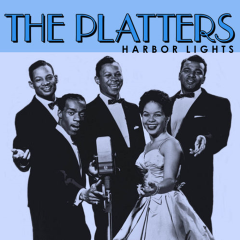
When The Platters released their version in 1960, "Harbor Lights" took on yet another form, with sound effects of ship bells, foghorns, seagulls, and lapping ocean waves interspersed into the lush orchestration and vocal prowess of The Platters lead singer Tony Williams's R&B groove. Their version went to #8 on the Billboard Hot 100, and #15 on the R&B charts.
The Platters are an American vocal group formed in Los Angeles in 1953. Many people have passed through the ranks of The Platters over the years, but the most popular complement of the band was the one with Tony Williams, David Lynch, Paul Robi, Herb Reed, and Zola Taylor as members. The group had 40 charting singles and four #1 hits on the Billboard Hot 100 between 1955 and 1967. They have been described as the group who first fused doo-wop with rhythm and blues. The Platters have won two Grammy Hall of Fame Awards and were inducted into the Rock and Roll Hall of Fame in 1990. The heirs of original member Herb Reed own the name, and a group called The Platters still tours to this date.