Exports of Venezuelan crude to the U.S. have moved lower in recent months, a trend that seems likely to continue with the May 27 expiration of Chevron’s permit to operate there. But while a limited extension of that permit appears likely, if not yet official, the development adds new challenges for Gulf Coast refiners that process heavy crude. In today’s RBN blog, we’ll update the situation in Venezuela, assess what it means for Chevron, and discuss the outlook for the heavy crude-capable Gulf Coast refiners.
Join Backstage Pass, your gateway to exclusive industry insights, connections, and resources across energy markets. Gain direct access to RBN's extensive archive covering crude oil, NGLs, LNG, natural gas, refined products, renewables, and energy transition.
Let’s start with some background on Chevron’s long history in Venezuela, which dates back more than 100 years. Chevron’s legacy company, Venezuelan Gulf Oil, began drilling in 1924, spurring commercial oil production there, and followed that up with operations at Lake Maracaibo and the Boscan Field (tiny, pink-shaded area in Figure 1 below) in northwestern Venezuela. Then-President Carlos Andrés Pérez nationalized Venezuela’s oil industry in 1976 and established Petróleos de Venezuela S.A. (PDVSA) as the state-owned oil company, but despite the nationalization, Chevron remained, and it was asked to form joint ventures (JVs) with PDVSA. In 2006-07, then-President Hugo Chávez’s regime increased royalties and taxes on foreign oil companies and made other changes that prompted some companies — including ExxonMobil and ConocoPhillips — to leave Venezuela.
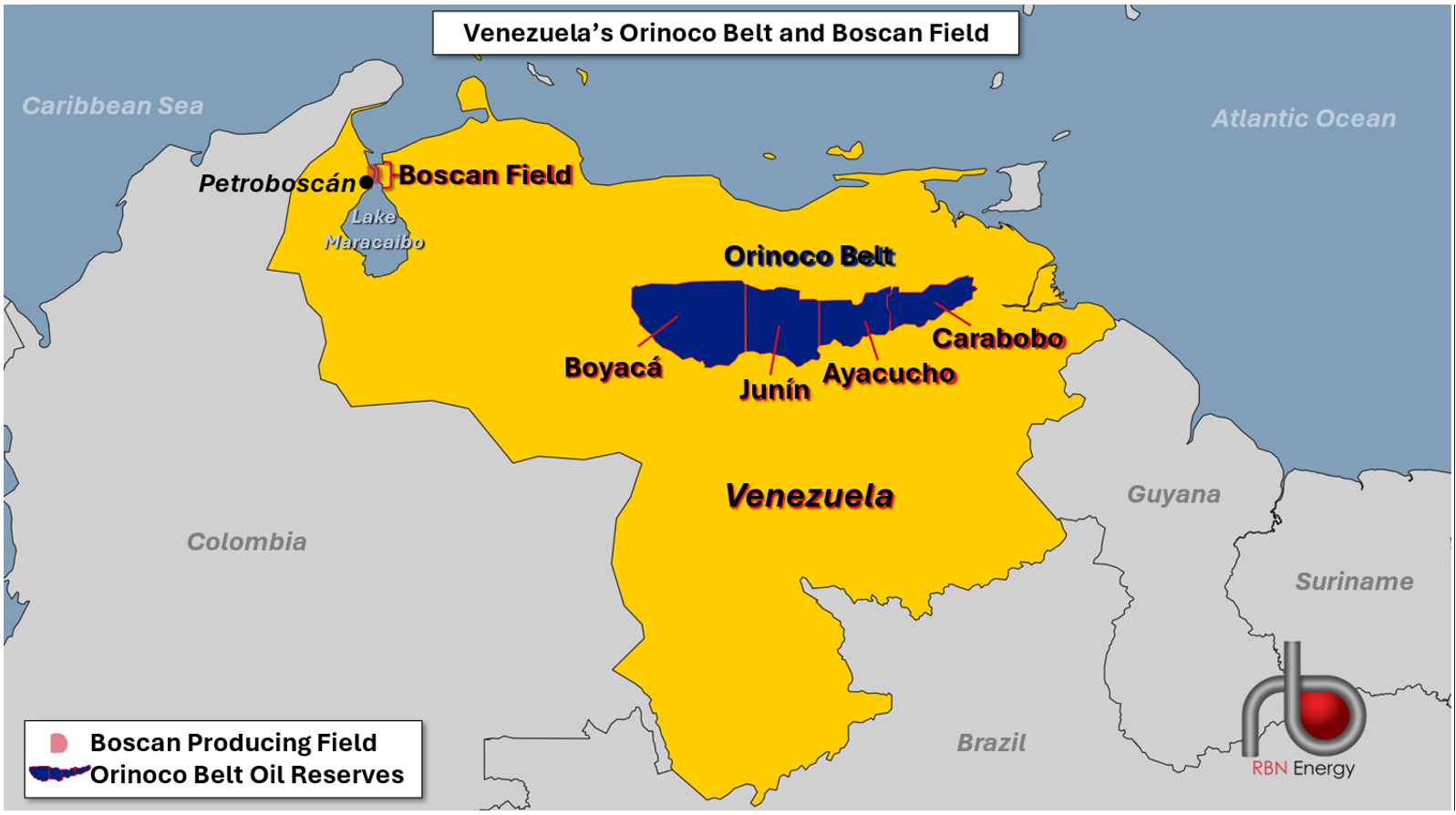
Figure 1. Venezuela’s Orinoco Belt and Boscan Field. Source: RBN
But Chevron hung on, attracted by Venezuela’s vast reserves and the ability to profitably produce oil at relatively low costs. By staying put, Chevron agreed to give up majority control of its operations to PDVSA. Still, it retained 40% interests and continued to be involved in several onshore and offshore projects, including Petroboscán in western Venezuela, while focusing on extra-heavy oil production in three blocks within the Carabobo area of the Orinoco Belt (blue-shaded area in Figure 1 above).
There have been other ups and downs for Chevron along the way, resulting in a mostly downward trend for Venezuelan crude exports to the U.S. in recent years (see Figure 2 below). The first Trump administration imposed economic sanctions on Venezuela in August 2017, which resulted in lower oil production and reduced exports to the U.S. The Trump administration followed that up with an April 2020 order for Chevron to wind down production in Venezuela, although exports to the U.S. had reached zero by that time. The Biden administration later reversed that order and eased sanctions further in October 2022, allowing Chevron to increase production for sales to the U.S. Imports began again in January 2023.
About the song
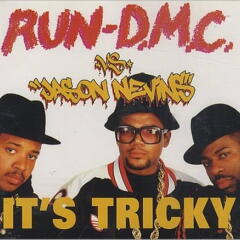
“It’s Tricky” was written by Joseph Simmons, Darryl McDaniels, Jason Mizell, Rick Rubin, Doug Fieger and Berton Averre. It appears as the second song on side one of Run-D.M.C.’s third studio album, Raising Hell. Released in early 1987 as the fourth single from the album, it went to #21 on the Billboard Hot R&B/Hip-Hop Songs chart and #57 on the Billboard Hot 100 Singles chart. A hilarious video of the song, featuring Penn and Teller as hustlers at a three-card Monte game, was released to support the single. The song samples The Knack’s “My Sharona.” Personnel on the record were: Darryl McDaniels (DMC) (vocals), Joseph Simmons (Rev. Run; vocals), Jason Mizell (Jam Master Jay; keyboards, turntables, percussion), The Knack (sampled in the song), and Rick Rubin, Larry Smith and Russell Simmons (production, sampling).
Raising Hell was recorded at Chung King studio in New York City in 1985-86 and was produced by Rick Rubin and Russell Simmons. The album yielded the mega-hit “Walk This Way,” a collaboration with Aerosmith, which helped relaunch that band’s career. The album was released in May 1986 and went to #3 on the Billboard 200 Albums chart and has been certified 3x Platinum by the Recording Industry Association of America (RIAA). Four singles were released from the LP.
Run-D.M.C. was an American hip-hop group formed in Queens, New York City, in 1983 by Joseph Simmons, Darryl McDaniels and Jason Mizell. They were one of the pioneering groups of new-school hip-hop. Their 1984 debut album, Run-D.M.C., became the first hip-hop album to be awarded a Gold record by the RIAA. They released seven studio albums, six compilation albums and 30 singles and have sold more than 20 million records worldwide. After the murder of Jason Mizell in October 2002, Simmons and McDaniels broke up the band. They have reunited a few times for festival dates since then. They were inducted into the Rock and Roll Hall of Fame in October 2009. Simmons and McDaniels continue as solo artists and record producers.