A lot of work must be done to revive Venezuela’s crude oil industry, which has suffered from years of poor management and underinvestment. One of the biggest priorities is to improve and expand its export capacity, which will require repairs and upgrades to export terminals while also fixing problems around unreliable power supply and tanker congestion. Exports have rebounded sharply in early 2026 after collapsing late last year, but much more could happen. In today’s RBN blog, we’ll outline the additional steps that could be completed to improve Venezuela’s facilities and boost export volumes.
Venezuela has been a frequent topic in the RBN blogosphere since the start of the year, when U.S. forces deposed and arrested President Nicolás Maduro. In Take Me Money and Run Venezuela, we recapped how the country went from a major global supplier to producing less than 1 MMb/d today — roughly one-quarter of its former output. We then dug into Venezuela’s crude slate in Orinoco Flow, noting that most reserves lie in the 21,000-square-mile Orinoco Belt and are extra-heavy, making the oil difficult and costly to move and refine. In When Love Comes to Town, we compared Venezuelan and Canadian heavy crudes and why they’re attractive to U.S. Gulf Coast refiners. In Round and Round (which previewed our first Drill Down Report of 2026, which is available here), we laid out the practical steps Venezuela would need to take to boost crude production. Most recently, The Show Goes On detailed the country’s refining sector, Upgrade U examined the important role the country’s crude upgraders figure to play in any plan to boost domestic production and increase exports, while Don’t You (Forget About Me) looked at the country’s expansive natural gas reserves.
Most Venezuelan crude oil production is low-API, high-sulfur crude, coming from the previously noted Orinoco Belt. Because the crude is so dense and viscous, it needs to be blended with a diluent — typically condensate or natural gasoline — or upgraded to a lighter synthetic crude oil (SCO) before it can be transported easily, similar to crude produced in the Canadian oil sands. Exports of crude and refined products have rebounded sharply this year after collapsing late last year. Shipments bottomed out near 100 Mb/d in early January (see Figure 1 below) following a steep December decline, then recovered to roughly 500–550 Mb/d by late January. After holding relatively flat through February, exports climbed to around 1.1 MMb/d in March — the highest level in about six months — before briefly spiking to around 1.4 MMb/d in early April.
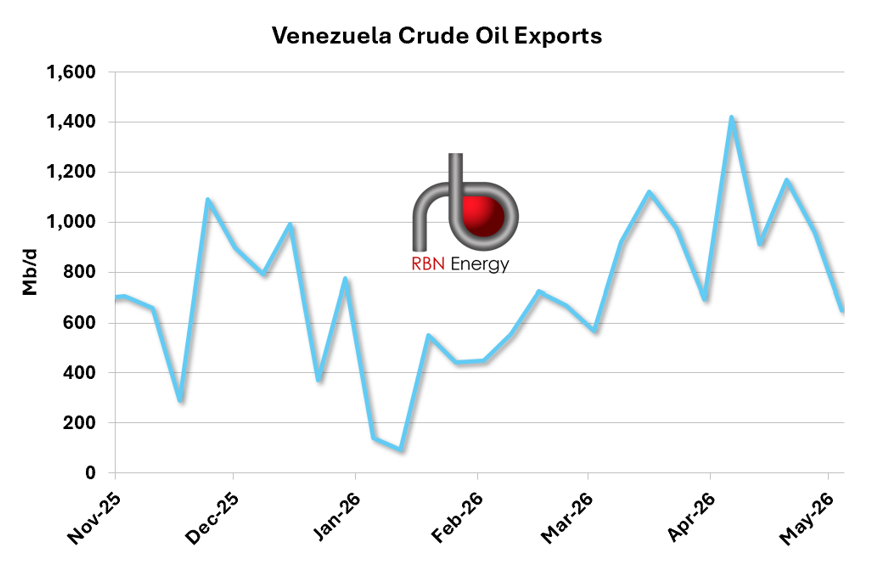
Figure 1. Venezuela Crude Oil Exports. Source: RBN
Imports of Venezuelan Crude Soar to Highest Level Since 2019
According to this week’s EIA Weekly Petroleum Status Report (WPSR) for the week ended May 9, U.S. imports of Venezuelan crude soared to 588 Mb/d, the highest weekly volume since January 2019.
About the song
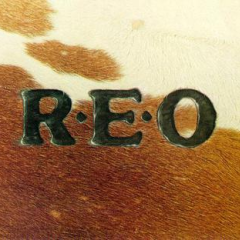
“Keep Pushin’” was written by Kevin Cronin and appears as the first song on side two of REO Speedwagon’s sixth studio album, R.E.O. The song is about persevering through struggles and heartbreak, breaking through to a better life. Released as a single in June 1976, it failed to reach the Billboard Singles chart. Personnel on the record were: Kevin Cronin (vocals, rhythm guitar), Gary Richrath (lead guitar, backing vocals), Gregg Philbin (bass), Neal Doughty (keyboards), and Alan Gratzer (drums).
The album, REO, was recorded in January 1976 at Criteria Studios in Miami and produced by John Stronach. It marked Kevin Cronin’s return after a four-year absence and was the last album for bassist Gregg Philbin, who was replaced by Bruce Hall. The album was released in June 1976 and went to #159 on the Billboard 200 Albums chart. One single was released from the LP.
REO Speedwagon, also known as REO, was an American rock band formed in Champaign, IL, in 1967 with drummer Alan Gratzer and keyboardist Neal Doughty. The band was named after the REO Speedwagon truck made by Ransom Eli Olds (R.E.O.) in Lansing, MI. The band got its start playing around the campus of the University of Illinois in 1967. Their manager was a student, Irv Azoff, who would later manage The Eagles and become the head of MCA Records. Their debut album, R.E.O. Speedwagon, was released by Epic Records in October 1971. They released 16 studio albums, 10 live albums, 22 compilation albums and 34 singles and have sold over 40 million records worldwide. Twenty-six members have passed through the band since its formation. Guitarist Gary Richrath died in Bloomington, IL, in September 2015 at 65. Bassist Gregg Philbin died in Fort Myers, FL, in October 2022 at 75. The band officially retired the name at the end of 2024. Kevin Cronin still tours as The Kevin Cronin Band, playing sets of REO songs.
"About the Song" -- written by Mickey McMahan , RBN Director of Musicology