



The refining industry is complex and unpredictable. Recent plant closures in the U.S. and abroad, as well as mounting pressure to produce more renewable diesel (RD) and sustainable aviation fuel (SAF), have shifted the landscape. In addition, an eight-year battle over CITGO’s three U.S. refineries has taken a new direction. Despite these shifts, the refining industry has remained resilient. In today’s RBN blog, we’ll discuss how refineries balance these changes and make choices to shape their future, the focus of our upcoming Refined Fuels Master Class. Warning: Today’s blog is a blatant advertorial.
As we discussed in Us and Them, the U.S. refining industry has undergone a number of changes in recent years, and more turbulence is likely as global economic and trade patterns shift and many governments push decarbonization efforts. For some U.S. refineries, this has led to closures due to weak profits, rising regulatory costs and declining demand for products, particularly gasoline. But other refineries have prospered and even invested in expansions. The domestic refining industry has evolved into the most competitive in the world, and the issues and challenges faced by other countries will likely benefit U.S. refiners.

In today’s blog, we’ll discuss refining basics, the latest news with the CITGO refineries, the push to increase RD and SAF production, and the importance of using the crack spread and yield models to analyze refining margins. Those are among the topics to be covered in greater detail during our upcoming Refined Fuels Master Class, an online-only event hosted on Thursday, October 2, from RBN’s Refined Fuels Analytics (RFA) practice.
Refining 101
We begin by ensuring understanding of the refining process. Refineries are dynamic hubs that can stretch over thousands of acres, employ more than 2,000 people and often operate at 90% capacity or higher to transform crude oil into fuels like gasoline, diesel and jet fuel. Each refinery is unique and can adjust the quantity of the products it produces depending on market demand and the type of crude oil processed.
The process is quite complex. There’s a mix of separation, conversion and treating processes that happen behind the scenes inside pipes, towers and reactors. The key steps include distillation, which separates crude oil into different fractions; and cracking and reforming, where heavy molecules are broken down or improved. Hydrocrackers boost jet and diesel production while reformers increase gasoline octane and generate hydrogen. Hydrotreaters play a crucial role in removing sulfur, making products cleaner and more environmentally friendly.
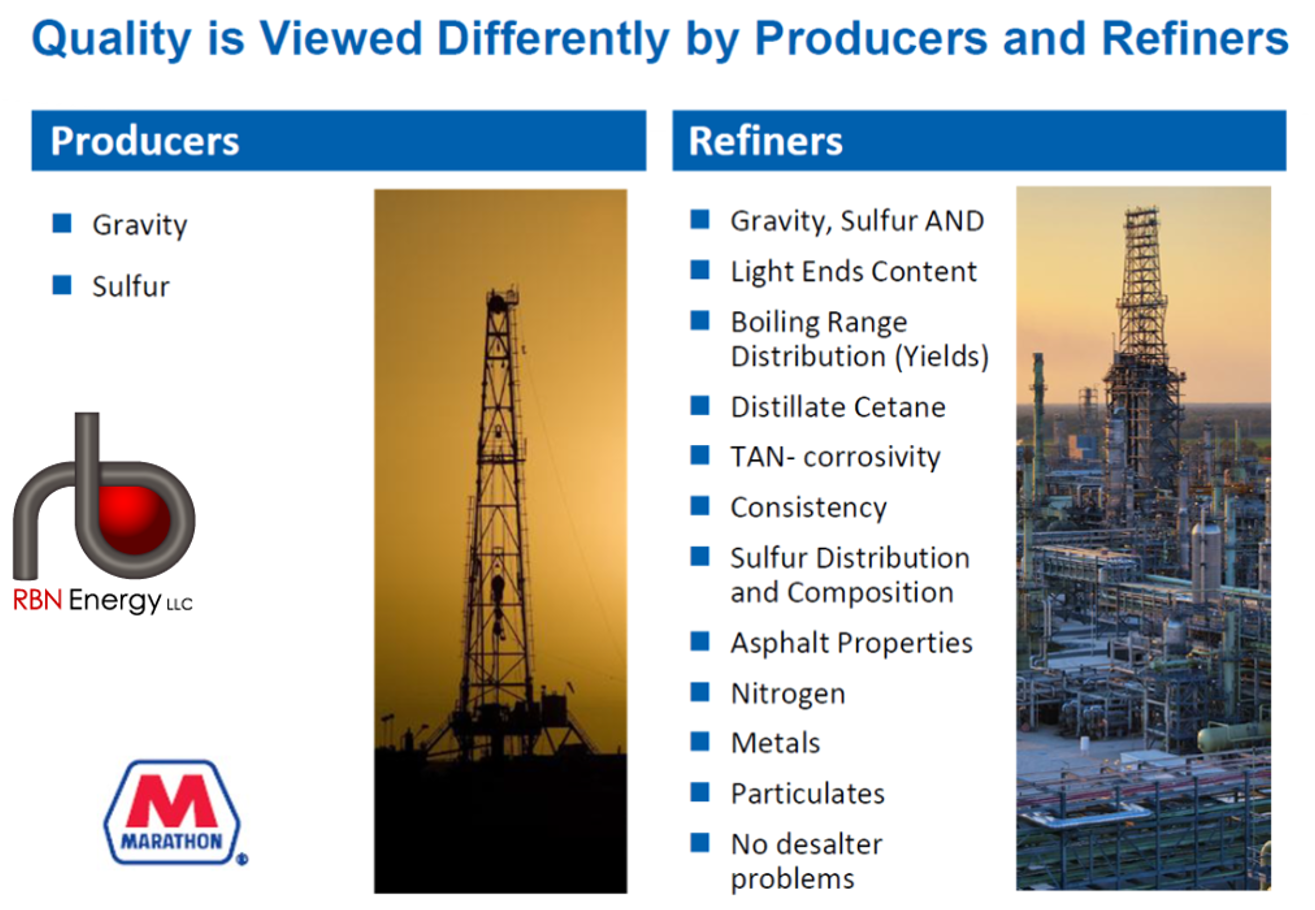
Figure 1. Quality is Viewed Differently by Producers and Refiners. Source: RBN

About the song
"Unpredictable" was written by Derrick Baker, Christopher Bridges, Harold Lilly, Jim Jonsin, and James Scheffer. It appears as the first song on Jamie Foxx's second studio album of the same name. The song, which also features rapper Ludacris, was released as the second single from the album in October 2005. It went to #2 on the Billboard Hot R&B/Hip-Hop Songs and #8 on the Billboard Hot 100 Singles charts and has been certified Platinum by the Recording Industry Association of America. It was Foxx's first US top-ten single. Personnel on the record were: Jamie Foxx (lead, backing vocals), Ludacris (rapping), Warryn Campbell (instrumentation programming), Babyface (guitar, percussion), and Charlie Bereal (guitar).
The album, Unpredictable, was recorded during 2005 at Circle House Studios, The Hit Factory, Larrabee Sound, Mix Star Studios, Ocean Way Recording, Stankonia, Tree Sound, Larrabee North, Phase Four in Los Angeles, and Criteria in Miami. It was produced by Charlie Bereal, Bigg D, Warryn Campbell, Ron Feemster, Sean Garrett, Ron Huggar, Daron Jones, Jim Jonsin, Mateo Laboriel, Harold Lilly, No I.D., Polow da Don Miykal Snoddy, Tank, and Timberland. Released in December 2005, it went to #1 on the Billboard 200 and Top R&B/Hip-Hop Albums charts and has been certified 2x Platinum by the RIAA. Four singles were released from the LP.
Jamie Foxx (Eric Marlon Bishop) is an American actor, singer, and comedian. He has released five studio albums and 19 singles. He has starred in many motion pictures, television shows, and comedy specials. He has won an Academy Award (Best Actor for his portrayal of Ray Charles in Ray), an American Music Award, a Golden Globe Award, two Grammy Awards, four NAACP Image Awards, and a Screen Actors Guild Award. After recovering from a stroke in 2023, Foxx continues to act and do stand-up comedy. He starred in the 2025 action thriller, Tin Soldier, and has directed and stars in the sports comedy drama, All-Star Weekend, due for release at the end of 2025.






Comments
The Citgo terminal located in Vicksburg, MS is now owed by Ergon Refining, Inc.