The U.S. propane market may appear seamless at times, but a lot is happening just below the surface to determine consumer pricing. Key factors include the high seasonality of demand, supply contracts that must account for the seasonality of product delivery and the price, and the cost of transportation from terminals to bulk plants to end users. In today’s RBN blog, we will review the final delivery steps, the impact of transportation costs, and how contracts are priced.

Visualize the infrastructure behind U.S. NGL movement.
The U.S. NGLs Map provides a comprehensive view of the transport, processing, and export networks moving NGLs across the U.S.
This is the fifth and final blog in our series about domestic U.S. propane markets. In Part 1, we outlined the journey of propane from wellhead to burner tip and the various segments of the domestic propane market, including industrial, petrochemical, commercial, residential and agricultural demand. In Part 2, we detailed the role of wholesalers (middle section in Figure 1 below), whose primary function is to aggregate supplies, operate logistics networks, trade propane and integrate midstream operations. (Recently, in Should I Stay Or Should I Go?, we addressed some issues facing wholesalers today.) In Part 3, we introduced how retailers (right section) get their product and then sell and deliver it to the final customer. In Part 4, we covered the seasonal nature of propane demand and how it impacts storage levels and buying patterns.
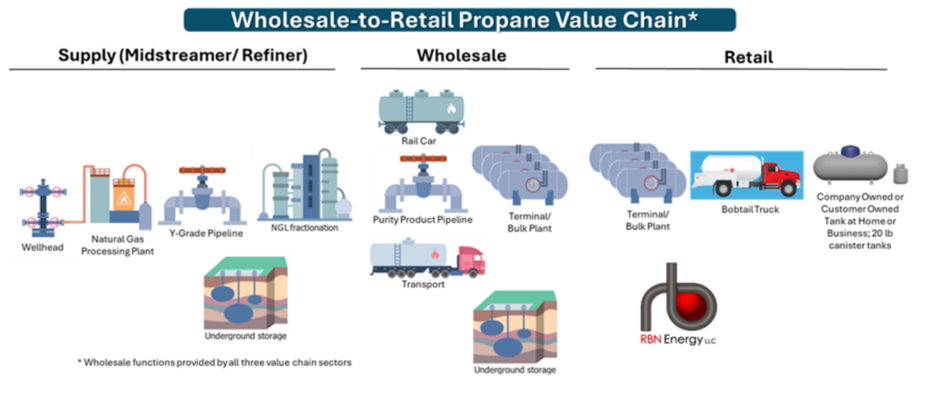
Figure 1. Wholesale-to-Retail Propane Value Chain. Source: RBN

About the song
“Do You Realize” was written by Wayne Coyne, Steven Drozd, Michael Ivans and David Fridmann and appears as the ninth song of The Flaming Lips’ 10th studio album, Yoshimi Battles the Pink Robots. Released as a single in August 2002, it has become one of The Flaming Lips’ most popular songs and has been certified Gold by the Recording Industry Association of America (RIAA). In 2009 it was adopted as the Official Rock Song of Oklahoma. The song’s lyrics deal with the precarious balance of the cycle of life and death. The video for the song was shot in the colorful neon glare of Fremont Street in Las Vegas. It features Flaming Lips singer Wayne Coyne surrounded by female dancers in baby doll lingerie, people wearing rabbit and pig heads, and an elephant. Another typical day in a Flaming Lips video shoot. Willie Nelson recorded a version of the song that was included on his Last Leaf on the Tree album, released in November 2024. The Nelson album was produced by Willie Nelson’s son, Micah Nelson, who has also done time playing bass in The Flaming Lips. Wayne Coyne has said Nelson’s cover of their song was “an utter joy and probably brings more meaning to it.” Personnel on the record were: Wayne Coyne (vocals, guitar), Steven Drozd (guitar, bass, drums, keyboards), and Michael Ivans (bass, keyboards).
Yoshimi Battles the Pink Robots was recorded between June 2000 and April 2002 at Tarbox Road Studios in Cassadaga, NY. Produced by The Flaming Lips, Dave Fridmann and Scott Booker, the album was released in July 2002. It went to #50 on the Billboard 200 Albums chart and has been certified Gold by the RIAA. Four singles were released from the LP.
The Flaming Lips are an American psychedelic rock band formed in Oklahoma City in 1983 by Wayne Coyne. Their live shows are visual extravaganzas reminiscent of Pink Floyd and Grateful Dead shows of the past with perhaps more psychedelics involved. They have released 16 studio albums, 18 EPs, 10 compilation albums and 15 singles. The band has won three Grammy Awards. Eighteen members have passed through the band since its beginnings, with founder Wayne Coyne the only original member still in the group. They continue to record and have tour dates scheduled for Germany, Portugal and Spain through June.