With more than 9 billion gallons of propane delivered to U.S. customers each year, moving those volumes to their final destination is a complex task involving pipelines, rail cars, storage (be it underground or above ground) and, ultimately, trucks. Several major factors help determine the quantity and price of propane delivered to end-use customers, including the seasonality of demand versus the steady nature of production. In today’s RBN blog, we discuss highlights from our new Drill Down Report on propane.

Let’s start with the basics. Looking at the far left in Figure 1 below, propane is produced from the wellhead and is entrained in the natural gas stream. The NGL stream is separated at a gas processing plant into a liquid stream that is a mix of NGLs, also known as raw mix or Y-grade. The cold temperatures of the processing plant cause the propane and associated NGLs to “fall out” of the stream as a liquid. The raw mix is then piped to a fractionator, where it is separated into purity product streams. (The raw mix can also be placed in storage and kept underground until it is ready to be fractionated.) Following fractionation, propane is either stored until needed (this often occurs with propane fractionated in the summer months for use during winter demand) or it can be taken directly to the next step, which is transportation to a wholesaler. Propane from refineries is also picked up at this step and put largely on rail cars.
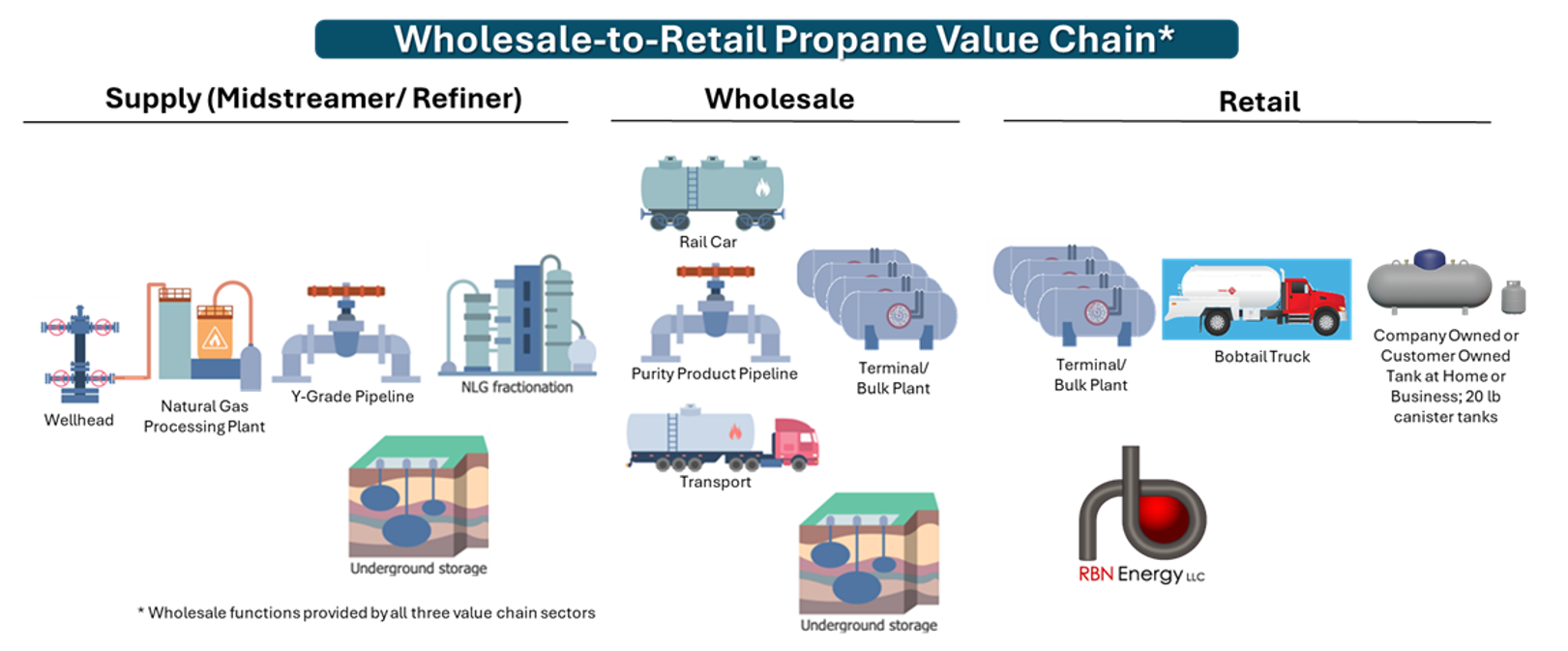
Figure 1. Wholesale-to-Retail Propane Value Chain. Source: RBN
Wholesalers (middle section in Figure 1 above) — companies that sell propane to retailers — have four primary functions. The first is supply aggregation, which includes acquiring propane from multiple sources. This is usually done by midstream companies that operate fractionation facilities. It is also done by “pure” wholesalers that buy directly from fractionators and refineries, and refiners that produce propane as a byproduct. The second function is operating logistics networks to ensure the timely delivery of propane across regions. Many wholesalers maintain large fleets of propane transport trucks to handle long-haul deliveries to terminals. They also have railcars to handle long-distance transport to terminals, roughly 60% of propane terminals in the U.S. have rail capacity. The third function is product trading. Wholesale propane marketers engage in both physical trading and financial hedging. The fourth and final primary function is midstream integration and wholesale competition. Some wholesale propane marketers are midstream companies that own assets such as pipelines, fractionation facilities and terminals.

About the song
“Do You Realize” was written by Wayne Coyne, Steven Drozd, Michael Ivans and David Fridmann and appears as the ninth song of The Flaming Lips’ 10th studio album, Yoshimi Battles the Pink Robots. Released as a single in August 2002, it has become one of The Flaming Lips’ most popular songs and has been certified Gold by the Recording Industry Association of America (RIAA). In 2009 it was adopted as the Official Rock Song of Oklahoma. The song’s lyrics deal with the precarious balance of the cycle of life and death. The video for the song was shot in the colorful neon glare of Fremont Street in Las Vegas. It features Flaming Lips singer Wayne Coyne surrounded by female dancers in baby doll lingerie, people wearing rabbit and pig heads, and an elephant. Another typical day in a Flaming Lips video shoot. Willie Nelson recorded a version of the song that was included on his Last Leaf on the Tree album, released in November 2024. The Nelson album was produced by Willie Nelson’s son, Micah Nelson, who has also done time playing bass in The Flaming Lips. Wayne Coyne has said Nelson’s cover of their song was “an utter joy and probably brings more meaning to it.” Personnel on the record were: Wayne Coyne (vocals, guitar), Steven Drozd (guitar, bass, drums, keyboards), and Michael Ivans (bass, keyboards).
Yoshimi Battles the Pink Robots was recorded between June 2000 and April 2002 at Tarbox Road Studios in Cassadaga, NY. Produced by The Flaming Lips, Dave Fridmann and Scott Booker, the album was released in July 2002. It went to #50 on the Billboard 200 Albums chart and has been certified Gold by the RIAA. Four singles were released from the LP.
The Flaming Lips are an American psychedelic rock band formed in Oklahoma City in 1983 by Wayne Coyne. Their live shows are visual extravaganzas reminiscent of Pink Floyd and Grateful Dead shows of the past with perhaps more psychedelics involved. They have released 16 studio albums, 18 EPs, 10 compilation albums and 15 singles. The band has won three Grammy Awards. Eighteen members have passed through the band since its beginnings, with founder Wayne Coyne the only original member still in the group. They continue to record and have tour dates scheduled for Germany, Portugal and Spain through June.