Shipowners and refiners are struggling with how to prepare for January 1, 2020, when all vessels involved in international trade will be required to meet significantly stricter limits on emissions of sulfur oxides (SOx), either by using fuel with a sulfur content of less than 0.5% or by “scrubbing” the exhaust of ship engines when using the much higher-sulfur bunker fuel that most ships now rely on. The International Maritime Organization’s (IMO) new sulfur rule isn’t a minor tweak. It’s a game changer that already is causing widening spreads on the futures market between 3.5%-sulfur heavy fuel oil (HFO) — the traditional global bunker fuel — and rule-compliant low-sulfur distillates. The rule also promises to be a boon to complex Gulf Coast and other refineries that can break down residual-based HFO into higher-value, lower-sulfur distillates. Today, we begin a new series on how shipowners, refiners and the markets for HFO and low-sulfur marine fuel are responding (or not) to the coming change in global bunker requirements.

Canadian crude output is rising, requiring new export routes. As traditional pathways face constraints, the U.S. Rockies—especially the Guernsey, WY hub—are emerging as key corridors for moving Canadian heavy crude to downstream markets, including the Gulf Coast.
Currently, the world’s refineries produce about 8 MMb/d of residual fuel oil (or resid), about half of which ends up as the up-to-3.5% sulfur HFO that is consumed by the 50,000-plus tankers, dry bulkers, container ships and other commercial ships that ply international waters. As we said in Against the Wind, the IMO — a specialized agency of the United Nations — in recent years has been implementing rules that gradually reduce the allowable SOx emissions from the engines that power these ships. In January 2012, the global cap on sulfur content in marine fuel (blue bars in Figure 1) was reduced to 3.5% (from the old 4.5%) and in January 2020 — only 19 months and change from now — it will be reduced to a much stiffer 0.5%. There are even tougher standards already in place in the IMO’s Emission Control Areas (ECAs) for sulfur, which include Europe’s Baltic and North Seas and areas within 200 nautical miles of the U.S. and Canadian coasts. In July 2010, the ECA sulfur limit in marine fuel (red bars) was reduced to 1% (from the old 1.5%), and in January 2015, the limit was ratcheted down again to a very stringent 0.1% — a standard that will remain in force within the ECAs when the 0.5% sulfur cap for the rest of the world becomes effective on January 1, 2020. [For those wondering, the U.S. Jones Act tankers (except for steamships) and articulated tug barges (ATBs) have been complying with the 0.1% sulfur limit since January 2015. The steamship exemption goes away on January 1, 2020.]
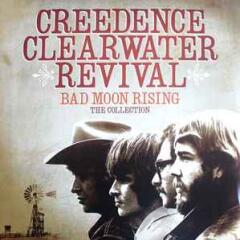
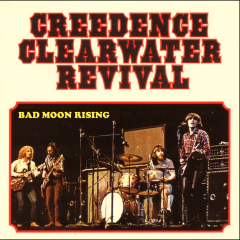
About the song
“Bad Moon Rising” was the lead single from Creedence Clearwater Revival’s third album, Green River. Written and produced by John Fogerty, the song was recorded at Wally Heider’s Studio in San Francisco in March 1969. The single reached #2 on the Billboard Hot 100 singles; the Green River LP went to #1 on the Billboard 200 album chart.
John Fogerty has said he wrote “Bad Moon Rising” after watching “The Devil and Daniel Webster,” and was inspired by a scene in the movie involving a hurricane. The last line of the chorus — “There’s a bad moon on the rise” — has often been misheard as "There’s a bathroom on the right," and Fogerty has been known to sing that line sometimes in concert. The song has been used in numerous films and television shows.
Creedence Clearwater Revival, also referred to as CCR, included John Fogerty (lead and backing vocals, lead guitar and piano), Tom Fogerty (rhythm guitar), Stu Cook (bass) and Doug Clifford (drums). The band was formed in the San Francisco Bay area in 1967 and released seven studio albums from 1968 to 1972 — they disbanded in October of that year. John Fogerty went on to have a successful solo career and still tours today. Tom Fogerty (John’s older brother) released several solo albums before passing away in 1990. Stu Cook and Doug Clifford still tour today as Creedence Clearwater Revisited, playing a repertoire of CCR songs. Creedence Clearwater Revival was inducted into the Rock and Roll Hall of Fame in 1993.