


Some U.S. refiners report lower-than-market gasoline profit margins in the summer, which are often attributed to summer volatility specifications. But that is not always the primary issue; rather, some refiners have trouble generating enough octane-barrels due to the strong demand during the summer months, which can help drive price spikes. In today’s RBN blog we explain why, with a focus on octane, the primary yardstick of gasoline performance, quality and price, and show how refiners use a PIANO analysis to optimize their production.

The replay of our Fall 2026 School of Energy (September 9 & 10, Houston) is now available online!
Learn from RBN experts, participate in hands-on Excel modeling, connect with industry peers, and gain a stronger understanding of today's interconnected energy markets.
Octane is a measure of a gasoline’s resistance to pre-ignition during compression in an engine cylinder, which can cause a knocking sound. Retail gasoline is classified by its octane rating: regular gasoline has an octane rating of 87 and premium gasoline has an octane rating of 91 to 93 — typically, retailers also offer a blended, mid-level alternative with an octane rating of 89. In the U.S., the posted octane rating is the average of the octane measured two different ways, the Research Octane Number (RON) and the Motor Octane Number (MON). That average is called the Anti-Knock Index (AKI), which is the octane number we see posted on the pump, as shown below.
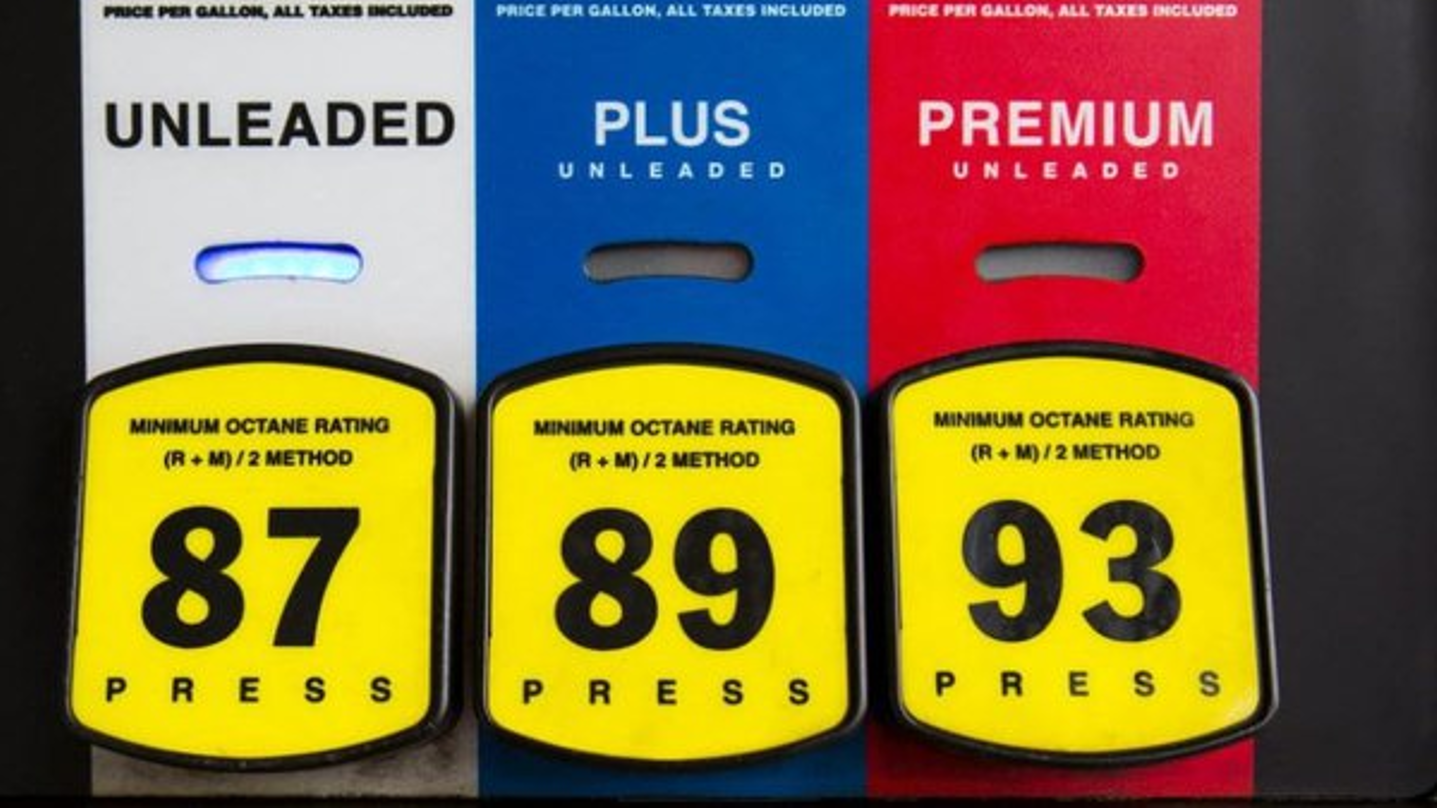
Gasoline at the Pump is Typically Available at a Variety of Octane Levels.
More than a technical indicator of knocking tendency, octane is the dominant market measure of retail gasoline performance and quality. And, as most drivers know, it is also the primary marker of gasoline price — higher octane means a higher price per gallon. Gasoline octane can be increased by either refining crude oil into higher-octane gasoline (through processes like reforming or using special catalysts) or adding octane-enhancing additives (such as alkylate) to refinery-produced gasoline.

About the song
“I Love a Piano” was written by Irving Berlin in 1915 and first performed in the Broadway musical revue Stop! Look! Listen! by the Harry Fox Ensemble, featuring vocalist Abel Conner. The musical ran for 105 performances beginning on Christmas Day 1915. The show was produced by Charles Dillingham and directed by R.H. Burnside. The song was first recorded by vaudeville singer Billy Murray, “The Denver Nightingale,” and released in the US in January 1916 on Victor Records. Across the pond, Ethel Lewey had a successful run with the song on the HMV label in April 1916. Judy Garland sang a rousing version of the song in the 1948 American musical film, Irving Berlin’s Easter Parade, which also starred Fred Astaire, Peter Lawford and Ann Miller. The musical won an Academy Award for Best Scoring of a Musical Picture. Jazz pianist Joe Bushkin recorded the song and used it for his 1950 debut album’s title. Andy Williams sang the song with Kermit the Frog on a 1980 episode of The Muppet Show and Tony Bennett performed the song in a performance on MTV Unplugged in 1994.
Irving Berlin was an American composer and songwriter. Born in Imperial Russia, he arrived in the U.S. at the age of 5. He published his first song in 1907 and had his first big hit with “Alexander's Ragtime Band” in 1911. Walter Cronkite said of Berlin: “He helped write the story of this country, capturing the best of who we are and the dreams that shape our lives.” During his 60-year career, Berlin wrote more than 1,500 songs. In 1938, Berlin’s “God Bless America” became the unofficial anthem of the U.S. He won an Academy Award, a U.S. Army Medal of Merit, two Tony Awards, a Congressional Gold Medal, a Grammy Lifetime Achievement Award, a Presidential Medal of Freedom, and a Medal of Liberty. He is a member of the Songwriters Hall of Fame, American Theater Hall of Fame, Jewish-American Hall of Fame, and has a star on the Hollywood Walk of Fame. Berlin died in Manhattan in September 1989 at the age of 101.





Comments
...and we're still paying the environmental cleanup costs of that time in some places.
Good point. MTBE was an important chapter of the clean fuels era that should have been included in the historical review. But I didn't know we're still working on the cleanup??