


Oxygen-containing gasoline additives called oxygenates, including ethanol, have provided an octane boost to the U.S. gasoline pool since 2000. This has allowed refineries to reduce the octane of refinery-produced gasoline, which increases their gasoline production capacity and efficiency while simultaneously helping achieve the goals for cleaner, lower-carbon fuels derived from domestic renewable feedstocks. A new approach to gasoline formulation promises to take this “sharing” of the octane load much further to exploit the unique octane-enhancing qualities of ethanol, although there are some real-world challenges to wider implementation. In today’s RBN blog, we explain what’s behind the concept of “hydrogen-rich” gasoline.

The Crude Oil Billboard keeps readers at the forefront of the U.S. crude oil market by offering access to data and information moments after its release. Say goodbye to PDF reports that come out after the market has already moved on.
In the first blog in this series, I Love a PIANO, we explained that two types of petroleum molecules (olefins and aromatics) are high in octane and two other types (naphthenes and paraffins) are low in octane, while a fifth (isoparaffins) can vary from moderate to very high octane. (That’s all the chemistry you need to know to understand the basics of gasoline octane.) These five molecular types — paraffins, isoparaffins, aromatics, naphthenes and olefins — form the acronym PIANO, which is the common name of the hydrocarbon-type analysis used by refiners and gasoline blenders.
As explained in our Breaking the Chains series, octane is a measure of a gasoline’s resistance to pre-ignition during compression in an engine cylinder, which can cause a knocking sound. It is also the primary yardstick of gasoline quality and price. The numbers you see on service station gasoline pumps are the octane ratings of the products — typically 87 for regular gasoline and 93 for premium. The PIANO analysis tells gasoline producers how much of each hydrocarbon type are in each gasoline blendstock, which helps blenders apply the basic strategy of gasoline octane production, which is to get enough of the O’s (olefins) and A’s (aromatics) into each product to meet its octane specification.
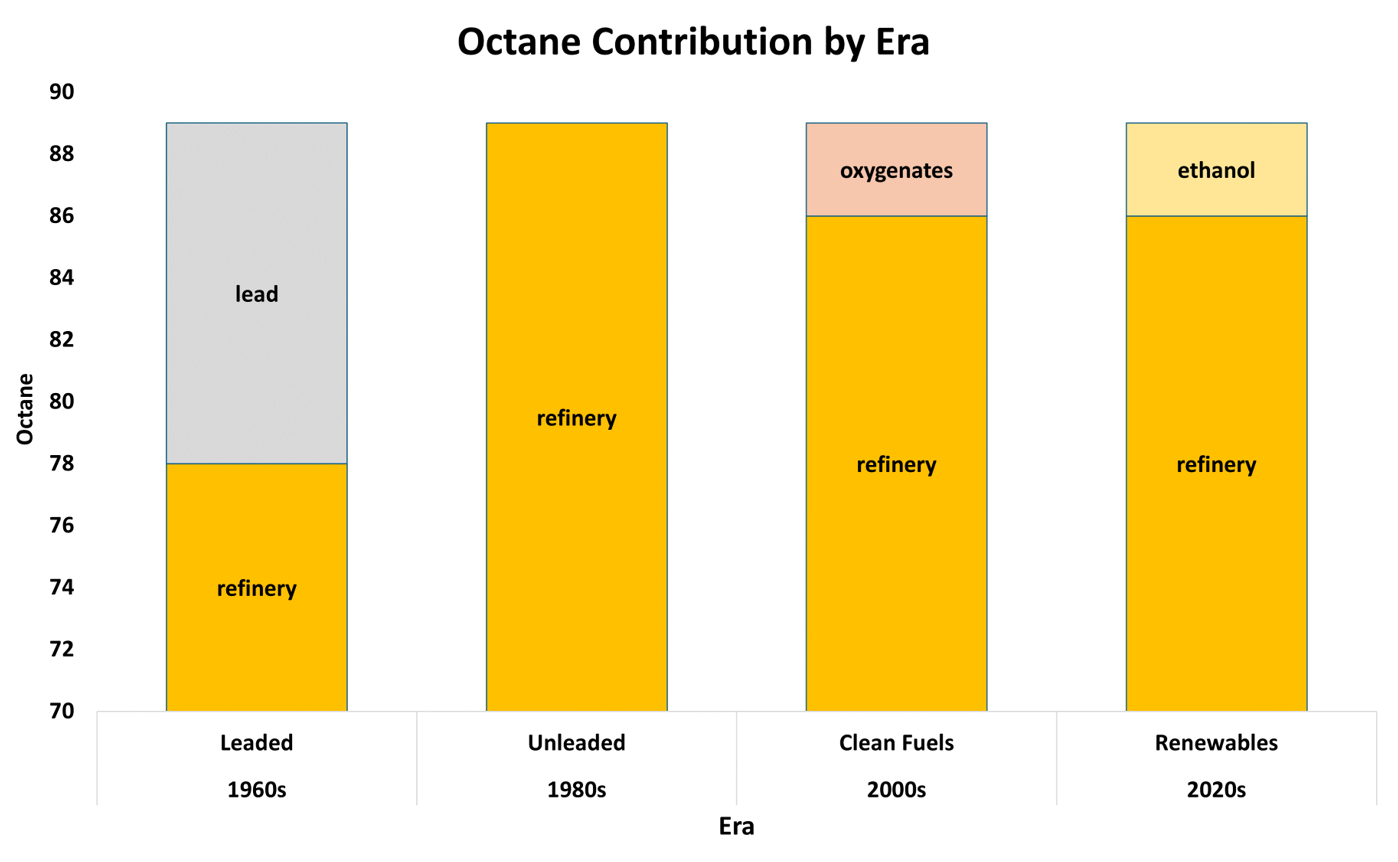
Figure 1. The Four Eras of Octane Technology. Sources: Hoekstra Trading LLC, RBN Energy
About the song
“Can I Kick It?” was written by Lewis Reed, Kamaal Fareed and Ali Muhammad. It appears as the eighth song on A Tribe Called Quest’s debut studio album, People’s Instructive Travels and the Paths of Rhythm. The song was recorded in late 1989 at Calliope Studios in New York City. It contains samples of “Walk on the Wild Side” by Lou Reed, “What a Waste” by Ian Dury and the Blockheads, “Spinning Wheel” by Dr. Lonnie Smith, “Dance of the Knights” by Sergi Prokofiev, and “Sunshower” by Dr. Buzzard’s Savannah Band. A video was made for “Can I Kick It?” by director Jim Swaffield. Released as a single in October 1990, it went to #8 on the Billboard Hot Rap Songs Singles chart. Personnel on the record were: Q-Tip (rapping, production, mixing), Ali Shaheed Muhammad (scratching, programming), Phife Dawg (rapping), Jarobi White (rapping), and Lucien (backing vocals).
People’s Instructive Travels and the Paths of Rhythm was recorded in 1989-90 at Calliope Studios and Battery Studios in New York City and produced by A Tribe Called Quest. The album was released in April 1990 and went to #23 on the Billboard Top R&B/Hip-Hop Albums chart and #91 on the Billboard 200 Albums charts. It has been certified Gold by the Recording Industry Association of America. Three singles were released from the LP.
A Tribe Called Quest was an American hip-hop group formed in Queens, New York City, in 1985 by Q-Tip, Phife Dawg, Ali Shaheed Muhammad, and Jarobi White. The group was considered to be at the forefront of alternative hip-hop. They released six studio albums, five compilation albums, two EPs, and 16 singles. They won a Billboard Founders Award, a Brit Award, and a Source Award, and were inducted into the Rock and Roll Hall of Fame in 2024. After founding member Phife Dawg died in March 2016, the group released a final album, We Got It from Here ... Thank You 4 Your Service, which debuted at #1 on the Billboard 200 Album chart in November 2016. The group performed their final concert at Bestival in Dorset, England, in September 2017






Comments
Hydrogen rich gasoline creates a whole new paradigm for making gasoline. It eases the octane crunch as George points out. But it makes gasoline cheaper, lowers tailpipe emissions, lowers CO2 emissions in the refinery and at the tailpipe. HRC gasoline (Hydrogen Rich Content) is patented and in early stages of commercialization. Implementation of a different technology and approach requires know-how. So, if you are interested in learning more, contact us through our website (HRCFuels.com) or email me at [email protected].