With global demand for LNG rising and U.S. natural gas producers needing markets for their burgeoning output, it’s not a question of whether another round of U.S. liquefaction/LNG export facilities will be built, but which developer will be first and when it will make its final investment decision (FID). Odds are that the initial FID for this “next round” of projects is only months away, but as for the specific developer and project that will lead the pack, that has yet to be determined. We do know, however, that a handful of projects appear to be making real progress, and today we consider one of them: Tellurian’s Driftwood LNG project near Lake Charles, LA.
This is the second episode in our series on the next round of U.S. liquefaction/LNG export projects. In Part 1, we discussed the roller-coaster ride that U.S. LNG has been on for the past 20-odd years — and some odd years they’ve been. Through the 1990s and the first two-thirds of the 2000s, U.S. natural gas production was close to flat, so the general thinking was that U.S. gas output had peaked, and that over time the country would need to import increasing amounts of LNG to meet its gas demand. In 2005, the Energy Information Administration (EIA) estimated that by 2015 the U.S. would be importing the LNG equivalent of nearly 12 Bcf/d, and that by 2025, the nation would be importing LNG volumes equal to nearly 18 Bcf/d. A number of LNG import terminals were constructed to handle the expected inflow. It became clear by 2010-11, however, that the Shale Revolution — and the resulting boom in U.S. gas production — had eliminated the need for LNG imports. All of a sudden, many of the companies that had just finished building LNG import terminals started exploring the possibility of adding liquefaction plants at those sites to export LNG instead.
The RBN Crude Oil Analytic Suite gives you access to four weekly reports covering crude oil markets, including: Crude Billboard, Crude Permian, Crude TradeView, and Crude Voyager.
Now, seven years later, five liquefaction trains — four at Cheniere Energy’s Sabine Pass LNG facility in Louisiana and one at Dominion’s Cove Point LNG in Maryland — with a combined capacity of more than 23 million tonnes per annum (MMtpa) are up and running, and 20 liquefaction trains with a combined capacity of nearly 49 MMtpa have their FIDs in hand and are under construction. (We track the status of LNG projects with FIDs in RBN’s new LNG Voyager Report — click here for more information.) Given that 1 Bcf/d of natural gas equals approximately 7.6 MMtpa, the five currently operational trains could send out the LNG equivalent of about 3 Bcf/d, and the 20 units being built could send out an additional 6.4 Bcf/d, for a total of 9.4 Bcf/d — more than one-ninth of total U.S. gas production today, not even accounting for the usual 10% losses in the liquefaction process. And that’s just the beginning. At least another dozen and a half liquefaction/LNG export projects are in various stages of pre-FID, pre-construction development.
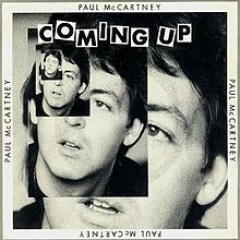
About the song
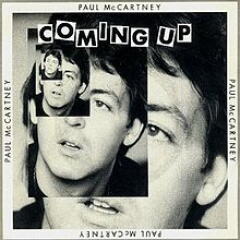
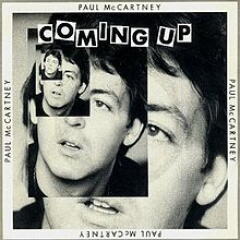
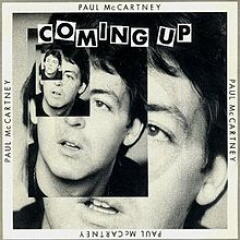
"Coming Up" is a song written, recorded and produced by Paul McCartney for his 1980 solo studio album, McCartney II. The single was released in April 1980; it quickly rose to #2 on the UK singles chart; a live version of the song with Wings went to #1 on the U.S. Billboard Hot 100 at the same time. In the music video of "Coming Up," Paul and his wife Linda play various roles as members of a band identified on the kick drum as "The Plastic Macs," an homage to John Lennon's Plastic Ono Band. On the album, Paul plays bass, guitar, keyboards, drums and sings all the lead vocals. Linda McCartney assists with the backing harmonies.
Sir James Paul McCartney is an English singer-songwriter, multi-instrumentalist, and composer. He gained worldwide fame as the bassist and singer for the Beatles. His songwriting partnership with John Lennon was the most successful of the post-World War II era. McCartney is a two-time inductee into the Rock and Roll Hall of Fame — in 1988 with the Beatles and in 1999 as a solo artist. He also is the recipient of an Academy Award (in 1971, for the score of the movie version of “Let It Be”) and 18 Grammy Awards. He has written or co-written 32 songs that topped the Billboard Hot 100, and is rock and roll’s only billionaire. Paul was knighted by Queen Elizabeth II in 1997.