It seems like everyone has an opinion about the Strategic Petroleum Reserve (SPR), and everyone is at least a little bit right. For example, many assert the SPR provides a helpful crude oil supply buffer in the event of a major disruption from, say, a strong hurricane in the Gulf of Mexico or a war in the Middle East. Others say the market can take care of itself — the SPR just muddies the waters by getting government (and worse yet, politicians!) involved. Still others say the oil market has changed dramatically since the SPR was established almost a half-century ago and that the strategy behind the reserve should be revised in response to those changes. In today’s RBN blog, we discuss the very gradual refilling of the SPR after a big draining — and an ongoing debate about the reserve’s future.
Crude Oil Permian provides detailed analysis of the fundamental drivers impacting the Permian Basin crude oil market including weekly data, analysis and market intelligence updates of: Permian crude oil supply and demand, pipeline outflows and capacity, prices, and infrastructure updates.
The U.S. SPR, established in the mid-1970s in response to the 1973-74 oil crisis, is the largest emergency stockpile of crude oil in the world, with an authorized capacity of 714 MMbbl. In the past few decades, it has been used to store crude for a rainy day — that is, to help deal with unpredictable events such as embargoes or major hurricanes that interrupt supply.
During the Trump administration, the crude oil volumes stored within the SPR’s four storage sites (more on those in a moment) fell by 57 MMbbl (from 695 MMbbl to 638 MMbbl), mostly due to congressionally mandated drawdowns designed to help offset federal spending. Since taking office in January 2021, President Biden has tapped the SPR a number of times, mostly to help address a supply/demand balance that tightened rapidly as demand rebounded from COVID lows, resulting in higher oil, gasoline and diesel prices. For example, in November 2021, the Biden administration authorized a 32-MMbbl exchange in which barrels would be released by the end of April 2022 but would need to be returned to the SPR during fiscal 2022-24. Then, in February 2022, the administration authorized a 30-MMbbl withdrawal shortly after Russia’s invasion of Ukraine. (The 30 MMbbl was one half of an international, 60-MMbbl sale orchestrated by the International Energy Agency, or IEA.) One month later, the president announced plans for the largest SPR withdrawal ever: the release of 1 MMb/d over 180 days.
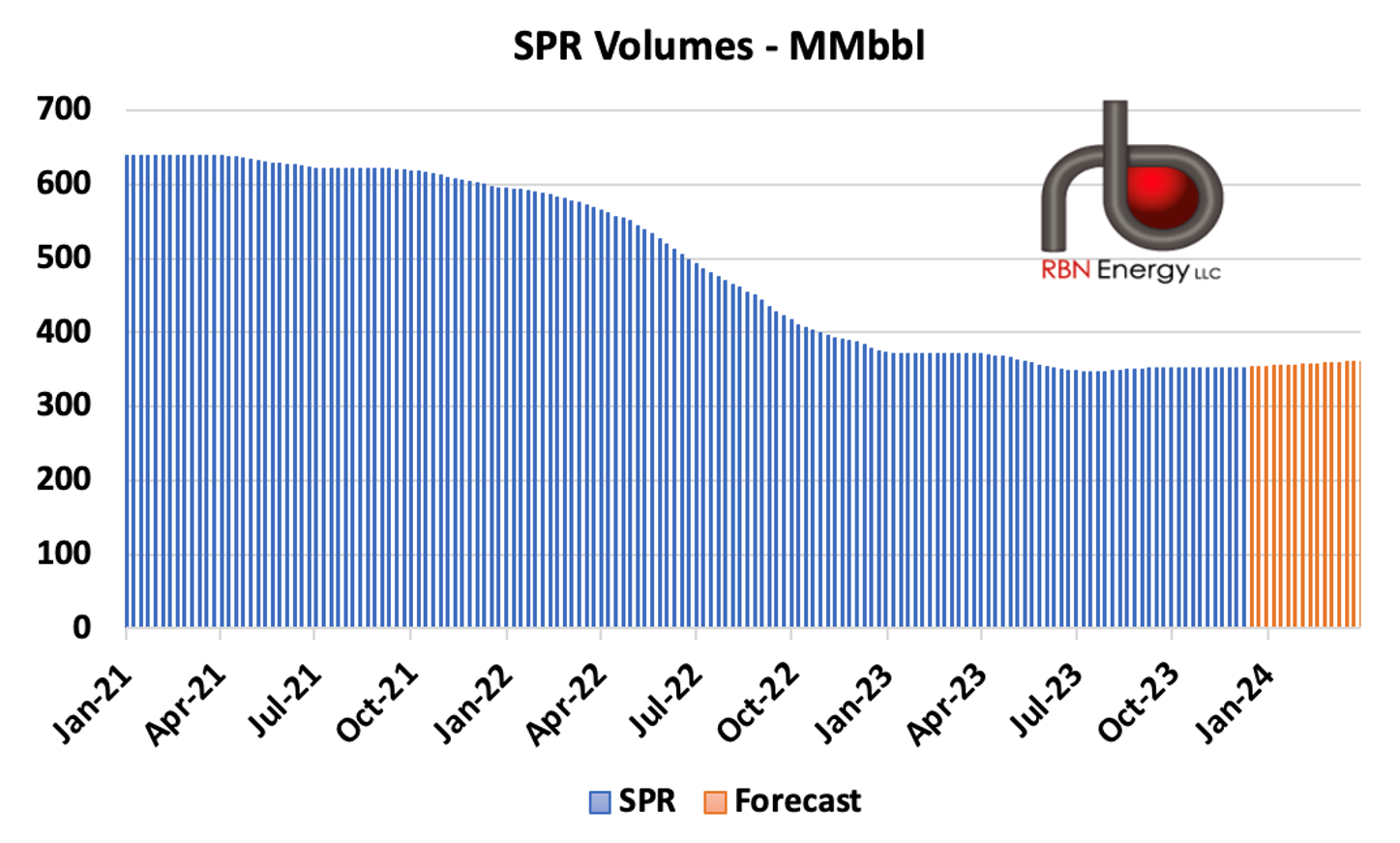
Figure 1. SPR Volumes During the Biden Administration. Source: EIA
About the song
“Empty Spaces” was written by Roger Waters and appears as the second song on side two of Pink Floyd’s 11th studio album, The Wall. At 2:10 in length, the song is sandwiched between “Goodbye Blue Sky” and “Young Lust” and provides a glimpse into the character of Pink transforming from puberty into adulthood. (There is a hidden backward masking message on the left side of the song before the lyrics start.) “Empty Spaces” was not included in the film version of The Wall. Personnel on the record were: Roger Waters (vocals, bass). David Gilmour (vocals, electric guitar, synthesizers), Richard Wright (piano), Nick Mason (drums, percussion), James Guthrie (synthesizer), and Phil Taylor (sound effects),
The Wall was recorded between December 1978 and November 1979 at Britannia Row in London, Super Bear in Nice, Miraval in Correns, 30th Street in New York City, and Producers Workshop and Cherokee in Los Angeles. The album was produced by Bob Ezrin, James Guthrie, Roger Waters and David Gilmour. The album is a rock opera that explores the main character Pink’s journey from becoming a rock star into isolation from society resulting in building a wall around himself for protection. Roger Waters modeled the Pink character after himself and Pink Floyd founding member, Syd Barrett. The album was released in November 1979 and went to #1 on the Billboard 200 Albums chart. It has been certified 23X platinum by the Recording Industry Association of America. Three singles were released from the LP.
Pink Floyd is an English progressive rock band formed in London in 1965 by Syd Barrett, Roger Waters, Richard Wright, and Nick Mason. Guitarist David Gilmour joined the band in 1967 and Syd Barrett left the band in 1968. The band has released 15 studio albums, four live albums, 12 compilation albums, three EPs and 27 singles and have sold more than 250 million records worldwide. They have won three Grammy Awards and two Ivor Novello Awards and are members of the Rock and Roll Hall of Fame and the UK Music Hall of Fame. Syd Barrett died in 2006 and Richard Wright died in 2008. Pink Floyd has never officially broken up, and the three remaining members have all enjoyed successful solo careers. In March 2022, Gilmour and Mason reunited as Pink Floyd and recorded and released the single, “Hey, Hey, Rise Up,” protesting the Russian invasion of Ukraine.