The swift increases in crude oil and gasoline prices that followed Russia’s invasion of Ukraine in February — and the sanctions that were implemented soon thereafter — spurred a lot of concern that the U.S. and global economies would go into a tailspin. In response, government officials here and abroad turned to their strategic reserves as a way to quickly balance the market and rein in prices while buying time for additional oil production to come online. But U.S. production growth and rig activity have hit a wall since June, when releases from the Strategic Petroleum Reserve (SPR) started to pick up steam, reducing the prospects for a significant output increase this year. In today’s RBN blog, we examine the changes in the market since the major withdrawals were announced, how the hoped-for bridge to higher oil production has so far failed to materialize, and why it’s unlikely the government will turn to the SPR if prices spike again soon.
The Biden administration, fully aware of the public's sensitivity regarding gasoline prices, hasn’t been shy about tapping the SPR. Last November — when prices first started to rise — it authorized a 32 MMbbl exchange in which barrels would be released by the end of April but would need to be returned to the SPR during fiscal 2022-24. Then, a 30 MMbbl withdrawal was announced shortly after Russia’s invasion of Ukraine in late February. Finally, on March 31, President Biden said the U.S. would release another 180 MMbbl of crude from the SPR over six months, or about 1 MMb/d, as we discussed in I Want to Break Free.

Crude Oil TradeView provides up-to-date data and insights into the behavior of differentials for 33 crude assessments across North America. Each week, it also walks you through the reasoning of why differentials widen, narrow, flip (premium vs. discount), or blow out.
A few days after Biden’s announcement, the International Energy Agency (IEA) said it would release 120 MMbbl from emergency reserves (about 88 MMbbl of crude oil and 32 MMbbl of refined products) over six months through contributions from 19 countries, including 60 MMbbl of oil from the U.S. (Those barrels were part of the 180 MMbbl release announced by Biden.) The IEA estimated that about 240 MMbbl of emergency stocks (oil and products) would be added to the market over the next six months — an average of about 1.3 MMb/d. (That estimate did not include the release of 62.7 MMbbl of crude oil and refined products that was announced by the IEA on March 1, which included the 30 MMbbl of U.S. oil that was noted earlier.)
About the song
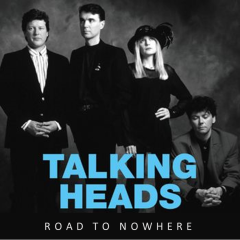
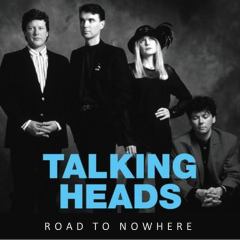
“Road to Nowhere” was written by David Byrne and appears as the fourth song on side two of Talking Heads’ sixth studio album, Little Creatures. Released as a single in September 1985, the song went to #25 on the Billboard Mainstream Rock Tracks Singles chart. “Road to Nowhere” songwriter and Talking Heads front-man David Byrne has said, “I wanted to write a song that took a joyful look at doom.” The music video for the song was nominated for Best Video of the Year at the 1986 MTV Video Music Awards. Personnel on the record were: David Byrne (lead, backing vocals, electric guitar), Jerry Harrison (organ, backing vocals), Tina Weymouth (bass, backing vocals), Chris Frantz (drums, backing vocals), Andrew Cader (washboard), Jimmy Mcdonnel (accordion), Lenny Pickett (sax), Steve Scales (tambourine), and Erin Dickens, Diva Gray, Gordon Gordy, Lani Groves and Kurt Yahijian (backing vocals).
Little Creatures was recorded between October 1984 and March 1985 at Sigma Sound in New York City. Produced by Talking Heads, the LP was released in June 1985. It went to #20 on the Billboard 200 Albums chart and has been certified 2X Platinum by the Recording Industry Association of America. Three singles were released from the album.
Talking Heads were an American rock band formed in New York City in 1975 by David Byrne, Tina Weymouth, Chris Frantz and Jerry Harrison. The group got its start playing at CBGB’s in the Bowery in New York in 1975. They were signed to Sire Records and released their debut album, Talking Heads: 77, in September 1977. They released eight studio albums, two live albums, nine compilation albums, and 31 singles. The band was inducted into the Rock and Roll Hall of Fame in 2002. Along with the original four members of the band, Talking Heads were augmented by nine additional players at various times before their breakup in 1991. All four original members of the band have gone on to successful solo and group endeavors.