All the debate and speculation you hear about the future of the data center industry comes with the promise of massive electricity — and natural gas — usage down the line. But which data centers are using the most grid power right now — no hype, no future expansion plans, just actual performance? And how much electricity are they actually using? In today’s RBN blog, we’ll look at the largest U.S. data centers in operation today and the amount of grid power they’re consuming.
Data centers and their need for massive amounts of power have been a major topic in the RBN blogosphere. The promise (and potential pitfalls) around data centers is most notably seen in Virginia, which has more than 550 data centers in operation, with some estimates well above that. But as we discussed recently in Sweet Virginia, some communities in the Old Dominion State are asserting greater control over the approval process and seeking to slow development. As we noted in Part 2 of that mini-series, Virginia remains a hot spot for data centers, with dozens of new facilities under development, but Texas has also stepped up its game, with more than 350 data centers in operation (see God Blessed Texas). Its neighbor to the east, Louisiana, also has some massive projects underway, including a $10 billion site being constructed by Meta (parent company of Facebook and Instagram; see Louisiana Saturday Night) that could one day cover a stretch of land equal to one-seventh the size of Manhattan.

The Natural Gas Master Class is a one-day online event focusing on understanding flow analysis, interpreting pipeline data and forecasting future flows. This course is designed to equip you with the knowledge and skills to effectively analyze the complexities of natural gas markets, flow analysis, and pipeline modeling. Join us online
October 21 | Online
Data centers are dominating the energy industry and long-term estimates for power demand are thought by some to be overly optimistic, perhaps more of a wish than reality. Indeed, suspicious minds wonder how many of those data centers will become operational and how long it will take. Operators often cite design capacity, which is what a facility would pull if it ran 24/7, with every customer plugged in and all the cooling kicked on. In reality, a data center may consume only a fraction of its total capacity at a given point in time, depending on the stage of buildout, the level of tenant activity and other factors. The question we are discussing in today’s blog is simple: How much electricity are the biggest U.S. data centers pulling from the grid right now?
Finding an answer to that question isn’t simple or easy, and also note that we said “pulling from the grid right now.” A challenge with facilities that rely heavily on renewables and/or behind-the-meter systems is that they don’t file the same public interconnection documents as grid-dependent campuses. That means their actual power draw may be significant, but the data isn’t publicly available, so it isn't easy to rank them alongside fully grid-metered sites.
It’s also important to keep in mind that hard data on power consumption is scarce. Utilities rarely disclose site-specific load, so we generally rely on utility filings, company updates and regulatory documents to track which facilities are drawing power, which means that other data-center sites could be worthy of inclusion here. The exact number of megawatts each site draws at any given moment remains a gray area.
A key pattern stood out in our analysis. Many of today’s largest data center consumers are on large campuses built a decade or more ago and have undergone numerous expansions along the way to reach their current state. Combined, the 11 sites discussed in today’s blog have about 3,000 MW of installed capacity, enough to power more than 2.4 million U.S. homes. Below is our list of the data centers using the most electricity, based on factors including analysts' insights, publicly available information, and companies' reports.
Google’s Council Bluffs, IA, data center complex is first on our list with its sprawling campus, which began construction in 2007 (see Google icon in the center of Figure 1 below). This is a monster hub for Google’s cloud, AI and internet operations. MidAmerican Energy, a utility with customers in several Midwest states, serves the site, and Google has contracted for up to 407 MW of wind power through public agreements with it. Google’s precise energized load is not disclosed, but analysts speculate it falls within 500-600 MW. The entire complex comprises two campuses, four buildings and an estimated 2.9 million square feet. The first facility near Lake Manawa became operational in 2009, with a second major campus (Southlands) opened in 2013.
About the song
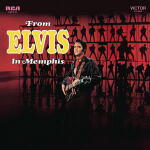
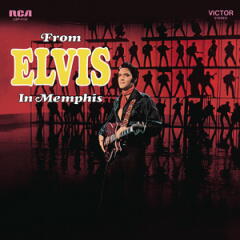
“Suspicious Minds” was written by Mark James (Francis Rodney Zambon), who also penned the hits “You Were Always on My Mind” and “Hooked on a Feeling.” It appears as the 14th song on the 2000 bonus reissue of From Elvis in Memphis, Elvis Presley’s ninth studio album. James had originally released the song as a single on Scepter Records in 1968. Chips Moman, who had produced that record, was working with Presley and pitched it to him as a single to follow up on Presley’s success with his ’68 Comeback Special. Recorded at Memphis Sound in Memphis between 4-7 AM on a cold morning in January 1969, it was released as a single in August 1969. Produced by Chips Moman and Felton Jarvis, it went to #1 on the Billboard Hot 100 Singles chart and has been certified Gold by the Recording Industry Association of America (RIAA). It would be Presley's final #1 single until his death in 1977. Personnel on the record were: Elvis Presley (vocals), Reggie Young (guitar), Mike Leach (bass), Bobby Wood (piano), Bobby Emmons (organ), Gene Chrisman (drums), various Memphis horn players (trumpets, trombones, baritone saxophones), and Mary Greene, Ginger Halladay, Mary Hallady, Donna Thatcher (backing vocals). It is worth noting that Donna Thatcher, who did the “ahhs” on the song, later became Donna Godchaux of The Grateful Dead, who recently passed away in Nashville at 78. For a real treat, check out the live version of the song on the 1972 album, Elvis as Recorded at Madison Square Garden.
From Elvis in Memphis was recorded at American Sound in Memphis in January and February 1969 under the direction of Chips Moman and his house band, The Memphis Boys. Made for under $25,000, it was Presley’s first recording in Memphis since his Sun Record recordings in 1955. Released in June 1969, the album went to #2 on the Billboard Country Albums chart and #13 on the Billboard 200 Albums chart. It has been certified Gold by the RIAA. The hit single, “In the Ghetto,” was the only single released from the original LP.
Elvis Presley was an American rock and roll singer and actor. Known as “The King of Rock and Roll,” he helped change the culture of popular music in the 1950s. He released 29 studio albums, nine live albums, 17 soundtrack albums, 21 compilation albums, 38 EPs and 113 singles and has sold more than one billion records worldwide, making him the best-selling male solo artist of all time. He starred in 32 motion pictures and five concert specials. He is a member of the Rock and Roll Hall of Fame, Country Music Hall of Fame, Gospel Music Hall of Fame, UK Music Hall of Fame, Rockabilly Hall of Fame and National Rhythm & Blues Hall of Fame, and has a star on the Hollywood Walk of Fame. Presley died at Graceland, his Memphis home, in August 1977 at 42.
"About the Song" -- written by Mickey McMahan , RBN Director of Musicology