ARM Energy Holdings has reached a final investment decision (FID) for the 2.5-Bcf/d Mustang Express Pipeline, which will support Sempra Infrastructure’s Port Arthur LNG Phase 2, the latest of several major LNG projects in the Sabine River area to reach FID. The pipeline is intended to act as a regional header system with a route designed to offer maximum optionality and connectivity. In today’s RBN blog, we’ll discuss the pipeline’s strategy and what it could mean for regional gas flows.

The Natural Gas Master Class is a one-day online event focusing on understanding flow analysis, interpreting pipeline data and forecasting future flows. This course is designed to equip you with the knowledge and skills to effectively analyze the complexities of natural gas markets, flow analysis, and pipeline modeling. Join us online
October 21 | Online
Let’s start with the biggest story in the gas market. The surge in associated gas production from the crude-oil-focused Permian Basin has prompted a wave of new pipelines to move gas to major demand centers, especially existing and planned LNG export terminals along the Texas and Southwest Louisiana coast. The 2.5-Bcf/d Matterhorn Express came online in October 2024 to take gas from the Permian to the Katy Hub just west of Houston; so will the 2.5-Bcf/d Eiger Express when it starts up in 2028. Also planned are the 2.5-Bcf/d Blackcomb Pipeline from the Permian to near Corpus Christi, the 2.2-Bcf/d Hugh Brinson Pipeline to near Dallas, and a handful of new pipes along the coast, including the Traverse and Trident projects. (For insights on gas flows throughout Texas and Louisiana, check out RBN’s Arrow Model.)
The latest entry, ARM Energy Holdings’ 236-mile, 42-inch Mustang Express (dashed blue line segments in Figure 1 below), would play a pivotal role in moving Permian gas to the coast because it would run from Colorado County, where it connects to the header system for the Tres Palacios storage facility (green line), to the Katy Hub and then to Port Arthur Phase 2 (red-striped diamond) on the easternmost edge of Texas’s Gulf Coast (more on the route below). Port Arthur Phase 2, which was sanctioned in September, will include two liquefaction trains, each at 6.5 MMtpa (about 1 Bcf/d), bringing the site’s total capacity to about 26 MMtpa (3.8 Bcf/d). It is expected to start up in two stages: the first train in 2030 and the second in 2031.

About the song
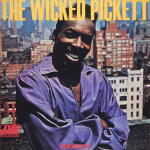
“Mustang Sally” was written by Mack Rice and appears as the first song on side one of Wilson Pickett’s fourth studio album, The Wicked Pickett. Mack Rice was the first to issue the song as a single on the Blue Rock label in May 1965, where it reached #15 on the Billboard R&B Singles chart. Rice knew Pickett from when they were members of the R&B group The Falcons. Pickett recorded his version at Fame Studios in Muscle Shoals, AL, with The Swampers backing him up. Released as a single in November 1966, it went to #6 on the Billboard R&B and #23 on the Billboard Hot 100 Singles charts. Many artists have covered the song, and it still fills a dance floor when performed by cover bands. Personnel on Pickett’s version were: Wilson Pickett (lead vocals), Chips Moman (lead guitar), Jimmy Johnson (rhythm guitar), Spooner Oldham (organ), Tommy Cogbill (bass), Roger Hawkins (drums), Charlie Chalmers, Ed Logan (tenor sax), Floyd Newman (baritone sax), Gene Miller (trumpet), and The Sweet Inspirations (backing vocals).
The Wicked Pickett album was recorded at Fame Studios in Muscle Shoals, AL, and produced by Rich Hall and Jerry Wexler. Released in December 1966, it went to #5 on the Billboard Top Selling R&B and #42 on the Billboard 200 Albums charts. Two singles were released from the LP.
Wilson Pickett was an American R&B singer and songwriter. His vocal skills were developed in the church and streets of Detroit, where he grew up as a young man. Little Richard was his main influence. He was an early member of The Primettes and The Falcons, and released recordings with both groups. As a solo artist, he released 21 studio albums, three live albums, 10 compilation albums and 59 singles. He is a member of the Rock and Roll Hall of Fame and the National Rhythm & Blues Hall of Fame, and has a Pioneer Award from the Rhythm and Blues Foundation. Pickett died in Reston, VA, in January 2006 at 64.
"About the Song" -- written by Mickey McMahan , RBN Director of Musicology