As anyone who drives a car that requires premium gasoline will surely tell you, the large difference between the prices of regular and premium grades — now averaging nearly $1/gal at the pump — shows no signs of going away. While U.S. retailers once priced those grades much closer together as a matter of routine, those days appear to be long gone. In today’s RBN blog, we look at how regular and premium gasoline were once priced, how that relationship has diverged over time, and what it likely means for future prices.
In the U.S., retail gasoline is usually classified by its octane rating: regular gasoline with a typical octane rating of 87 is the least-expensive option, with premium gasoline with an octane rating of 91 to 93 the most expensive option. The posted octane rating is the average of two different measurements, the Research Octane Number (RON) and the Motor Octane Number (MON). (Both are used to measure gasoline’s resistance to engine knock, but they are determined under different conditions.) That average is called the Anti-Knock Index (AKI), which is the octane number posted on the pump. And as all drivers know, higher octane means a higher price per gallon.
If you pulled up to the pump in the 1990s, posted prices usually showed premium gasoline at about 20 cents/gal above regular gasoline, with a midgrade option half way between the two, a result of long-standing retail pricing strategies. That pricing convention carried over into the early 2000s, as the premium-regular spread at the retail level (blue line in Figure 1 below) showed little fluctuation, regardless of changes in actual pump prices, and remained well above the premium-regular spread seen at the wholesale level (orange line), which represents the actual difference in refining costs and the prices refiners receive for their product. (We closely track the U.S. and global gasoline market in our semiannual Future of Fuels report; the next edition will be published in July.)

Figure 1. Difference Between Premium and Regular Gasoline Prices
at the Retail and Wholesale Levels, 2000-Current. Source: EIA
About the song
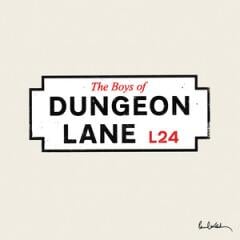
“Days We Left Behind” was written by Paul McCartney and appears as the third song on side one of his 20th solo studio album, The Boys of Dungeon Lane. The song is a reminiscence of growing up in Liverpool after World War II, with a nod to some associates with whom McCartney joined forces to change pop culture in the world. Released as the first single from the album in March, it went to #22 on the Billboard Adult Contemporary Singles chart. McCartney performed the song on Saturday Night Live in May. Personnel on the record were: Paul McCartney (vocals, acoustic guitar, bass, piano, pump organ).
The Boys of Dungeon Lane was recorded from 2021 to 2025 at Hogg Hill Mill in Icklesham, Abbey Road, and Metropolis in London; and Henson, Gold Tooth, and Diamond Dust in Los Angeles. Produced by Paul McCartney and Andrew Watt, the album was released in May and went to #5 on the Billboard 200 Albums chart. Three singles have been released from the LP.
Paul McCartney (Sir James Paul McCartney) is an English singer, songwriter and musician. He achieved worldwide fame as a member of The Beatles, along with bandmates John Lennon, George Harrison and Ringo Starr. His songwriting partnership with John Lennon produced the majority of the extensive song catalog for The Beatles. The four lads from Liverpool went on to change the face of pop music and culture in the world. As a solo artist, McCartney has released 20 studio albums, 10 live albums, five compilation albums, four EPs and 132 singles and sold over 100 million records. He released seven studio albums with Wings and 17 studio albums with The Beatles. McCartney has an OBE, has been knighted, has a Gershwin Prize, Kennedy Center Honors, a Legion d’Honneur, is a member of the Rock and Roll Hall of Fame as a member of The Beatles and as a solo artist, and has a star on the Hollywood Walk of Fame. He continues to record and tour.
"About the Song" -- written by Mickey McMahan , RBN Director of Musicology