The COVID-19-induced social isolation and subsequent economic slowdown have caused major drops in U.S. refined products consumption, especially gasoline and jet fuel, which have experienced declines of as much as 44% and 70%, respectively, relative to similar periods in 2019. Diesel fuel consumption has been off as much as 20% on the same basis, and given that COVID is a global crisis, product exports have also fallen. As a result, U.S. refinery utilization has dropped to less than 70% for the last few weeks, the lowest levels since September 2008 during Hurricane Ike. All this presents refiners with two challenges: (1) reduced total demand; and (2) the disproportionate decline in gasoline and jet fuel. Each refinery is configured differently and has a varying degree of flexibility to react to these challenges. Today, we discuss what refiners can do to adjust operations and product yields, and examine the point at which some refineries might be forced to shut down completely.
As discussed in Part 1 of this blog series, refineries are doing everything they can to reduce their overall output, minimize their gasoline and jet fuel production in particular, and enter what you might call “max diesel mode.” There are four levers that a refinery can use to deal with the current situation: (1) adjust its operating conditions, (2) alter its crude slate, (3) ratchet down its utilization rate, and (4) shut down the entire facility. To gain a better understanding of a refinery’s ability to adjust its refined-product output in response to shifting markets, we also discussed the basics of how a refinery breaks down crude oil into component parts or fractions, beginning with atmospheric distillation and continuing with vacuum distillation.

The Crude Oil Billboard keeps readers at the forefront of the U.S. crude oil market by offering access to data and information moments after its release. Say goodbye to PDF reports that come out after the market has already moved on.
Generally speaking, a refinery’s objective is to break down heavier, more dense components that have larger hydrocarbon molecules into lighter, less dense components that have smaller hydrocarbon molecules. Each refinery has a set of equipment and processes that is used to break down either crude itself or particular crude fractions into component parts — the more sophisticated the refinery, the more breaking down that goes on. Once the breakdown is complete, refineries treat, reconstitute and/or blend these component parts together to make refined products to meet consumer demand. The refinery’s objective is to yield the most valuable mix of refined products possible from a given crude input.
Next, we discuss in some detail what refinery operators can do in response to the extraordinary market conditions they now face.
About the song
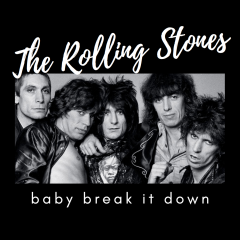
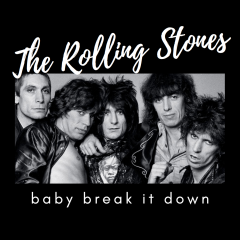
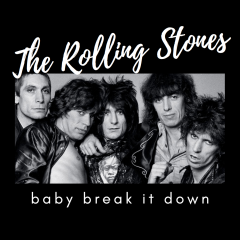
"Baby Break It Down" was written by Mick Jagger and Keith Richards and appears as the 13th song on The Rolling Stones' 22nd American studio album, Voodoo Lounge. Recorded between September 1993 and April 1994 at Ronnie Wood's house in Ireland and Windmill Lane Studios in Dublin, the album was released in July 1994. Produced by Don Was with Mick Jagger and Keith Richards, it was the first album for the group in five years, since The Stones released Steel Wheels in 1989. Voodoo Lounge would also be the first Stones album without Bill Wyman, who had been the band's bassist since its inception. Personnel on the LP were: Mick Jagger (lead vocals, guitar), Keith Richards (guitars, backing vocals), Ronnie Wood (guitars, pedal steel, backing vocals), Charlie Watts (drums, percussion), Darryl Jones (bass), Chuck Leavell (keyboards), and Bernard Fowler and Bobby Womack (backing vocals). Six singles were released from the album, which went to #2 on the Billboard Top 200 Albums chart. It has been certified 2x Platinum by the Recording Industry Association of America. Voodoo Lounge won a Grammy Award in 1995 for Best Rock Album. The album's title was derived from Keith Richards, who while vacationing in Barbados named the terrace of his house "Voodoo's Lounge" after his adopted cat — named Voodoo — claimed it as his playground.
The Rolling Stones are a British rock band formed in London in 1962. They have sold more than 200 million records worldwide. The band has released 30 studio albums, 28 live albums, 26 compilation albums, three EPs and 120 singles. They have won one Billboard Music Award, four Grammy Awards, three MTV Video Music Awards and two World Music Awards. The Rolling Stones are members of the Rock and Roll Hall of Fame and the UK Music Hall of Fame. Original members Jagger, Richards and Watts — along with longtime member Ronnie Wood — still record and tour. The Rolling Stones’ upcoming No Filter tour of North America has been postponed, however, due to the ongoing global COVID pandemic.