It took a while, but domestic air travel is finally returning to pre-pandemic levels and international travel to and from the U.S. is showing signs of recovering too. As a result, U.S. production of jet fuel has been rising steadily in recent months and, since most jet fuel needs to be transported long distances from refineries to airports, so have flows of jet fuel on U.S. refined products pipelines. All of that is good news, but as pipeline flows rise, so may the stresses on some elements of the U.S. refined products/jet fuel distribution network, including pipelines, storage facilities and “last mile” jet fuel delivery trucks. In today’s RBN blog, we continue our look at jet fuel, this time with a look at the extensive web of U.S. refined products pipelines.
This is the third episode in our series. In Part 1, we discussed the wild ride the jet fuel market has been on since the pandemic started in early 2020. First, demand, prices and production plummeted. Then came a slow, uneven recovery that continued through this past winter, when Russia’s war on Ukraine and other factors caused spikes in crude oil and jet fuel prices just as air-traffic volumes were finally returning to normal. We also explained that jet fuel is produced via atmospheric distillation, that the U.S. is by far the world’s largest producer, and that while the U.S. is essentially self-sufficient regarding jet fuel — producing about as much as it consumes — and its volume of exports and imports are relatively modest (and roughly equal), mostly because it’s more economic to import jet fuel from other countries to some parts of the U.S. than to transport it there from domestic refineries.

The Future of Fuels bi-annual report by RBN's Refined Fuels Analytics provides an in-depth analysis of the U.S. and global refinery industries, focusing on crude oil and fuel market dynamics, supply and demand, alternative fuels, refinery capacities, and price forecasts to help stakeholders navigate the evolving energy landscape.
In Part 2, we took a big-picture, PADD-by-PADD look at jet fuel production and demand. The headlines from that blog are:
- Refineries in PADD 3 (Gulf Coast) generally account for more than half of U.S. jet fuel production, followed by PADD 5 (West Coast) and PADD 2 (Midwest).
- PADD 1 (East Coast), with its population density and slew of major airports, consumes more jet fuel than any other region, with the West Coast being the runner-up.
- The East Coast depends on a combination of in-region jet fuel production, imports, and — most of all — piped-in volumes, mostly from the Gulf Coast.
We also noted that no long-distance pipelines are dedicated to jet fuel-only use. Instead, jet fuel, ultra-low-sulfur diesel (ULSD) and various grades of gasoline typically are transported on the same refined products pipelines, not as a mix to be separated later, but in a series of “batches” that are diverted to the proper tanks in sequence as they arrive at downstream storage facilities.
About the song
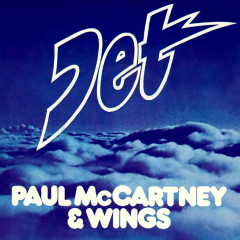
“Jet” was written by Paul and Linda McCartney and appears as the second song on side one of Paul McCartney & Wings’ third studio album, Band on the Run. Released as a single in January 1974, the song — named after the McCartneys’ Labrador Retriever, Jet — went to #7 on the Billboard Hot 100 Singles chart. The song was recorded at Abbey Road Studios in London in September 1973. Personnel on the record were: Paul McCartney (lead vocals, bass, guitar, drums, piano), Linda McCartney (backing vocals, synthesizer), Denny Laine (backing vocals, guitar), Jimmy McCulloch (lead guitar), and Howie Casey (sax).
Band on the Run was recorded between August and October 1973 at EMI and ARC in Lagos, Nigeria; and AIR, Kingsway Recorders and Abbey Road Studios in London. Produced by Paul McCartney, the album was released in December 1973 and went to #1 on the Billboard 200 Albums chart. It has been certified 3x Platinum by the Recording Industry Association of America. Three singles were released from the LP. The cover of the album was a photo featuring Wings members Paul McCartney, Linda McCartney and Denny Laine, joined by actors James Coburn, Christopher Lee, Michael Parkinson, Kenny Lynch and Clement Freud, all dressed as convicts caught in a prison yard searchlight.
Paul McCartney & Wings was a British rock band formed in London in 1971 by Paul and Linda McCartney, along with Denny Laine. The band released seven studio albums, one live album, two compilation albums and 29 singles. It won two Ivor Novello Awards and six Grammy Awards. Ten members passed through the band until its breakup in 1981. Wings member Jimmy McCulloch died in June 1979, Linda McCartney in April 1988, and Henry McCullough in June 2016. Paul McCartney continues to record and tour.