The jet fuel market has been on a wild ride the past two-plus years. First, demand for the refined product took an unprecedented, COVID-induced nosedive in February and March 2020. By May 2020, Gulf Coast prices for jet fuel had plummeted to less than 50 cents/gal (from just under $2 at the start of that year) and refiners had slashed production to 505 Mb/d (from just under 1.9 MMb/d). It was a tough few months — the recovery from the market’s bottom was neither quick nor consistent. Domestic air travel is finally back, but with international travel slower to rebound, total jet fuel supply and demand are still off of their pre-pandemic levels. Jet fuel prices are taking off, though, last week hitting their highest mark since July 2008. In today’s RBN blog, we discuss the jet fuel market: how it’s rebounding, how it works and how it’s changing.
Jet fuel is produced from crude oil at refineries through atmospheric distillation, the most basic of refining processes, in which crude oil (after being pre-treated to remove salt and water) is heated to between 600 and 750 degrees Fahrenheit (°F) by piping it through a heater. The resulting hot liquids and vapors are discharged into a distillation tower, within which the liquids and vapors separate into fractions, according to their weight and boiling point. The lightest fractions (LPG and other NGL gases, light naphtha and heavy naphtha) vaporize and rise to the upper end of the tower, where they condense back to liquids. Middle distillates, including kerosene (jet fuel) and diesel, rise to the middle of the column, and heavier liquids, called atmospheric gas oils, separate lower down. The heaviest fractions with the highest boiling points, called atmospheric bottoms, settle at the bottom.

The replay of our Fall 2026 School of Energy (September 9 & 10, Houston) is now available online!
Learn from RBN experts, participate in hands-on Excel modeling, connect with industry peers, and gain a stronger understanding of today's interconnected energy markets.
After emerging from the distillation tower, kerosene goes through various treatments to remove unwanted elements such as sulfur, nitrogen and metals, resulting in a pure, clean-burning fuel. “Jet A” is the jet fuel specification used in the U.S.; it has a freezing point of minus 40°F; almost everyone else uses “Jet A-1,” which has an anti-static additive and whose freezing point is minus 47°F. The U.S. is by far the world’s largest producer of jet fuel, with production averaging 1.72 MMb/d in 2019 — the last “normal” year not impacted by COVID — according to the Energy Information Administration, or EIA. (We’ll discuss the ongoing recovery in U.S. jet fuel production in a moment.) Other countries that produce significant volumes of jet fuel include China, South Korea, India, the Netherlands and Japan.
About the song
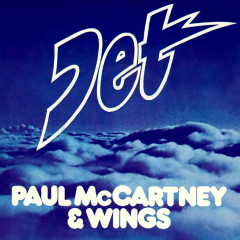
“Jet” was written by Paul and Linda McCartney and appears as the second song on side one of Paul McCartney & Wings’ third studio album, Band on the Run. Released as a single in January 1974, the song — named after the McCartneys’ Labrador Retriever, Jet — went to #7 on the Billboard Hot 100 Singles chart. The song was recorded at Abbey Road Studios in London in September 1973. Personnel on the record were: Paul McCartney (lead vocals, bass, guitar, drums, piano), Linda McCartney (backing vocals, synthesizer), Denny Laine (backing vocals, guitar), Jimmy McCulloch (lead guitar), and Howie Casey (sax).
Band on the Run was recorded between August and October 1973 at EMI and ARC in Lagos, Nigeria; and AIR, Kingsway Recorders and Abbey Road Studios in London. Produced by Paul McCartney, the album was released in December 1973 and went to #1 on the Billboard 200 Albums chart. It has been certified 3x Platinum by the Recording Industry Association of America. Three singles were released from the LP. The cover of the album was a photo featuring Wings members Paul McCartney, Linda McCartney and Denny Laine, joined by actors James Coburn, Christopher Lee, Michael Parkinson, Kenny Lynch and Clement Freud, all dressed as convicts caught in a prison yard searchlight.
Paul McCartney & Wings was a British rock band formed in London in 1971 by Paul and Linda McCartney, along with Denny Laine. The band released seven studio albums, one live album, two compilation albums and 29 singles. It won two Ivor Novello Awards and six Grammy Awards. Ten members passed through the band until its breakup in 1981. Wings member Jimmy McCulloch died in June 1979, Linda McCartney in April 1988, and Henry McCullough in June 2016. Paul McCartney continues to record and tour.