The Trump administration’s approach to economic policy — including tariff threats to longtime allies backed by sometimes shifting policy goals — might be a sound tactical move in the long run by keeping negotiators on edge and extracting better deals. But that approach has also heightened the sense of uncertainty about where things are headed, affecting investment and long-term planning. In today’s RBN blog, we discuss how economic policy uncertainty has increased in the past few months and how it’s impacting activity in the energy sector.

The replay of our Fall 2026 School of Energy (September 9 & 10, Houston) is now available online!
Learn from RBN experts, participate in hands-on Excel modeling, connect with industry peers, and gain a stronger understanding of today's interconnected energy markets.
The term economic uncertainty has been at the top of everybody’s mind recently. Even though U.S. tariffs have exempted most energy imports and there has been little market impact so far from Chinese tariffs on U.S. energy products, much of the energy industry has slowed decision-making on large new investment and is proceeding cautiously on just about every consequential project, just like the rest of the economy. While energy-related projects may not feel the effect of tariffs to the same degree as other sectors of the economy, the feeling of uncertainty is widespread. So, how do we assess the current situation and the impact of this slowdown?
Economic uncertainty and its impacts can be hard to quantify, but there are some measures, including the Economic Policy Uncertainty (EPU) Index, which provides a 50,000-foot view of where things stand and is calculated by researchers from Northwestern University, Stanford University and the University of Chicago. The U.S. version of the index has three underlying components. The first is an index of search results from 10 major newspapers, including the New York Times, Wall Street Journal and Washington Post. Researchers track the volume of news articles discussing economic policy uncertainty.
The second component draws on reports by the Congressional Budget Office (CBO) that list temporary federal tax code provisions, giving a measure of uncertainty regarding the path that the federal tax code will take in the future. The third component draws on the Federal Reserve Bank of Philadelphia’s Survey of Professional Forecasters. Here, researchers examine the differences between individual forecasters’ predictions about the Consumer Price Index (CPI), federal spending, and state and local expenditures to measure macroeconomic uncertainty.
Using those three components, the index is designed to have an average score of 100 (solid red line in Figure 1 below), with scores above that indicating a higher-than-average level of uncertainty and lower scores suggesting less. The index tends to jump during certain events — including wars, tight presidential elections and financial crises — but policy uncertainty has become more volatile since the Great Recession (green arrow), with notable spikes related to the 2011 debt-ceiling dispute (purple arrow), the pandemic and the runup to the 2020 presidential election (blue arrow).
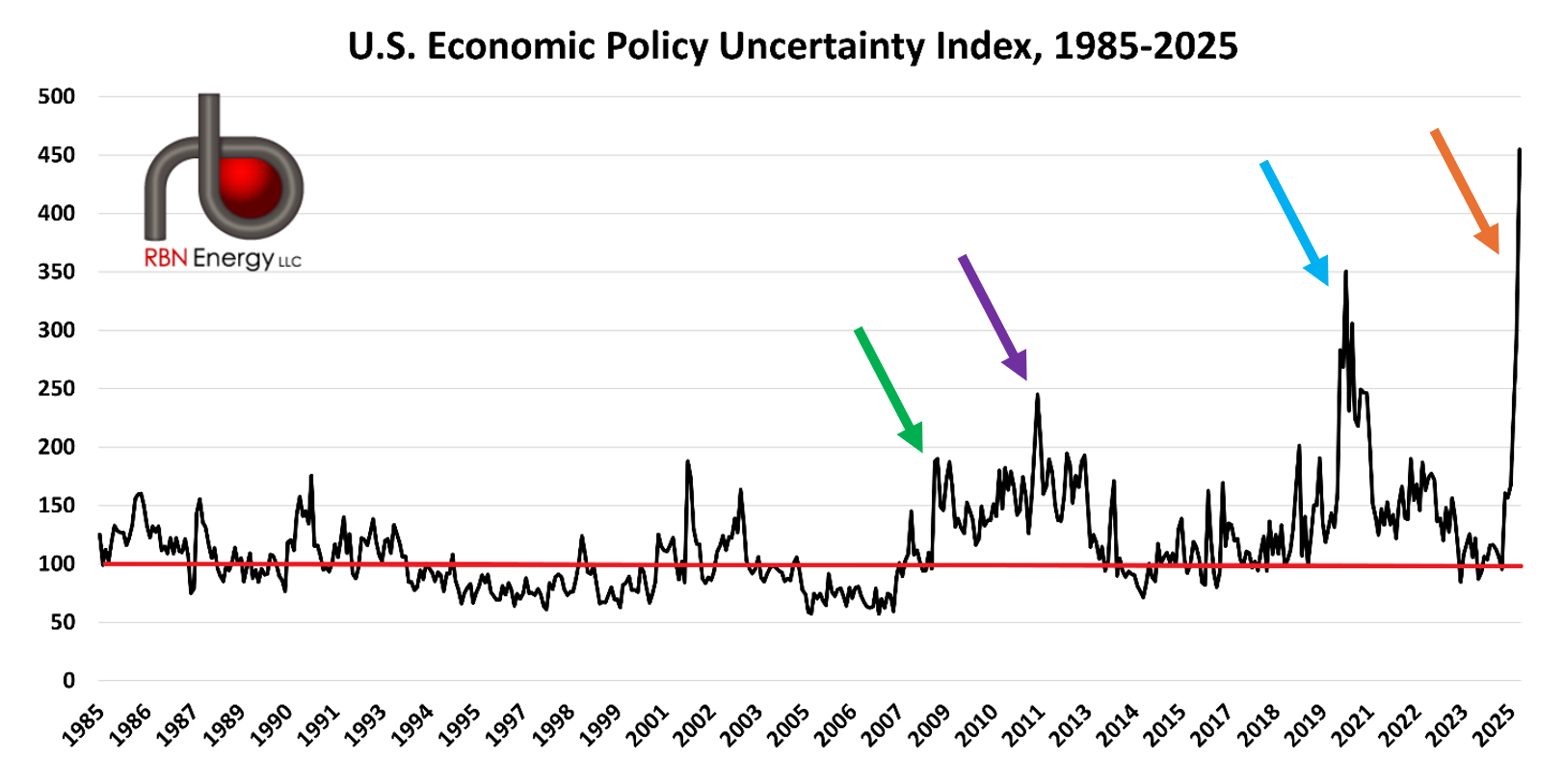
Figure 1. U.S. Economic Policy Uncertainty Index, 1985-2025. Source: policyuncertainty.com
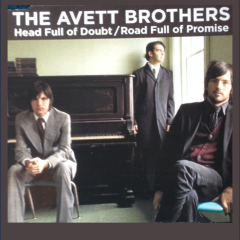
About the song
“Head Full of Doubt, Road Full of Promise” was written by Scott and Seth Avett and appears as the third song on The Avett Brothers’ 2009 major-label debut album, I and Love and You. The song is about conflict, contradiction, the temporary nature of the human mind, and the environments it presents. The video for the song features the animated paintings of Jason Ryan Mitcham illustrating the rise and fall of urban overdevelopment. The song has been used in a Northwestern Mutual television ad, and as background music for the 10th season of American Idol. The Avett Brothers performed it live at the 53rd annual Grammy Awards in 2011. Personnel on the record were: Scott Avett (lead, backing vocals, banjo, rhythm guitar, Hammond B-3, percussion), Seth Avett (lead, backing vocals, lead guitar, mandolin, Hammond B-3, percussion), Mike Marsh (drums), and Lenny Castro (percussion).
I and Love and You was recorded in 2008-09 at various Los Angeles studios and produced by Rick Rubin. It was the band’s major label debut on Rubin’s American record label. Released in September 2009, it went to #1 on the Billboard Folk Albums chart and #16 on the Billboard 200 Albums chart. One single was released from the LP.
The Avett Brothers are an American folk-rock band formed in 2000 in Concord, NC, by brothers Scott and Seth Avett. The brothers come from a musical family and have played music together since childhood. After playing in various rock bands in the late 1990s, the two released their first EP as The Avett Brothers in 2000. They have released 11 studio albums, four live albums, four EPs and 18 singles and have won five Americana Music Awards. The Avett Brothers started their 2025 U.S. tour in Boise, ID, in early April. The tour is scheduled to run through August and will include Independence Day weekend gigs with Willie Nelson in Austin, Dallas and The Woodlands, TX.