Any joint venture has its pros and cons for each party, and in an ideal world, everyone involved in a JV sees net benefits from pairing up with a partner. A quarter-century ago, state-owned Petróleos Mexicanos (Pemex) purchased a 50% stake in Shell’s Deer Park, TX, refinery. The JV partners also entered into a 30-year processing agreement under which each would purchase half of the refinery’s crude feedstock and own half the output. Separately, Pemex agreed to supply as much as 200 Mb/d of Mexico’s heavy sour Maya crude to Deer Park and Shell agreed to supply Pemex with 35-40 Mb/d of gasoline to help meet Mexico’s refined products deficit. The partners recently agreed to an early extension of the deal by 10 years from 2023 to 2033, while reducing the supply of Maya crude after 2023 to 70 Mb/d, to be sold at a fixed price. Today, we continue an analysis of the JV and the new changes to it.
This blog is based on analysis originally published by Morningstar Commodities and Energy Research.
In Part 1 of this series, we described the Deer Park refinery and looked at the Shell-Pemex joint venture from Pemex’s perspective. The deal was inked in 1993, when Pemex paid $1 billion for a 50% stake in the now 340-Mb/d refinery located along the Houston Ship Channel about 20 miles east of Houston. As a result of this investment, Pemex secured a major U.S. customer for its Maya crude at a time when few refineries had the expensive technology needed to extract full value from such a heavy-sour grade. Also as part of the agreement, Pemex gained a significant supply of refined gasoline from Deer Park that went towards meeting Mexico’s refined products supply deficit. As we’ve highlighted previously in the RBN blogosphere — most recently in July (see Más) — Mexico has been importing increasing volumes of gasoline and diesel from the U.S. During the three years ending in May 2018, Deer Park has output an average 102 Mb/d of gasoline (according to the Texas Railroad Commission, or TRRC), meaning that Pemex owns 50% or 51 Mb/d — a volume that represented 9% of Mexico’s gasoline imports in 2017. In theory, Pemex should have benefitted from access to Deer Park’s sophisticated refining technology, but not much seems to have rubbed off, given the dilapidated state of Mexico’s six refineries, which only ran at 40% of capacity in the first six months of this year. Pemex has benefitted from its share of the profits of a high-tech Gulf Coast refinery, where the margins for processing Maya have been almost $5/barrel higher this year than for refining light-sweet crudes like Light Louisiana Sweet (LLS).

Canadian crude output is rising, requiring new export routes. As traditional pathways face constraints, the U.S. Rockies—especially the Guernsey, WY hub—are emerging as key corridors for moving Canadian heavy crude to downstream markets, including the Gulf Coast.
Shell Upside
For Shell, the Deer Park joint venture with Pemex has provided a secure supply of heavy Maya crude from nearby Mexico for 25 years. Today, that secure supply remains important, given the collapse of Venezuelan production (see Meltdown!) and the impending re-imposition of sanctions on Iran that reduce that nation’s exports of heavy crude.
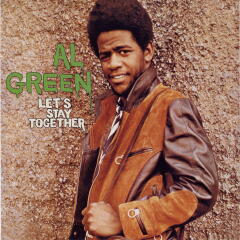
About the song
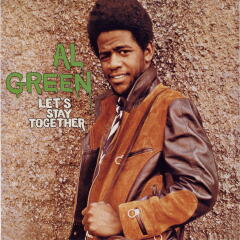
"Let's Stay Together" is a hit song by American singer Al Green from his 1972 album of the same name. Released as a single in 1971, "Let's Stay Together" reached #1 on the Billboard Hot 100, and remained on the chart for 16 weeks; it also topped Billboard's R&B chart for nine weeks. The tune was ranked 60th by Rolling Stone magazine on its 2004 list of “The 500 Greatest Songs of All Time.” The Let's Stay Together LP was produced by Willie Mitchell and Al Green, and recorded at Mitchell's Royal Recording Studio in Memphis. Personnel on the record were Al Green (lead vocals), Al Jackson Jr. and Howard Grimes (drums), Teenie Hodges (guitar), Leroy Hodges (bass), and Charles Hodges (organ and piano). The horn section included Wayne Jackson (trumpet), Andrew Love and Ed Logan (tenor sax), James Mitchell (baritone sax) and Jack Hale Sr. (trombone). Background vocals came from Charles Chalmers, Donna Rhodes and Sandra Rhodes.
Al Green is an American soul and gospel singer, songwriter and record producer, and pastor at the Full Gospel Tabernacle in Memphis. The Reverend Al Green, as he is also known, has recorded 29 studio albums, including secular and gospel releases. He has won 11 Grammy Awards, including a Grammy Lifetime Achievement Award he received in 2002. Green was inducted into the Rock and Roll Hall of Fame in 1995, and in 2004 he was inducted into both the Gospel Music Hall of Fame and the Songwriters Hall of Fame. He became a Kennedy Center Honors recipient in 2014. Reverend Al still occasionally preaches, and performs music to this day.