Twenty-five years ago, in 1993, the Mexican national oil company — Petróleos Mexicanos, or Pemex — purchased a 50% stake in Shell’s Deer Park, TX, refinery. The joint-venture partners entered into a 30-year processing agreement under which each would purchase half of the refinery’s crude feedstock and own half the output. Separately, Pemex agreed to supply as much as 200 Mb/d of Mexico’s heavy sour Maya crude to Deer Park and Shell agreed to supply Pemex with 35-40 Mb/d of gasoline to help meet Mexico’s refined products deficit. The partners recently agreed to an early extension of the deal by 10 years from 2023 to 2033, while reducing the supply of Maya crude after 2023 to 70 Mb/d, to be sold at a fixed price. Today, we begin a two-part series on the joint venture with a look at how Pemex has benefitted.
This blog is based on analysis originally published by Morningstar Commodities and Energy Research.
We’ve devoted a fair amount of coverage in the past two years to Mexico’s evolving energy market and its dependence on the U.S. for refined products and natural gas. Energy market reforms initiated in 2013 ended Pemex’s monopoly over oil and gas production and distribution, but through its subsidiary PMI, the company still plays dominant roles in selling Mexico’s crude oil exports and in buying refined products to help meet a growing domestic deficit. We covered Mexico’s refined products needs and developing infrastructure in our four-part Into The Void series that started in December 2017; we provided an update in July (see Más).
The 340-Mb/d Deer Park plant is the 10th-largest U.S. refinery by capacity, and part of a cluster of four refineries on the Houston Ship Channel about 20 miles east of downtown Houston. These refineries have been at the center of evolving crude supply logistics in the wake of the Shale Revolution, as detailed in our Stairway to Houston Drill Down Report a while back. In addition to its 50% ownership interest in the Deer Park refinery, Shell owns and operates an adjacent petrochemical steam cracker plant.
About the song
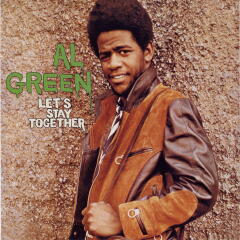
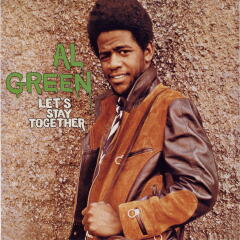
"Let's Stay Together" is a hit song by American singer Al Green from his 1972 album of the same name. Released as a single in 1971, "Let's Stay Together" reached #1 on the Billboard Hot 100, and remained on the chart for 16 weeks; it also topped Billboard's R&B chart for nine weeks. The tune was ranked 60th by Rolling Stone magazine on its 2004 list of “The 500 Greatest Songs of All Time.” The Let's Stay Together LP was produced by Willie Mitchell and Al Green, and recorded at Mitchell's Royal Recording Studio in Memphis. Personnel on the record were Al Green (lead vocals), Al Jackson Jr. and Howard Grimes (drums), Teenie Hodges (guitar), Leroy Hodges (bass), and Charles Hodges (organ and piano). The horn section included Wayne Jackson (trumpet), Andrew Love and Ed Logan (tenor sax), James Mitchell (baritone sax) and Jack Hale Sr. (trombone). Background vocals came from Charles Chalmers, Donna Rhodes and Sandra Rhodes.
Al Green is an American soul and gospel singer, songwriter and record producer, and pastor at the Full Gospel Tabernacle in Memphis. The Reverend Al Green, as he is also known, has recorded 29 studio albums, including secular and gospel releases. He has won 11 Grammy Awards, including a Grammy Lifetime Achievement Award he received in 2002. Green was inducted into the Rock and Roll Hall of Fame in 1995, and in 2004 he was inducted into both the Gospel Music Hall of Fame and the Songwriters Hall of Fame. He became a Kennedy Center Honors recipient in 2014. Reverend Al still occasionally preaches, and performs music to this day.