In the far western reaches of the Permian Basin lies Orla, TX — a town steeped in history and significance. Orla, which can be fittingly translated into “border” in Spanish, is about 40 miles north of Pecos, near the New Mexico border in Reeves County. Founded in 1890 as a section house for the Pecos Valley Railroad, Orla evolved from a modest stop along the tracks to a bustling oil supply hub — not your typical hub with lots of tank farms close together but still a heavy throughput area — by the 1960s. Though often considered a ghost town today, with a population thought to be in the single digits, Orla remains a vital player in the oil industry. As the origin region for several major takeaway pipelines in the Permian, this once-thriving community continues to serve as a crucial link in the region’s vast network of oil exploration, extraction and transportation, particularly along heavily traveled U.S. Highway 285. In today’s RBN blog, we look at the role that Orla plays in crude oil takeaway from the prolific Permian Basin.

Figure 1. Permian Crude Oil Pipelines. Source: RBN Crude Oil Permian
So how does Orla (dashed red circle in Figure 1 above) fit into the broader landscape of Permian oil takeaway capacity? Orla, the Permian’s westernmost crude oil hub, is “where it all begins” — that is, the boundary for Permian crude production and where a few long-haul pipelines originate. (Permian production will be a major theme at RBN’s upcoming NACON conference, to be held Thursday, October 24, at the Royal Sonesta Hotel in Houston. Click here for details.)

The Natural Gas Master Class is a one-day online event focusing on understanding flow analysis, interpreting pipeline data and forecasting future flows. This course is designed to equip you with the knowledge and skills to effectively analyze the complexities of natural gas markets, flow analysis, and pipeline modeling. Join us online
October 21 | Online
Most associate the Permian Basin with West Texas Intermediate (WTI), which has an API gravity between 38 and 44 degrees (light blue dots in Figure 2 below). This quality is concentrated in the Midland and southern Delaware basins. But to say that Permian crude oil quality varies is an understatement at best — it varies widely from one part to the next. There are several important aspects to crude quality but the most commonly discussed are API gravity, or API for short (light versus heavy), and its sulfur content (sweet versus sour). A high API number represents “lighter” oil types with lower densities while a low API number indicates denser, or “heavier” crude. “Sweet” crude has low sulfur content (typically below 0.5%) while sour crude has higher sulfur content. (For more on crude quality, see The Weight.)
About the song
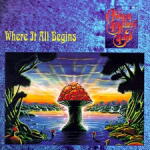
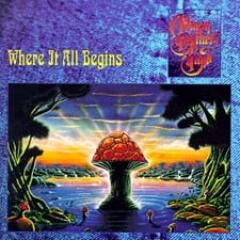
“Back Where It All Begins” was written by Dickey Betts and appears as the third song on side one of the album of the same name. The nine-minute-plus song features fiery dual Les Paul guitar jams from Dickey Betts and Warren Haynes. Personnel on the song were: Dicky Betts (lead vocal, guitar), Warren Haynes (guitar, backing vocals), Gregg Allman (Hammond B-3 organ, piano), Allen Woody (bass), Jaimoe (drums, percussion), Butch Trucks (drums, percussion), and Marc Quinones (congas, percussion).
The album, Back Where It All Begins, was recorded in January 1994 and produced by Tom Dowd. Dowd, familiar with Gregg Allman’s dislike of recording studios, took a different approach and rented Burt Reynolds’ BR Ranch sound stage in Jupiter, FL. This enabled Dowd to record the band with their full concert stage setup, with all the basic tracks recorded live with everyone playing together in the same room at the same time. The album was released in May 1994 and went to #45 on the Billboard 200 Albums chart. It has been certified Gold by the Recording Industry Association of America. No singles were released from the LP.
The Allman Brothers Band was an American rock band formed in Jacksonville, FL, in 1969 by brothers Duane and Gregg Allman, Dickey Betts, Barry Oakley, Butch Trucks, and Jaimoe. They used elements of rock, blues, jazz and country in their music and were one of the progenitors of the jam band genre. During their existence, they released 12 studio albums, seven live albums, 18 compilation albums, and 22 singles. They were inducted into the Rock and Roll Hall of Fame in 1995. The band officially broke up for the final time in 2014. Twenty members passed through the band since its formation. Of the original band, Duane Allman died in 1971, Barry Oakley died in 1972, Butch Trucks and Gregg Allman died in 2017, and Dickey Betts died in 2024.