Phillips 66 loaded its first Panamax tanker for export to Mexico over the weekend. Late on Sunday night, the SCF Prime signaled that it was headed for Pajaritos, Mexico, after loading at Phillips' terminal in Beaumont, TX. Mexico is making history with this pivotal first purchase of Bakken crude from Phillips 66 at the U.S. Gulf Coast (USGC). Up until now, the crude oil trade between the U.S. and Mexico had been a one-way street, with oil moving from Mexico to the U.S. and not the other way around. But now, as Mexico’s state-run oil company Petróleos Mexicanos (Pemex) faces dwindling oil production and refinery outputs, importing light, sweet crude from the U.S. is a new avenue to revive Mexico’s refinery utilization. Today, we examine the new shift in the traditional flows of crude oil across the Gulf of Mexico.

The Crude Oil Billboard keeps readers at the forefront of the U.S. crude oil market by offering access to data and information moments after its release. Say goodbye to PDF reports that come out after the market has already moved on.
U.S. Gulf Coast refiners have long seen the value of importing and processing Mexican crudes. The U.S. as a whole imported just over 600 Mb/d of oil from Mexico in 2017, and the lion’s share of those volumes were taken straight to Petroleum Administration for Defense District (PADD) 3 — the Gulf Coast. That made Mexico the fourth-largest crude supplier to the U.S. in 2017, bested only by Canada, Saudi Arabia and Venezuela. But while imports of Canadian crudes have surged in recent years — from 20% of total U.S. imports in 2008 to nearly 47% so far in 2018 — imports from just about everywhere else have declined, for a variety of reasons. The Saudi’s Arab Light can be displaced by domestic U.S. grades, while imports from Venezuela have gone down as a result of their declining production (see Meltdown!).
Similarly, crude imports from Mexico have come off sharply in recent years, and the lull corresponds to declines in oil production there. (We covered this state of flux in With a Little Help From My Friends.) Figure 1 compares U.S. imports of Mexican crude with Mexico’s domestic output. The dashed red line (right axis) illustrates the drop in Mexican crude production: year-to-date output is less than half what it was in 2005. (It’s worth noting here that the majority of that crude, nearly 60% of the total 1.8 MMb/d in September 2018, is categorized as “heavy,” or low in API gravity, according to Pemex.) Also in the last decade, at the same time Mexican production was decreasing, U.S. imports of Mexican crude (dark blue and light blue areas in Figure 1) have fallen by nearly 45% — from an average of 1.2 MMb/d in 2008 to 650 Mb/d so far in 2018 (left axis). The dark blue area shows the share of those imports that moved to refining centers on the Gulf Coast.
About the song
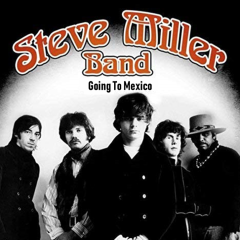
"Going to Mexico" was written by Steve Miller and Boz Scaggs, and appears on Steve Miller Band's fifth studio album, appropriately entitled Number 5. Released in November 1970, the LP reached #23 on the Billboard Top 200 Albums chart. Personnel on the record were: Steve Miller (lead vocals, guitar, bass and piano), Lonnie Turner and Bobby Winkelman (bass), Ben Sidran (keyboards), and Tim Davis (drums). "Going to Mexico" was the B-side to the single, "Steve Miller's Midnight Tango," and also appears on the Steve Miller Band double album Anthology, which was released in 1972.
Steve Miller Band, originally called Steve Miller Blues Band, was formed in San Francisco in 1966 by Steve Miller. Before signing a record deal with Capitol Records in 1967, the Steve Miller Blues Band backed up Chuck Berry on his Live at The Fillmore Auditorium album, and appeared at the Monterey Pop Festival. Before releasing their debut album in 1968, the band dropped "Blues" from their moniker.
Born in Milwaukee and raised in Dallas, Steve Miller started playing guitar at the age of six. His dad was good friends with Les Paul and Mary Ford, and Les Paul was his godfather. His popular high school rock band, "The Marksmen," included members Boz Scaggs and Dusty Hill, who would later become a hit solo artist and ZZ Top's bass player, respectively. Steve Miller Band has put out 18 studio albums, six live albums, seven compilation albums, and 30 singles to date. They have had 33 band members (including Miller) since their inception.
The band hit it big in 1973 with the platinum-selling album The Joker. Steve Miller Band went on to sell more than 24 million albums in the U.S. alone. Steve Miller Band's Greatest Hits 1974-78 has sold over 13 million copies. They have a star on the Hollywood Walk of Fame, and an ASCAP Golden Note Award. Steve Miller was inducted into the Rock and Roll Hall of Fame as a solo artist in 2016. Miller still tours to this day.