


Mexico has emerged as an important and growing market for U.S. natural gas producers, and for U.S. midstream companies scrambling to develop gas pipelines to serve Mexico’s gas consumers. Meanwhile, U.S. gasoline, diesel and liquefied petroleum gas (LPG) exports to Mexico are also up. Petróleos Mexicanos (Pemex)—the state-owned hydrocarbon giant, now in the midst of a major reboot—is on the hunt for private-sector partners to help revive Mexico’s sagging oil and gas production, and U.S. oil producers and Pemex are planning their first swaps of crude. Today we highlight RBN Energy’s latest Drill Down report examining the changing yins and yangs of cross-border energy relations.
Just a few years ago, U.S./Mexican energy interactions were dominated by Pemex sales of heavy Maya crude oil to refineries along the U.S. Gulf Coast. Now, imports of Mexican crude such as Maya to the U.S. are off although a crude swap between the U.S. and Mexico recently approved by the Department of Commerce Bureau of Industry and Security (BIS) permits up to 75 Mb/d of Mexican heavy crude to be swapped with an equivalent volume of U.S. light crude. This swap arrangement suits both countries in the short term but it is unclear if it will increase the scale of Mexico’s crude imports to the U.S. in the long run. Meantime U.S. exports of natural gas to Mexico are through the roof, and U.S.-sourced gasoline, diesel and LPG are helping Pemex meet Mexico’s domestic needs for those fuels. Also—and this may prove to be most important of all—the Mexican government has approved constitutional and legislative changes to encourage private-sector partnerships with Pemex in oil and gas exploration. Further, Pemex and Comisión Federal de Electricidad (CFE), the state-owned electric utility now building a fleet of new gas-fired power plants, are turning to U.S. (and Canadian) midstream companies to build, own and operate thousands of miles of new gas pipelines to deliver needed supply.
In our latest Drill Down report released today, we review how the fall-off in Mexican crude oil exports to the U.S. is tied mostly to declining production of heavy crude in older Pemex fields such as the offshore Cantarell, and Mexico’s inability (so far at least) to develop new, replacement fields. In the natural gas sector, we describe how rising U.S. exports to Mexico are a direct result of burgeoning U.S. gas production, in particular the Eagle Ford and the Permian Basin, both of which are close to the U.S./Mexico border. U.S. exports of gasoline, diesel, liquefied petroleum gas (LPG) and other refined products to Mexico are increasing as well, not only because Mexico’s economy is growing, but because Pemex’s refineries are unable to keep up with domestic demand and need to be modernized and expanded. (Figure 1 shows the key elements of Mexico’s energy infrastructure.)
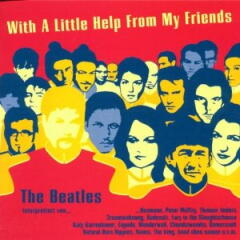
About the song
“With a Little Help from My Friends” was written by John Lennon and Paul McCartney and appears as the second song on side one of The Beatles’ eighth studio album, Sgt. Pepper’s Lonely Hearts Club Band. Lennon and McCartney wrote the tune for Ringo Starr to sing on the album. They recorded the song in March 1967 at EMI Studios in London the day before the band posed in their costumes for the Sgt. Pepper album cover shoot. The song has been covered by many artists, with the most popular one being Joe Cocker, who sang it while making his presence felt at the Woodstock Musical Festival in 1969, and the documentary film that followed the event. Cocker released his version on a single in the UK in October 1968; it went to #1 on the UK Singles chart. Personnel on The Beatles’ version were: Ringo Starr (lead vocals, drums, tambourine), Paul McCartney (bass, piano, backing vocals), John Lennon (rhythm guitar, cowbell, backing vocals), George Harrison (lead guitar, backing vocals), and George Martin (Hammond organ).
Sgt. Pepper’s Lonely Hearts Club Band was recorded between November 1966 and April 1967 at EMI Studios and Regent Sound in London, with George Martin producing. It was released in May 1967 and went to #1 on the Billboard 200 Albums chart and all album charts worldwide. It has been certified 11x Platinum by the Recording Industry Association of America and has sold more than 32 million copies worldwide. The LP won four Grammy Awards and remains one of the top-selling albums of all time. Released during the Summer of Love in 1967, it became a defining moment in pop culture, and helped solidify the album format as a legitimate art form. No singles were released from the LP.
The Beatles were an English rock band formed in Liverpool in 1960. With members John Lennon, Paul McCartney, George Harrison and Ringo Starr, they changed the course of pop music and culture, becoming one of the most popular rock bands of all time. They released 17 studio albums, six live albums, 54 compilation albums, 36 EPs and 63 singles. The band has sold more than 600 million records worldwide. The Beatles have won numerous awards, including an Academy Award, seven Grammy Awards, four Brit Awards and Ivor Novello Awards, and are members of the Rock and Roll Hall of Fame individually and as a band. The Beatles officially broke up in 1970, with all members going on to successful solo careers. John Lennon was murdered in December 1980 and George Harrison died in November 2001. Paul McCartney and Ringo Starr still record and tour as solo artists.




Comments
This is a great post. You guys are really on top of the North American Energy markets. American E&P companies have a storied history of operating in dangerous frontier areas. Also, yes, the Beatles wrote "With a Little Help from My Friends" but Joe Cocker recorded the iconic rendering that most people remember. Keep up the great work!
-Eric